Skip to main content
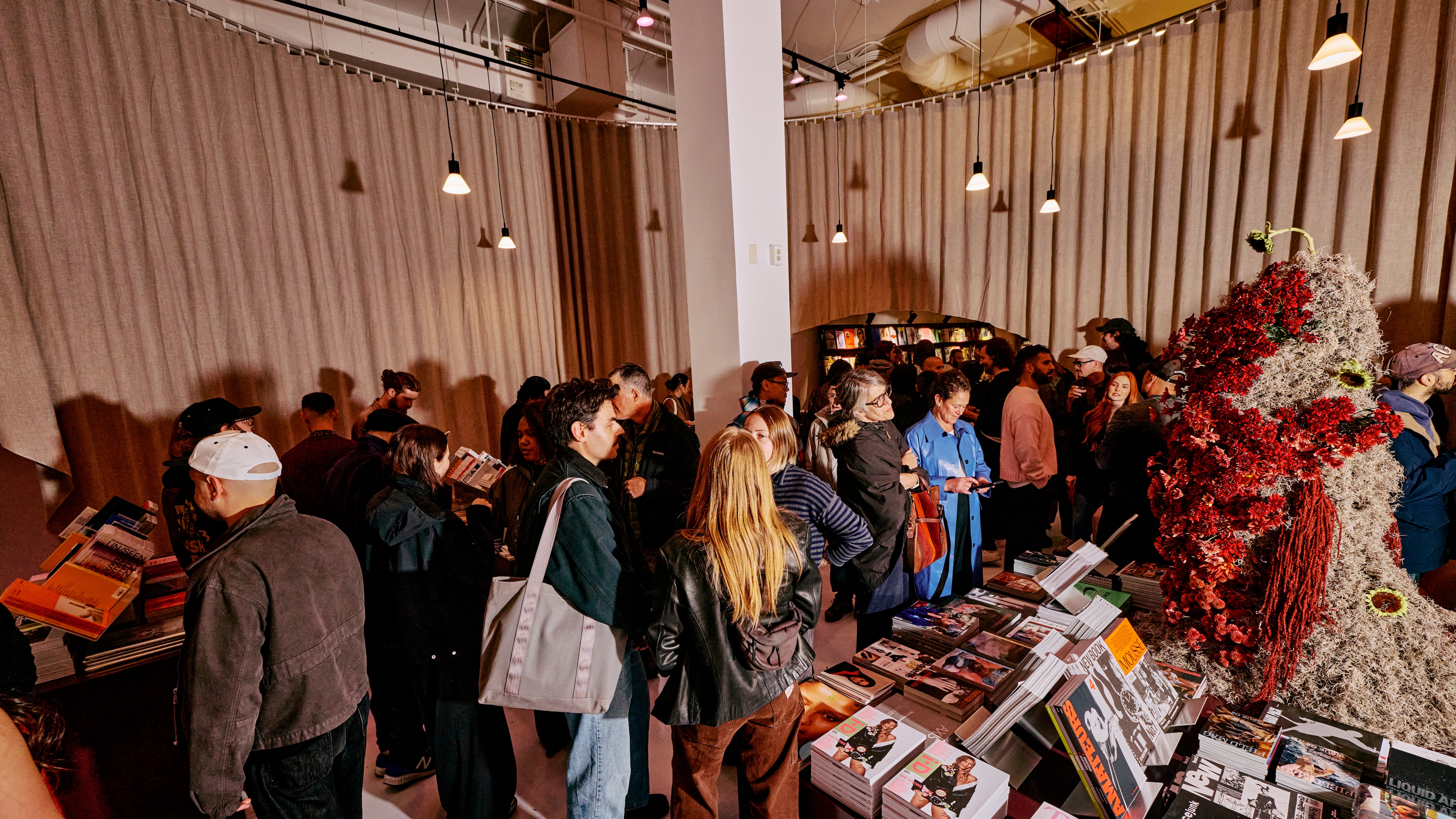
First things first: Chess Club is not a chess club. There are no knights, no rooks, no tournaments and no classes at the Chess Club downtown at Southwest 11th Avenue and Washington Street. What there are, instead, are tons of obscure, international books, magazines and zines, many with a focus on fashion and design.
This does not always come as welcome news to visitors who pop their head in looking for a game, which happens about once a week.
“I like a slightly misleading name,” says co-founder Andrew Simon, 38, who’s also a fan of downtown designer clothing store Stand Up Comedy. Simon and co-founder Christy Lai, 43, came up with the moniker together about three years ago. They liked the idea that “Chess Club” evoked: a place to go after school when you don’t want to go home yet, but you want to meet other like-minded people in a space that’s intellectually enriching.
The shop was still a work in progress, though, one sunny September afternoon when Simon and Lai gave WW a look around their new location, which opened to the public Oct. 30. Chess Club is growing and needed to move to this larger, more centrally located space after a year and a half at Northwest 6th Avenue and Glisan Street in Old Town, and a year of doing pop-up events before that.
Apparently, lots of Portlanders—and tourists who hear about the shop online and make pilgrimages while they’re in town—need a third space to stoke their intellectual curiosity, build community and peruse visual art zines about, in one example, “an outsider’s perspective into horse racing.”
The design centerpiece of the new Chess Club is a gigantic wheat-colored drape that wraps the entire store; it is essentially the shop’s walls. Architect Ben Fuglevand calls it a “drum.” Two arches cut into opposite ends allow staff to easily change the configuration of the space, open it up for book launches and DJ sets or make it cozier for artist talks.
“It’s a transformer,” Fuglevand says. “It’s doing a lot with a little.”
Now, three years into the print retail game, Simon and Lai have learned some lessons. Japanese fashion magazines are popular, but not as popular as a gay magazine from Amsterdam called BUTT. Chefs rarely want to read about food and architects rarely want to read about architecture; Chess Club is a place to get inspired by other disciplines, Simon says. And—dead-tree publishers, rejoice!—they underestimated the enthusiasm for print in 2026.
“What surprised us the most was how well everything went,” Simon says. “Like how much enthusiasm there was from the community, how people found us from all over the world, how publications wanted to have their product in our store and do events. There was so much enthusiasm.”
Chess Club’s creative producer Sid Pai got his job through being a super fan. Pai, 26, came to all of Chess Club’s pop-ups until eventually the owners figured out that his background in industrial design—and obvious passion for the brand—meant he should probably just work there. He’s now a part owner and took the lead on the build-out of the 1111 SW Washington St. space, which used to house West End Bikes.
Much of the pleasure of being part of Chess Club is meeting fellow super fans, Pai says.
“The best part is probably people coming in who know way more than I will ever know about magazines or a specific magazine,” he says. “When they come in and they’re just, like, ‘You don’t have this. Let me tell you about it.’ My job is to just be, like, ready to receive.”
In September, the magazine inventory was still stored in a closet in the back hallway until the space was fully built out. The three owners grabbed armloads of glossies and laid them out on a work table for perusal. The range is more obscure and amazing than you could possibly be picturing. A stylish food magazine Uno focuses each issue on only one ingredient at a time (“Tomatoes,” “Spuds,” or the new release, “Olives”). The Barcelona-based glossy magazine Apartamento has been publishing since 2008. A South Korean street culture magazine called Orange Boy is available in print at one and only one newsstand in the U.S. (yes, it’s on Southwest Washington Street).
“A lot of our publications we sell are born on the internet,” Simon says. Field Mag, for instance, was an outdoors and design website called The Field starting in 2015 that just published its second print issue ever.
Or, there’s the flip side: Some of the magazines only exist in print, in very low circulation numbers, and don’t publish their content online at all.
“Just the fact that we even stock it, we’re one of, like, a handful of stores in the U.S.,” Lai says. “We feel privileged to be able to carry this slice of community cultures.”
SHOP: Chess Club, 1111 SW Washington St., chessclub.art. Noon–6 pm Monday and Wednesday–Friday, 11 am–6 pm Saturday and Sunday.