Skip to main content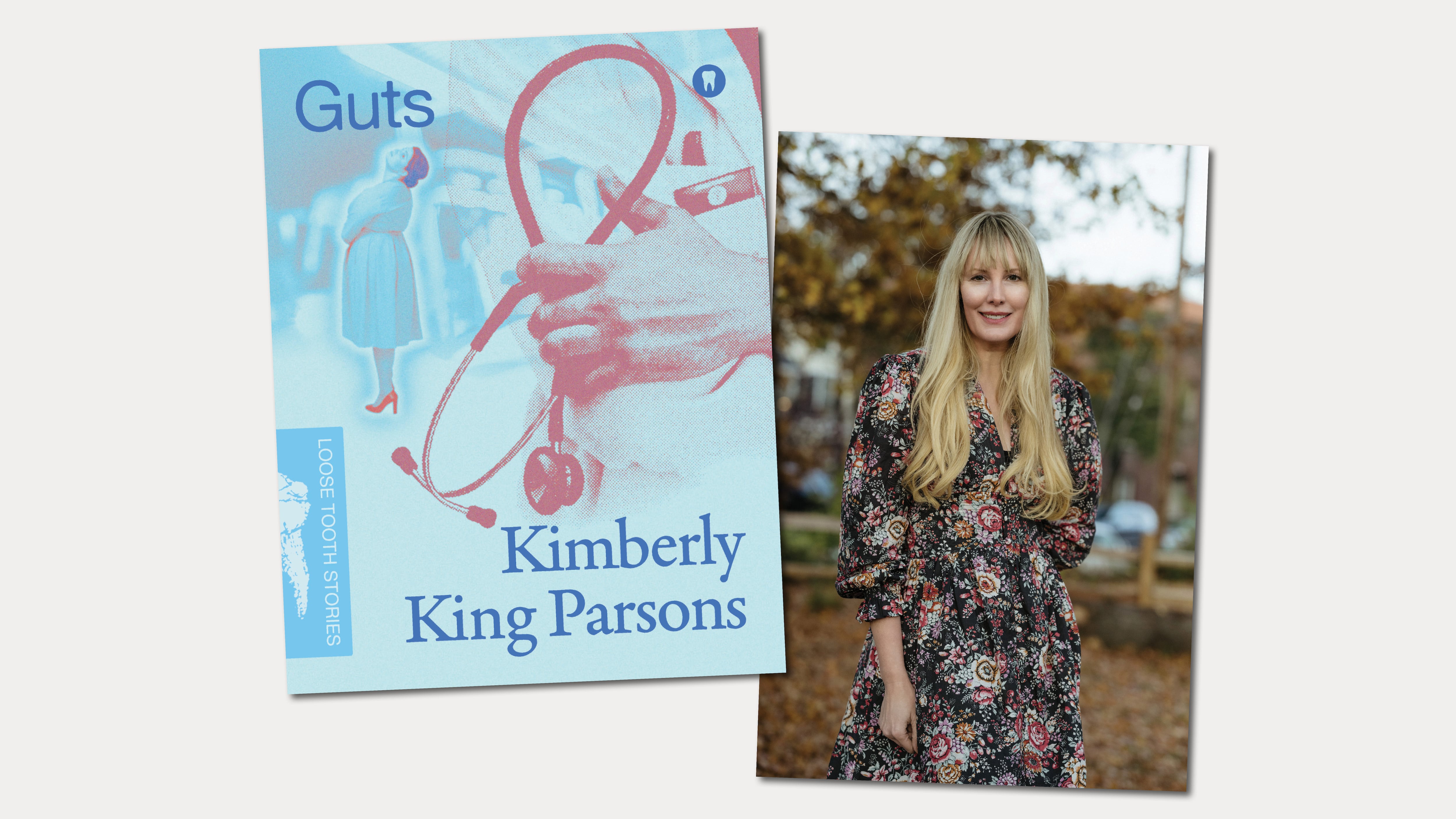
In 2019, Kimberly King Parsons broke one of the book world’s unwritten rules when she published a short story collection as her debut. Novels sell better, and conventional wisdom is that a fiction writer only “gets” to sell a story collection after proving their talents and market-worthiness with a big splashy book.
Not so for Parsons, the Lubbock, Texas–born author who moved to Portland in 2017 after a stint in New York. Black Light was long-listed for the National Book Award. Critics adored it.
“Every story in this collection is beyond remarkable,” Michael Schaub wrote in a review for NPR, “and Parsons proves herself to be a gutsy country-punk poet with a keen eye and a stubbornly unique sensibility.”
Parsons has since published the Oregon Book Award–winning novel We Were the Universe (2024), which was also a finalist for the Lambda Literary Award for Bisexual Fiction. Universe furthered her reputation for bottling the inner lives of gritty, selfish and frighteningly relatable characters.
The word “gutsy” showed up in a review of that book, too, this time a rave in The New York Times. But as useful as the word has been for critics describing Parsons and her work, it goes so much further in the author’s hands.
Earlier this month, a New York small press published the opening story from Black Light, “Guts,” as a standalone volume (Loose Tooth Press, 57 pages, $10). Its narrator, Sheila, is dating Tim, “an almost-doctor.” Their sex life is an increasingly clinical anatomy lesson, and Sheila takes his training-in-progress as license to diagnose everyone she sees. All the “sick, broken people,” the “careful limpers” and the “wheezers and wet coughers,” once a threat or nuisance, are all of the sudden “radiant, gleaming with need.”
Sheila is dry, hilarious and impressively shitty. She asks Tim if cadaver bodies are ever hot. “It’s possible that Irene is slightly fatter than I am,” she tells us of a domineering co-worker. But we get all this from inside her head. Outwardly, Sheila is a doormat. Life seems to have run her down a long time ago. Now she spends her free time drinking and riding the bus in a circle waiting for Tim to get off work. If she talks at all, she’s usually apologizing for something. More often than not, it’s her body.
She’s on “autopilot,” Parsons told me over the phone recently, “you know, being a spectator of your own life, being dragged about.” Our conversation has been condensed and edited for clarity.
WW: I read this story in two different sittings. I thought about it a million times in the two days between starting it and finishing it, though I wouldn’t say I was running back. Its world is not exactly a pleasant place. Tell me about that—conjuring a space that is so engaging but also completely awful.
Kimberly King Parsons: I’m refreshing my own memories. It has been a while since I thought about Sheila. She is battling all the general body-image shit that every woman, ever—it’s a tale as old as time! [laughs]—has dealt with. And then there’s the, sort of, disconnect with the physical body, which I personally feel quite a bit. I like my body, I appreciate it, but I sometimes feel like I’m a little bus driver inside there. A true disconnect. A brain in a jar or something.
What do you mean by a bus driver in there?
We might not put this in the thing…[laughs]
No, no, please continue.
Sometimes I have this sensation of being, like, a little guy in my own mind, driving the bus of my body through the world. It’s not a bad thing. [Those are] also just the times when I, or I’ll say this for the character. We’ll say, the times when Sheila—
[Laughs] Whoops.
—when Sheila feels most connected with herself is when she’s physically intimate with someone or when she’s high. And I can relate to that. These escapist moments actually bring you back to the body.
People have responded to this story, and to a lot of your writing, as being very embodied. But you’ve said before that you don’t feel like an especially embodied person.
People will say that about my fiction. It’s always “so embodied” or “so sensual.” It’s funny to me because I think it’s just characters who are really trying to feel that connection with their bodies. And so it almost—I come at it sort of sideways.
This character in particular is looking for tethers to that physical form, because I think it has not been a hospitable place for her, you know? She’s had this negative experience of just moving in the world in her body.
It’s no secret that the best observers are usually the people left out of things. If you’re saying you don’t feel embodied, or you don’t quite understand what apparently comes naturally to most people, do you think that has made you particularly good at describing the feeling of being embodied?
When you even just said, like, the “thing that comes naturally for most people”—I don’t believe that at all. I love writing about those moments. I love writing about sex stuff and drug stuff because those are both the times that—it’s just this getting underneath the everyday. You really can’t escape yourself through somebody else. Like, the way that Tim touches [Sheila] makes her feel simultaneously embodied and horribly disembodied, you know?
Essentially, he soothes her anxieties by giving names to her body parts in this very anatomical way. This is this part of you, this is this part of you. And it gets more and more sexual, but in this doctoring, reassuring, affirming way.
There’s also this idea of a person who is reaching his full potential, or who she would take as that. Because she feels like such a—I mean, I love writing sort of bighearted fuck-ups or, like, losers, you know? People who feel like they’re on the outside of their lives.
I understand why you could hate a person like this. She is so passive in so many ways. But her mind is so alive, and I love the contradiction of someone who is this really bright light, you know, internally—her interior mind is ablaze—and then she’s just like this….You would walk right past her on the street. You would never even notice her.
Later in the story, Sheila gets drunk at a dive and starts telling this random woman that she’s a doctor. The woman is bald, and Sheila just says, “What kind of cancer do you have?”
Yeah.
The woman kind of laughs it off. But eventually she concedes that she has bone cancer. And Sheila says, “Oh, bone? That’s no problem.”
You’ll be fine!
That scene feels like a very tidy summation of what Sheila is after, what she wants from her relationship with this guy.
She wants that. She wants somebody professional to sign off on all her bullshit, you know? Please, somebody, tell me I’m fine. Which is what all of us want, right? Somebody to be like, you’re totally fine. You’re totally normal. Don’t worry.
READ: Guts by Kimberly King Parsons from Loose Tooth Press, loosetooth.press. Available locally at Powell’s. $10.