Skip to main content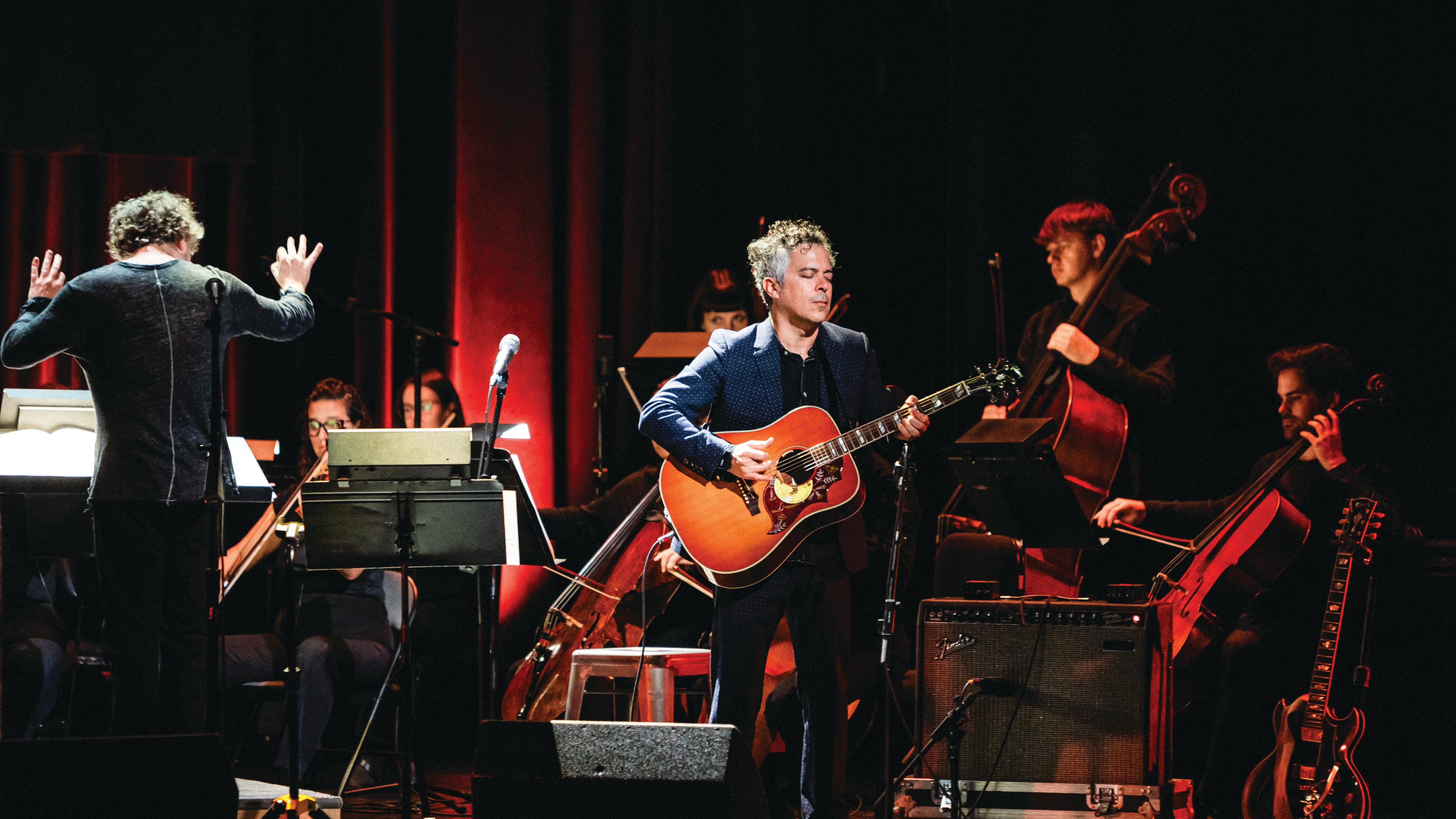
Regardless of genre, you know an earworm when you hear it.
Say you’re at a classical music concert. And say you’re not a classical music person. You hear a string of notes and think, Oh right, that one! Naming it is hardly the point. Even if you don’t know the name Erik Satie or how to pronounce Gymnopédie (zhim-noh-PAY-dee), you know the tune from so many melancholy movie scenes. Or maybe it’s Beethoven or Brahms. You know this song—even if it should technically be called a “piece” or “composition”—and therefore you belong in this velvet seat.
The Oregon Symphony, and many other symphonies around the world, have been leveraging that dynamic for years—but in reverse.
Orchestras have made efforts to appeal to wider audiences with “pops” programming since 1885. It started with lighter and shorter compositions. Songs from the Great American Songbook crept into the repertoire, and traditions like catching Handel’s Messiah at Christmas blossomed. More recently, the approach has expanded to things like the live movie score (the Oregon Symphony plays the score to The Princess Bride on Oct. 18) and the rapper with the symphony trick (it also hosted Rick Ross in May).
But pops programming has grown more sophisticated as lines dividing popular and classical music have dissolved. And the Oregon Symphony is pushing especially hard to move that needle.
“I think we’re one of the most progressive orchestras in the country,” says senior director of artistic planning for popular music Darcie Kozlowski. “It really is like, all music fits under the tent.”
In 2025, the Oregon Symphony played with the genre-blending singer-songwriter and violinist Andrew Bird, giving his folk-inflected chamber music compositions the full orchestral treatment. The Decemberists similarly added 76 string, woodwind, brass and percussion players to its regular five-piece setup for a pair of shows at the Schnitz last fall. Blurring lines a little further, M. Ward played a night of his textured folk tunes with a slightly scaled-back orchestra at Revolution Hall that same season.
Portland seems to be up for it. The Oregon Symphony says attendance for its pops programming grew 30% from 2023 to 2025, with nearly 20,000 more tickets sold. But the shift is not just a push to get butts in seats. It’s also moving the symphony itself in new and unexpected directions.
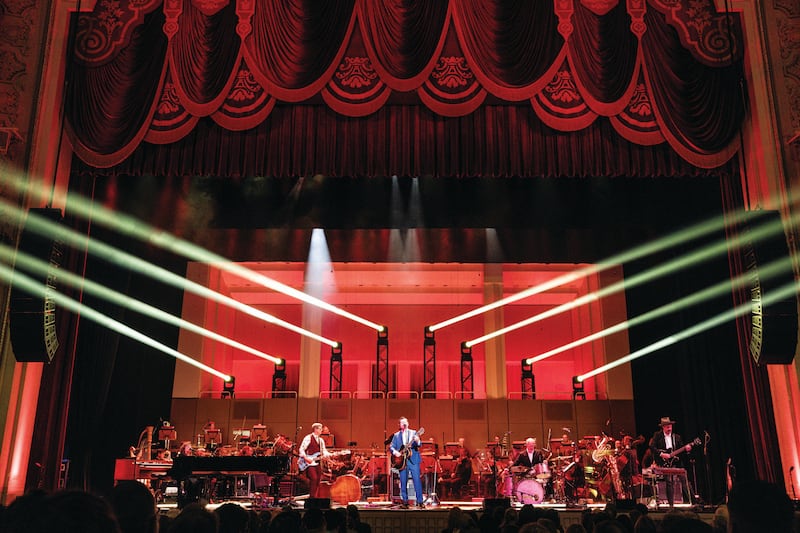
“You’ll see them spin a cello, you know, get kind of gritty with it, and dig in in a way that like, you’re not going to be doing with Mozart,” Kozlowski says. “Because the shows are louder, the crowds are going to be more responsive, and the orchestra absolutely thrives on that.”
No doubt, “It’s a completely different day at work.”
That newfound energy has also made inroads for an exciting kind of mixed bill, where a show centering on a pops performer might open and/or close with contemporary classical compositions.
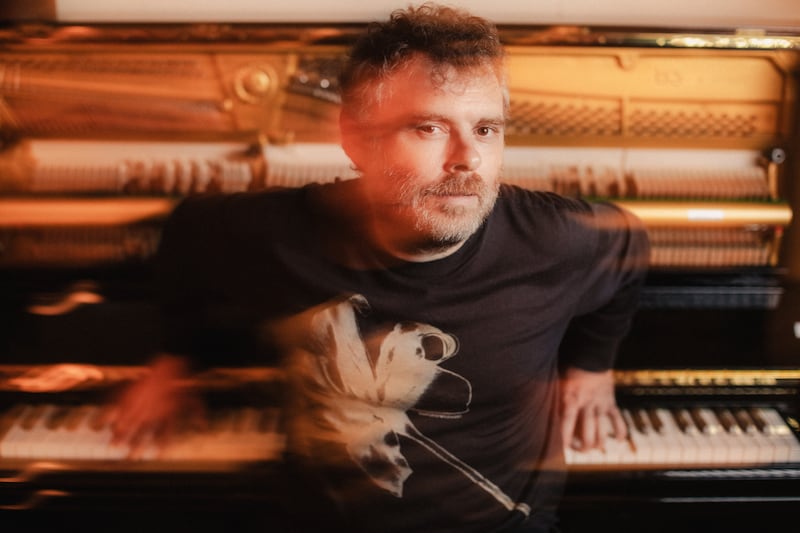
Gabriel Kahane is particularly well suited to these gigs. Kahane is both an indie singer-songwriter and a classical composer and conductor. He’s worked with the Oregon Symphony since 2018, performing his own work, which straddles these two worlds. He’s also served as creative chair for projects like the M. Ward show and a “concert crawl” that brought Pulitzer-winning composer Caroline Shaw’s string quartets to a series of venues across the eastside, moving from Polaris Hall to the Buckman nonprofit Center for Native Arts + Cultures and ending at Show Bar at Rev Hall.
Kahane is most excited about this kind of “cross pollination”—instances in which popular and classical music blend into some other, third thing.
“So much of it is just about lack of entry point, lack of familiarity,” he says. But “when you have someone like an Andrew Bird, who’s advocating to his fans for the Dvořák or the Ravel that the orchestra is opening the set with, the fans really, really eat it up.”
It’s also part of Kahane’s job to keep the orchestra busy during these shows by writing more elaborate musical charts. There is quite simply less music happening in a piece of music written for five people than one intended for 76, and without special attention, orchestra players are often left holding single notes measure after measure.
“You want the musicians to be leaning forward in their seats,” Kahane says, “and to not just be wallpaper.”
Kahane’s own work often uses classical forms to grapple with modern issues—a symphony or concerto with the soul and immediacy of a folk song. Recently, that’s included emergency shelter intake form, an oratorio about the housing crisis, and The Right to Be Forgotten, a folk opera inspired by spending a year off the internet.
On Oct. 24 and 25, Kahane premieres Every love song is a protest with the Oregon Symphony. He describes the new piece as “sort of about our relationship to each other, both inside and outside of politics” and cites a diverse range of influences hovering around “an ethic of love.”
Kahane is also sandwiching the new composition with classical works—citing some influences directly. To open, alongside the Oregon Symphony, former Congressman Earl Blumenauer will narrate Aaron Copland’s Lincoln Portrait, a composition from 1942 that excerpts the Gettysburg Address. And the symphony will close with Symphony No. 4, “Autochthonous” by William Grant Still, who is often referred to as the “dean of African American composers.”
Kahane’s performance is part of Sounds Like Portland, a festival the symphony grew into a series that brings all manner of Portland musicians into the fold.
This year, the series includes shows with Portugal. The Man and John Craigie, as well as a few others that push the envelope further. Portlander Edna Vazquez is mixing her mariachi and Mexican psychedelic rock influences with the full weight of the orchestra. Caroline Shaw is presenting a piece of music she wrote to accompany a reading of the children’s book The Mountain that Loved a Bird—a performance that will also feature the preprofessional dance company Dance West and the Pacific Youth Choir.
Season after season, there seem to be less regular days at the office on the calendar. And it’s hard to imagine any musicians feeling like wallpaper at these shows.
See the rest of the 2026 Fall Arts Guide here!