Skip to main content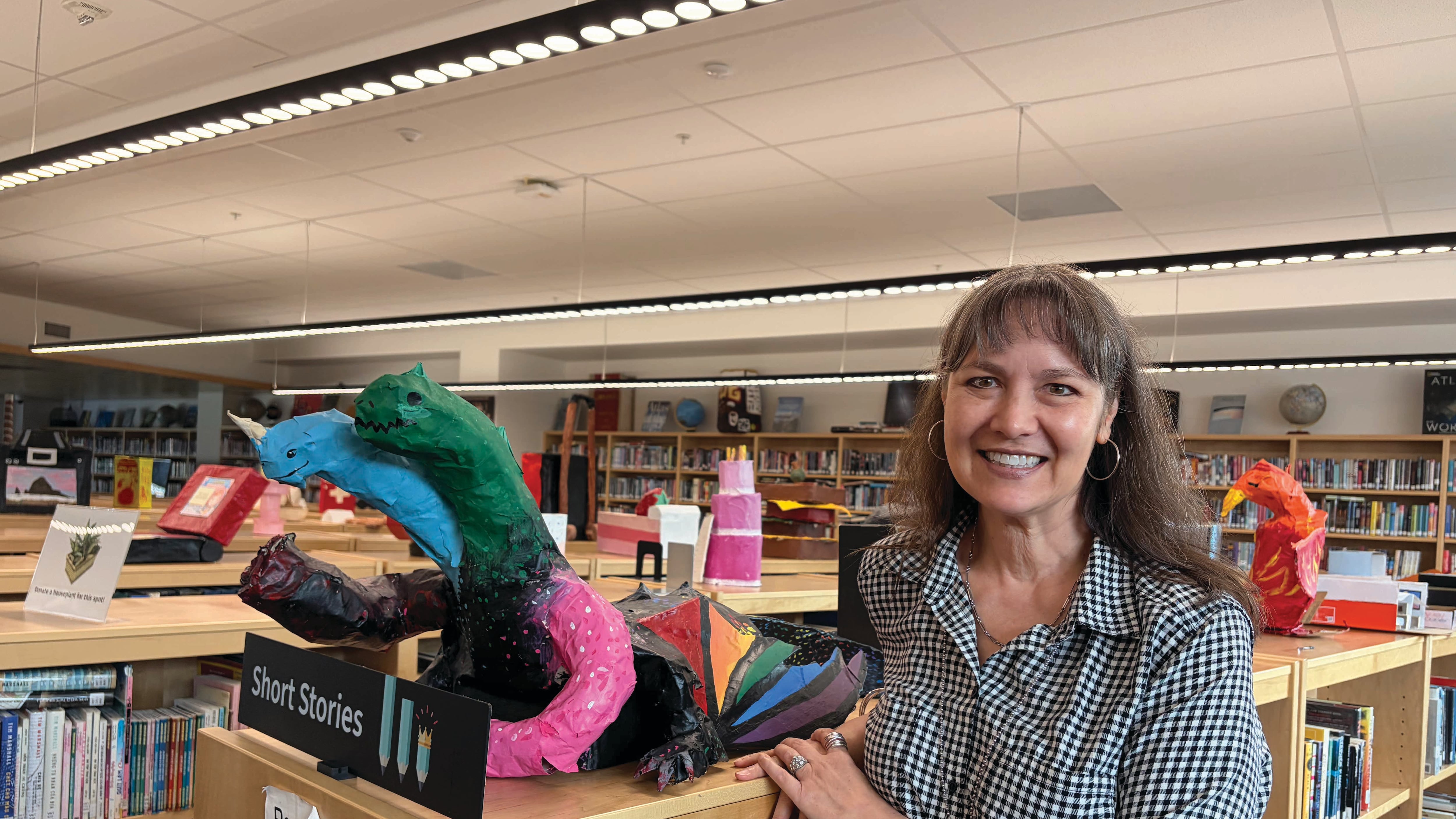
In 2022, Paige Battle was on a mission. She had learned that Anthony Doerr would be visiting one lucky Portland Public Schools high school to discuss his recently published novel Cloud Cuckoo Land with OPB’s Think Out Loud.
“When it was announced he was coming, I thought, I will do whatever it takes to make sure Grant is the school that’s selected,” Battle recalls.
The problem was that Grant classes needed to be teaching Doerr’s work to qualify, and only one English teacher had worked Doerr’s seminal novel All the Light We Cannot See into their curriculum. So Battle decided to create a class of her own.
She gathered a group of interested students to discuss Cloud Cuckoo Land over Domino’s pizza during lunch. That November, they heard the Pulitzer Prize–winning author speak with OPB’s Dave Miller from the comfort of the Grant library.
Battle says these events, where students can not only read world-renowned authors’ work, but hear them discuss it live, takes reading “one step further,” and goes far in fostering an appreciation for literature beyond their time at Grant.
“I want students to read for fun and to have that become a lifelong practice so that when they leave here, it’s just part of your life,” Battle says. “It doesn’t have to be solely academic.”
However, author talks are like any school library resources: coveted, elusive and, more often than not, found beyond school doors. Recently, their rarity has only grown. Two years ago, PPS faced a roughly $30 million budget deficit. Rather than eliminate entire district programs, it opted to cut school library positions.
“While PPS did make difficult budget reductions in 2024 that affected library staffing and resulted in reduced library hours at some schools, the district made a deliberate decision to maintain certified teacher librarians,” PPS director of media relations Valerie Feder tells WW.
Today, that means each school’s library is staffed with at least a half-time certified “teacher librarian,” a title that refers to librarians who, in addition to a degree in library science, have a teaching certificate. This combined expertise allows them to not only maintain an operating library, but also create relevant reading and research-based curriculum.
PPS is still one of the best districts in the state in terms of library resources. By contrast, 59 school districts across Oregon have no library staff, period, according to the Oregon Department of Education. Still, PPS librarians say limited library hours and fewer chances to connect with students have become hallmarks of their job.
Battle and several industrious librarians have refused to diminish their students’ experiences as resources dried up. In response, they’ve launched a series of student book clubs that get kids excited about reading, sometimes putting them in rooms with some of the biggest names in letters, like Doerr.
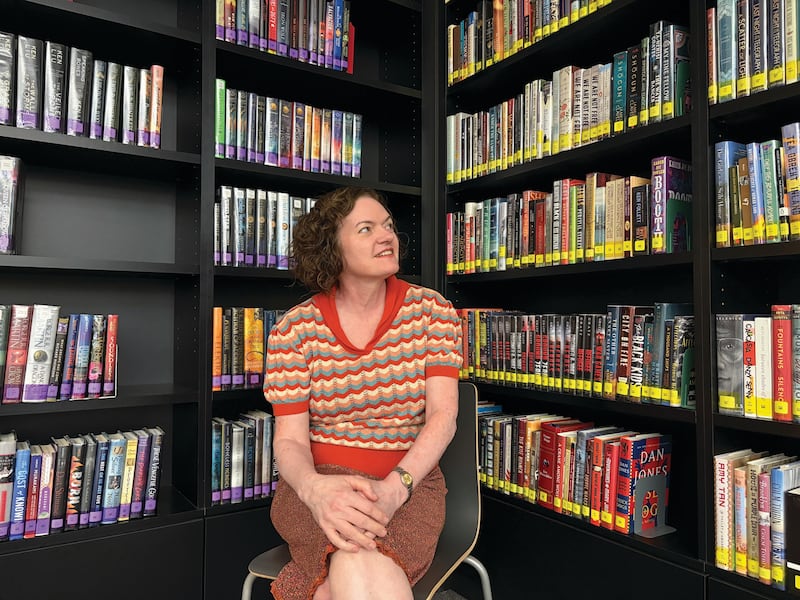
Melissa Blount has split her time as the librarian for both George and Roseway Heights middle schools for the past two years, taking on around a combined 900 students. Blount also has what she calls her “after-school, part-time job” coordinating George’s Oregon Battle of the Books team. OBOB, as students know it, is best described as bookworms’ alternative to competitive sports. The program curates a 16-book reading list for three different grade divisions each year, and teams of four to five students are grilled with trivia questions from the selected books.
With the power of parent volunteers, most PPS schools have enough OBOB teams to host their own in-school tournaments. At George, one of PPS’s seven Title I middle schools, where 66% of students are economically disadvantaged, finding similar volunteer support proves difficult.
“The parents are very supportive of teachers and very caring, but they’re really busy,” Blount says. “They usually have other kids. They have jobs. And so our volunteer list is pretty short.”
To keep the team afloat, Blount has turned to SUN Schools, Multnomah County’s after-school care program, and the Immigrant & Refugee Community Organization. Whether it be covering annual registration fees or handling building use permits, both organizations provide administrative aid that makes OBOB meetings possible.
IRCO’s staff in particular, Blount says, has the expertise to navigate the language and cultural barriers that arise in an English-only reading program.
While George’s team has “never been thriving” competitively, Blount says, she’s proud to help keep the program afloat. “We’re tenacious and we’re not going to give up. We’re going to make this opportunity happen for kids,” Blount says.
Nancy Sullivan, McDaniel High School’s teacher librarian, says both the school’s library assistant and textbook clerk positions were cut in 2024, leaving her to juggle all three workloads. When she’s not doing one of those three jobs, she frequents garage sales and used book stores to scrounge up the needed three-dozen-plus copies of books for her lunchtime book club, the Library Readers and Thinkers, or “Library RATs,” which counted 44 tween members last school year. (Sullivan also started Verselandia! at McDaniel in 2005, a youth poetry slam that’s now citywide and run by Literary Arts.)
Sullivan started the RATs in 2015, funding its modest overhead with grants and community donations. The group has read everything from Maggie Stiefvater’s young adult staple The Raven Boys to modern favorites like Ruth Ozeki’s The Book of Form and Emptiness. These books aren’t typically found on English class syllabuses, but that’s half of the club’s magic—the RATs create a reading list of their own.
“A lot of people think that kids don’t read. And I have so many readers,” Sullivan says with a chuckle. “Kids are reading, kids are reading whole books—and loving them.”
At Grant, Battle’s initial Cloud Cuckoo Land reading group has persisted. The group has since transformed into the Quarterly Book Study, where students plow through four books every school year.
Picks oscillate between classics and fresh-off-the-press bestsellers, and Battle strategically aligns the reading list with existing programs that can absorb the group’s costs. In 2024, the group employed Multnomah County Library’s Everybody Reads program to receive physical copies of the selected countywide read, Gabrielle Zevin’s Tomorrow, and Tomorrow, and Tomorrow, through the donor-supported Library Foundation.
Battle also frequently taps Literary Arts, the local nonprofit behind the Portland Book Festival. In conjunction with its Portland Arts and Lectures series, Literary Arts provides free tickets to attend the lectures and classroom copies of the visiting authors’ featured books.
While Battle’s high schoolers may not comprehend the scale of what their school librarian has done for them (yet), many of them have attended lectures by such literary titans as Zadie Smith and Percival Everett before leaving the 12th grade.
See the rest of the 2026 Fall Arts Guide here!