Skip to main content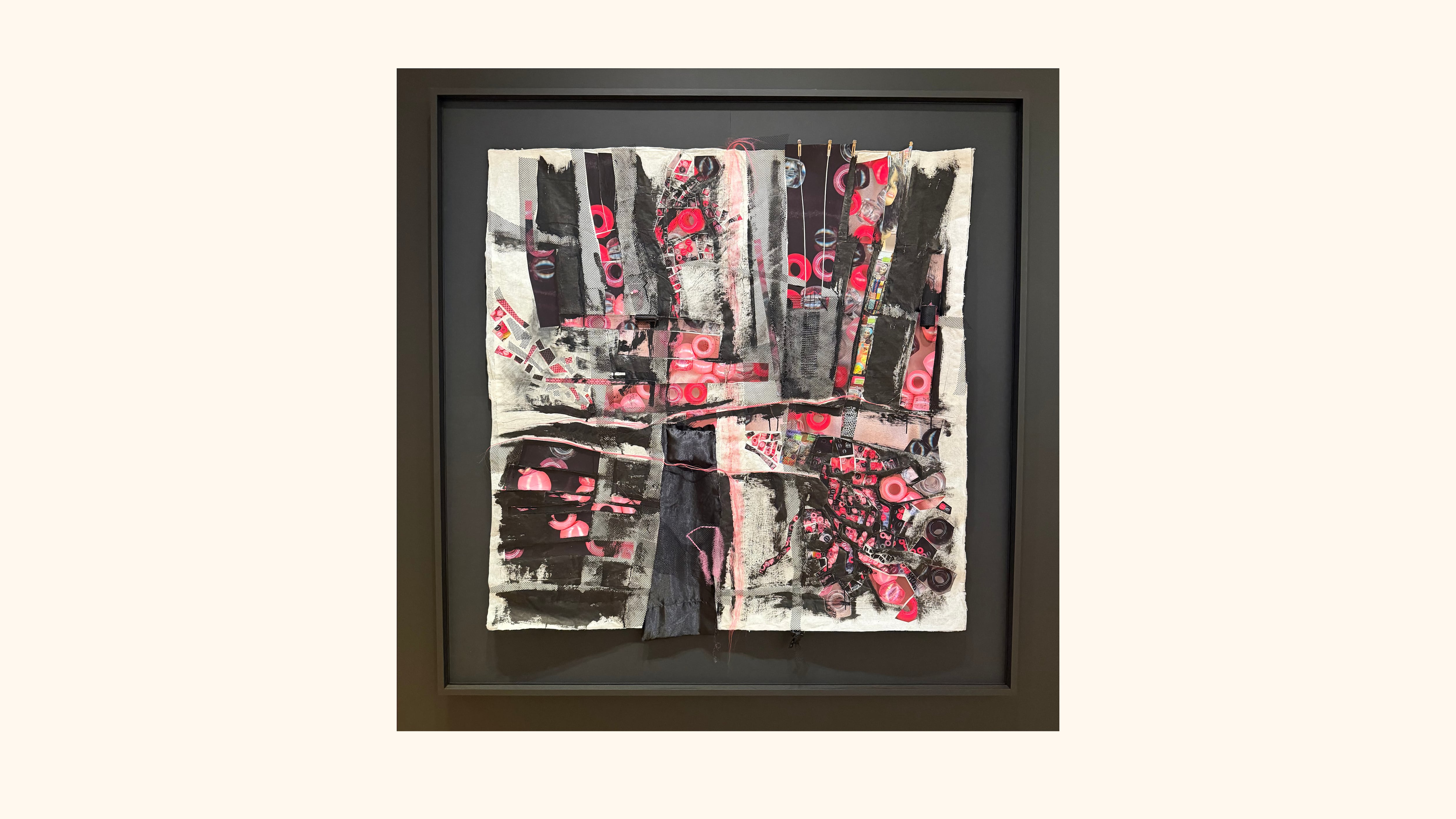
Portland’s reputation over the past few decades has transformed from a cloistered, homogenous, wet forest village to an inclusive, radically progressive, and powerfully pro-Black city of national note. And nowhere is this evidenced more brilliantly than in the newly renovated Portland Art Museum, where the new BAE Galleries do more than place Black identity at the forefront—they’ve created the space to explore the depth and wealth of Black culture for generations to come.
Before the museum’s grand unveiling of its newly constructed Black Arts and Experiences Galleries in 2025, a 2017 exhibition called Constructing Identities brought historical and contemporary paintings, sculptures, prints, and drawings by prominent Black artists from the 1930s to the midcentury civil rights era. In 2018, the Hank Willis Thomas exhibition All Things Being Equal delved deeper still into the Black American experience, and in 2023, Intisar Abioto changed the game once again, curating the critically acclaimed exhibition Black Artists of Oregon.
Now, after a grant (and guidance) from the 1803 Fund, a Black femme-led real estate investment firm built around generational wealth, ownership, and collective power, the museum is uniquely equipped to challenge perceptions not only around Black art, but around Black subjectivity versus objectivity and Black futures. As Rukaiyah Adams, CEO of the 1803 Fund, says of the galleries, “Everywhere we are is the Blackest place on earth.” The Portland Art Museum enthusiastically and wholeheartedly included.
Today, visiting the Portland Art Museum feels more like a homecoming than ever for not only Black artists and Black art aficionados, but for Portland’s Black community as a whole. Here are a few of my own favorite pieces now on display in PAM’s BAE galleries:
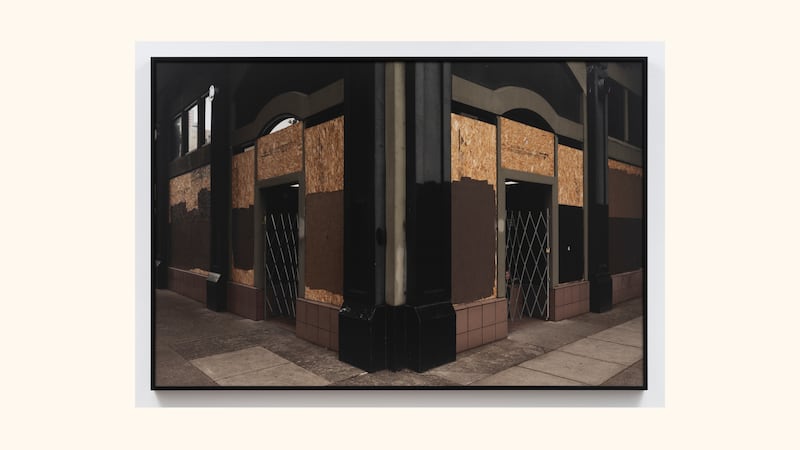
Carrie Mae Weems
Painting the Town
Part of Weems’ Painting the Town series, this striking image does something more than document Portland’s George Floyd uprising, which was met with violent responses from law enforcement and a commercial response that left most of our city’s commerce centers not only boarded up, but also with the oft-graffitied boards constantly buffed in what would eventually become abstract layers—shades of brown, beige, and black that seemed to reflect a diaspora that remained a target of hate. For Weems to capture the moment through this frame feels both powerful and empowering—even at their most vitriolic, our enemies will never erase us.
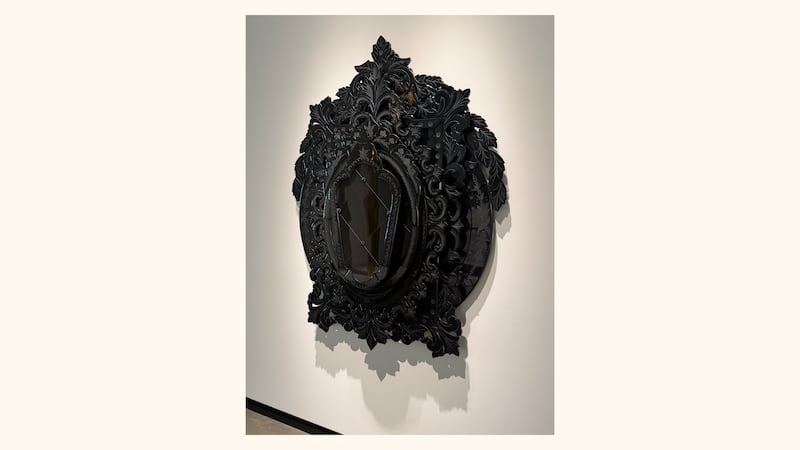
Fred Wilson
I Saw Othello’s Visage in My Mind
Standing before Fred Wilson’s intricate black mirror assemblage of glossy, ebony Murano glass may conjure comparisons to the Disneyesque silhouette of Maleficent’s magic mirror, but Wilson’s interpretation does something perhaps even more magical. By juxtaposing the luxurious embellishments of a decorative mirror against a reflection that forces the viewer to examine a distorted image that speaks directly not only to Blackness but also what Blackness means in the context of both comfort and power, this piece does more than delight in extravagance; it deliberately asks the viewer, “What do you see when you look in the black mirror?”
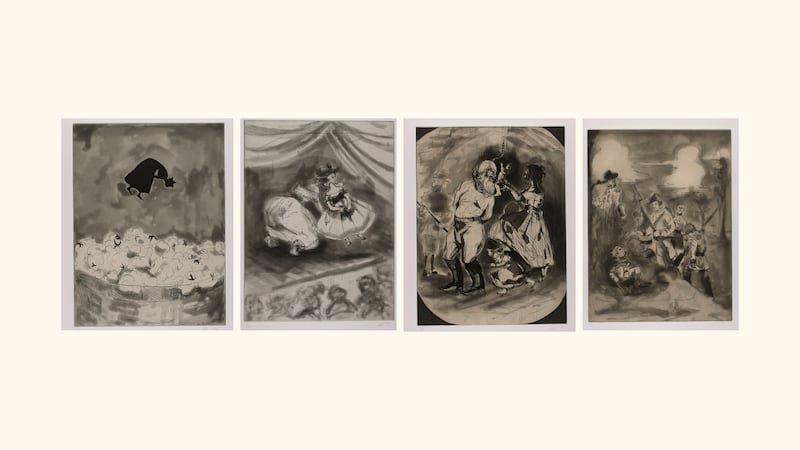
Kara Walker
Cotton
(Untitled) John Brown
Li’l Patch of Woods
Vanishing Act
In this quartet of spit bite etchings on paper, Walker turns a candid, unflinching lens toward the antebellum South, unflinchingly portraying the horrors of the period with chillingly stark and eerily familiar imagery that feels burned into the DNA of Black North America. In Cotton, a tiny woman falls, folded middive, into a comically huge bowl of cotton—a soft landing marred by the plant’s daggerlike burrs. In (Untitled) John Brown, the abolitionist is prepared for his execution by a young enslaved girl while his daughter watches in terror. In Li’l Patch of Woods and Vanishing Act, Walker deliberately evokes the grotesque body horror of enslavement by making the viewer acutely aware of the violent, exhibitionist, and sexualized acts our ancestors were subjected to.
Lisa Jarrett
Migration Studies (No. 110, Picture Day at MLK Elementary)
A trip to the beauty supply store is a Black girl’s rite of passage; it is a watershed moment to choose her first silk bonnet, her first set of colored beads and, if she so desires, her first bundle (or five) of synthetic hair. In Migration Studies No. 110, Jarrett captures not only the whimsy, magic, and colorful escapism of those trips to the neighborhood beauty supply shop but also the trepidation, anxiety, and delicate pride so many Black girls have felt on picture day—wearing a newly plaited arrangement, or activating a fresh silk press, or swinging a headful of highly coveted knotless box braids extended with the same extravagantly hued synthetic Kanekalon fiber employed by Jarrett as a detail of this multidimensional collage.
SEE IT: Portland Art Museum’s Black Art and Experiences Galleries, 1219 SW Park Ave, 503-226-2811, portlandartmuseum.org. 10 am–5 pm Wednesday–Sunday. $27.50.