Skip to main content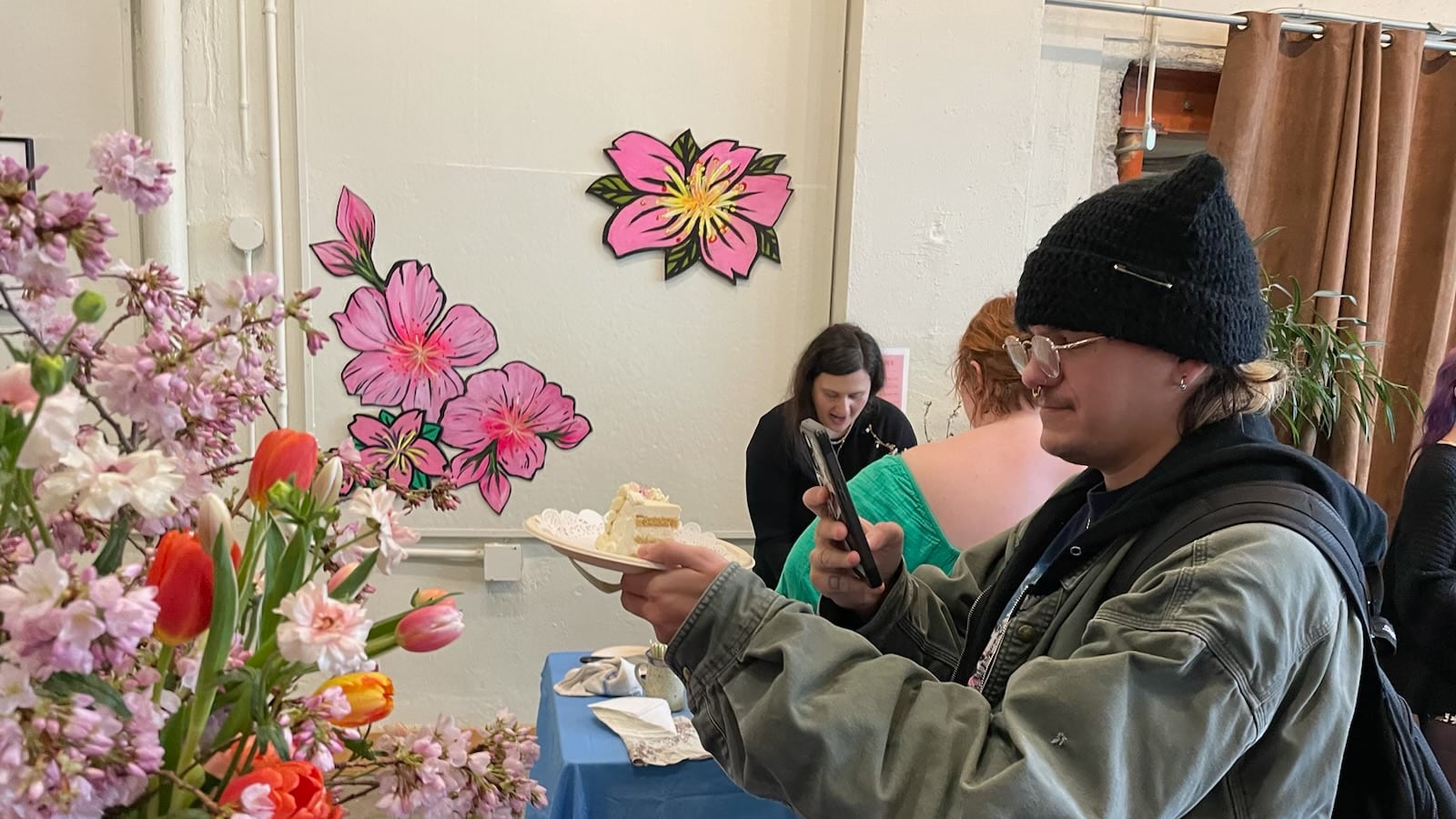
“We essentially wanted to figure out a way to embody what it feels like to re-create a grove of cherry trees,” explains Marianne Copene, director of the Flower Works program at p:ear. “The vision for the event was to honor Henry Sakamoto and his legacy, welcome in the return of spring, and celebrate setting intentions for the new year.”
The March 12 event at p:ear gallery was a one-off, pop-up floral installation titled New Bloom. The event, featuring floral designs highlighting the delicate beauty of our beloved cherry blossoms, was a tribute to the life and work of Henry Sakamoto, the icon of Portland’s Japanese American community who helped establish the Akebono cherry grove through Tom McCall Waterfront Park that blooms brilliantly every spring. Sakamoto was born to Japanese immigrant parents in Portland in 1927. At 15, he was taken to an internment camp. After his release two years later, he went on to earn a business degree from the University of Oregon, becoming a business leader not just in Portland’s Japanese American community, but for the city’s culture overall.
Punctuated by the Japanese American Historical Plaza’s stark reminders of what was once Japantown, the trees along the waterfront, in Sakamoto’s words, “are symbolic of international friendship.” The Insta feeds may see our waterfront in full bloom as an aesthetic herald of Pacific Northwest spring, but the reality is that the park and the trees stand as a testament to the resilience and work Japanese Americans did to rebuild their entire community after being released from the internment camps, when many found little or nothing to return to.
“We wanted to honor Henry [Sakamoto] as we navigate this moment on a worldwide view,” Copene sayss. “We are really trying to tell people’s stories through flowers.”
For the uninitiated, p:ear is Portland’s premier homeless youth education, art, recreation, and job training drop-in program, and Copene leads p:ear’s new Flower Works program, taking this intimate concept of storytelling through botanical artistry and, on this occasion, guiding her colleagues through the creative process, delivering events and projects such as New Bloom joyfully and with tremendous reverence.
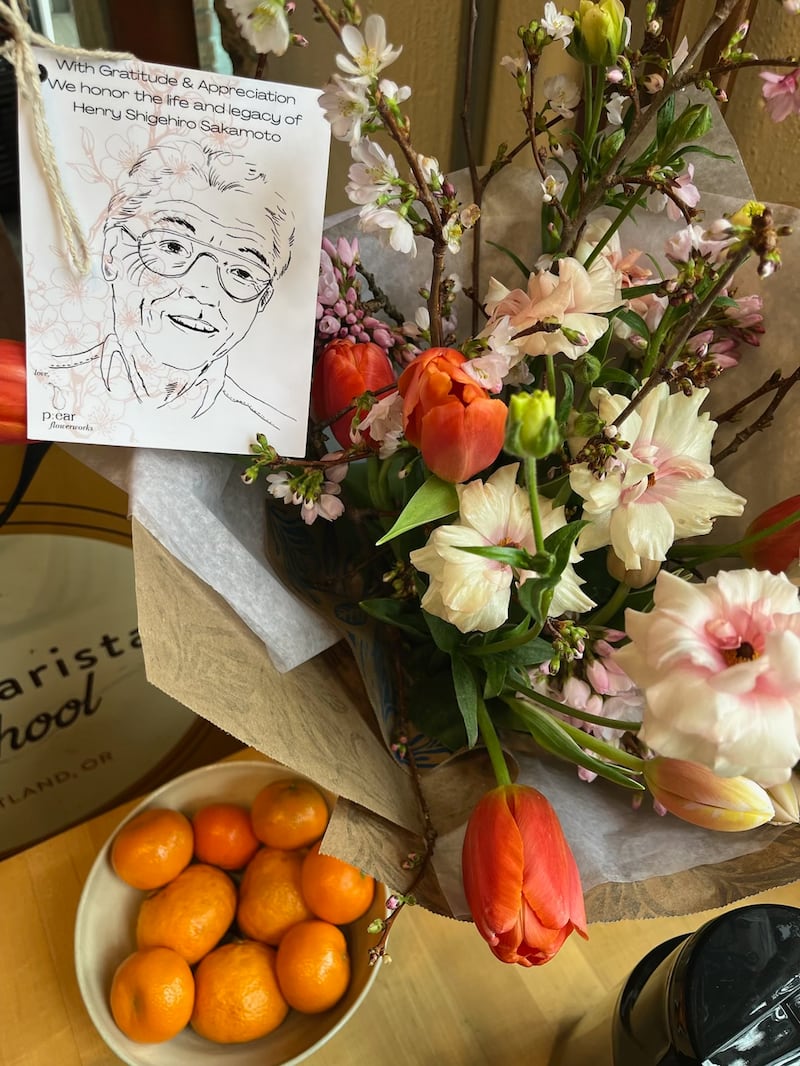
That this event is a tribute to the work of Henry Sakamoto is particularly poignant. Sakamoto died in December 2025, marking this as the first cherry blossom spring without him.
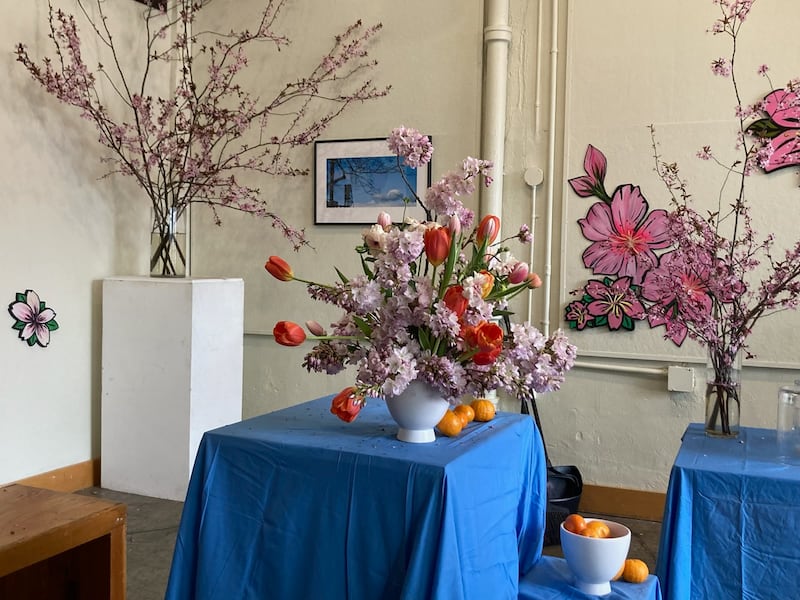
“We basically wanted to figure out a way to embody the feeling of a grove, really showcasing the trees,” Copene says of the New Bloom installation. “We wanted the installation to make us feel small, with tall branches suspended from the ceiling to kind of dwarf the viewer, allowing them to feel what it felt like to be under the canopy of spring.”
“One of the things that is really beautiful about the Cherry Blossom Festival is how it’s been celebrated,” Copene says. “Farmers would go [to the waterfront] to welcome spring, set intentions, and say prayers for the new year to come. For us, because we’re just starting off with a new program, it was really powerful for us to use both Henry’s vision and his legacy as a way to set our intentions of how we want to occupy space.”
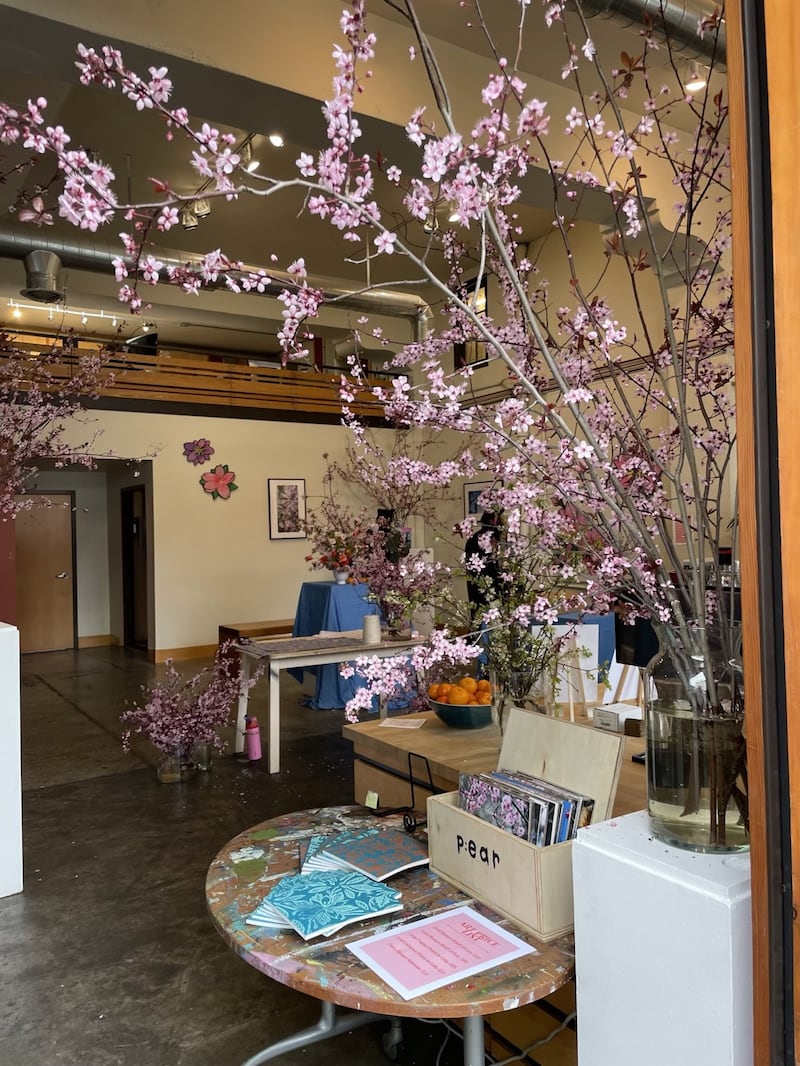
In preparation for the event, the youth participating in p:ear’s Art Works program did collaborative art pieces, painting cherry blossoms on wood or exhibiting photos taken throughout Old Town of cherry blossoms that were sold from the walls of the gallery space. Through p:ear’s Works programs, youth baristas in Coffee Works created an exclusive drink menu of seasonal drinks, the Flower Works program made flower wraps and sold bouquets, and also created the pop-up’s central floral installation using cherry blossom branches tall enough to tower over the entire proceedings, much like the trees on the waterfront form a pastel canopy to herald the return of spring. In this way, the event paid tribute not only to Sakamoto and the changing of the seasons, but also the strength and resilience of a community that supports each other despite the odds.
Henry Sakamoto’s son Blake spoke about his father and about growing up in Japantown, reminding everyone to enjoy the cherry blossoms while they’re there. But most importantly, the younger Sakamoto encouraged attendees to simply appreciate the legacy of Japanese Americans in our community.