Skip to main content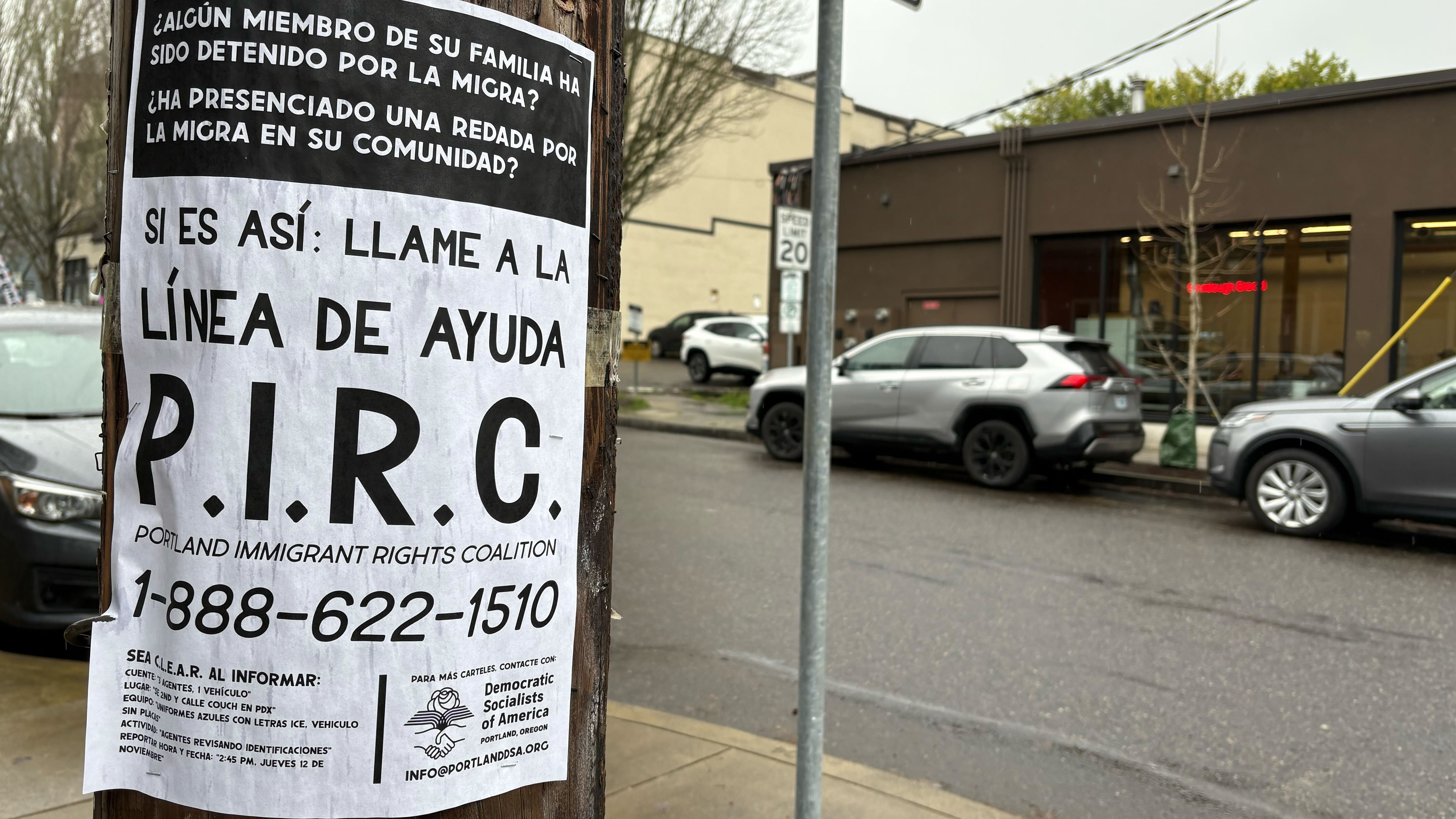
It long ago became a cynical fashion to snicker at the liberal lawn sign: “No matter where you are from, we’re glad you are neighbors,” says one classic, in Spanish then English then Arabic, bringing a sense of good feeling to—the criticism goes—the leafy single-family-zoned neighborhood where few newcomers could actually afford to live.
Whatever your feelings, in today’s world, immigrant-supporting signs that in recent months proliferated on Portland’s telephone poles, storefronts and stoops convey a practical urgency that sets them apart.
“STOP: NO ICE ACCESS IN THIS BUSINESS,” reads a “NOTICE TO ALL LAW ENFORCEMENT & IMMIGRATION AGENTS” in the window of my neighborhood pub. “IF YOU ENTER, YOU ARE TRESPASSING AND WE WILL PURSUE LEGAL REMEDIES.”
Another one: “HAS SOMEONE IN YOUR FAMILY BEEN DETAINED BY I.C.E.? HAVE YOU WITNESSED AN I.C.E. RAID IN YOUR COMMUNITY? IF SO, CALL THE P.I.R.C. HOTLINE”
While many flyers refer to the Portland Immigrants Rights Coalition, most were in fact produced and distributed by other community groups, say PIRC coordinator Alyssa Walker Keller, even as the leaflets sometimes include hotline and know-your-rights information drawn from the PIRC website and others.
“I always appreciate it when people check in with us ahead of time and send them to us,” Walker Keller says, referring to signs that mention the organization by name. But “it’s been really fun to see these signs out in the wild, and just be like, wow, I don’t know who made that one, but I love it.”
She says the signs have multiple effects. Those delineating private areas could prove useful in class action lawsuits if and when constitutional violations occur. Others boost morale and signal a sense of civic solidarity.
They don’t go unnoticed. A Venezuelan immigrant who arrived in Portland about a year ago with her family spoke to WW anonymously about the signs in medical centers, schools and beyond that have left her deeply moved. It’s been a scary period; though she’s seeking asylum and has scheduled check-ins with ICE, her family fears even going outside. “We can’t go anywhere,” she says in Spanish. And yet she perceives meaningful support from far and near. “Here in Portland, the community is full of good people,” she says. When she sees the signs, she knows “we’re not alone.”