Skip to main content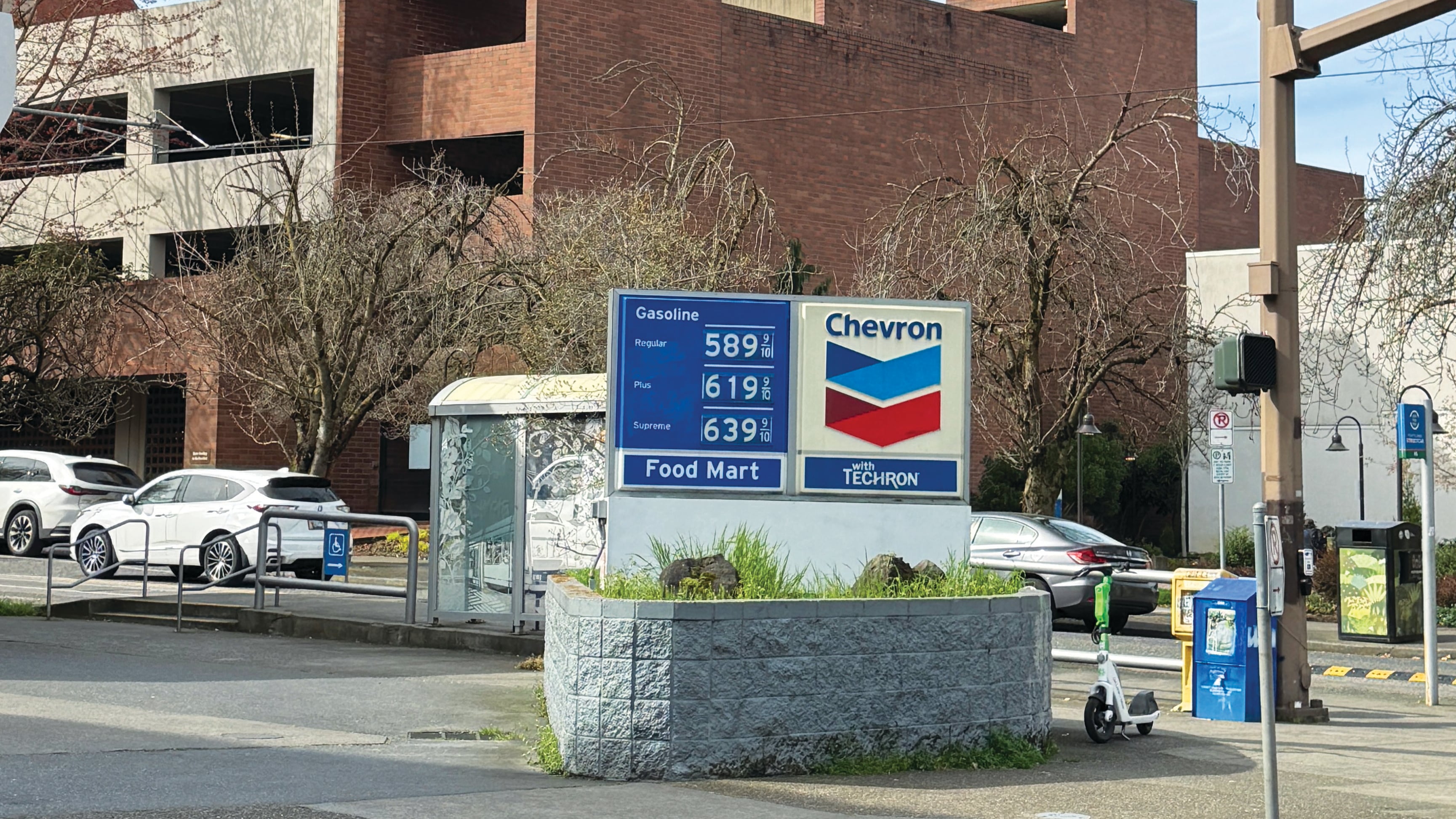
Even if you don’t drive—or don’t drive very much—you know gas prices are way, way up from the beginning of the year (see main story).
Three weeks ago, average gas prices were below $3 a gallon in 39 states, according to reporting by NerdWallet. As of Monday, all 50 states were reporting prices above $3, with a nationwide average of just under $4, according to AAA. Gas prices in Oregon hovered around $4.85 this week, making us the state with the fifth-highest gas prices in the country. (Drivers in California, Washington, Alaska and Hawaii are all paying more.)
That’s typical, says AAA Oregon/Idaho spokeswoman Marie Dodds.
“We are always fourth, fifth or sixth unless there’s some major hurricane or storm that takes out a refinery somewhere,” Dodds tells WW.
A combination of geographic isolation—that is, less drilling and fewer refineries, meaning oil has to be shipped farther—places West Coast drivers at a disadvantage. Regulations and taxes can also drive up the price of gas.
It’s also common for gas prices to start climbing in the spring due to increased demand, Dodds says: Spring break and daylight saving time mean drivers are out for longer and later trips. California and the Pacific Northwest also switch to summer mix gasoline around this time of year—Calfornia will transition in April and Oregon and Washington in June—and that drives up prices as well.
Those are normal seasonal factors, in other words. But then there’s the geopolitical picture, which is anything but.
“Right now, we have a situation where obviously the conflict with Iran and the Middle East is going to have an impact on prices,” Dodds says.
On Feb. 27, the day before the U.S. and Israel launched surprise airstrikes on Iran, crude oil cost $67 a barrel. At the close of markets March 20, crude cost $98 a barrel; on Monday, following Trump’s announcement that further strikes on Iran would be postponed, crude closed at $89 a barrel. Generally speaking, every $1 increase in the price of crude results in an increase of 2.4 to 2.5 cents per gallon of gas.
“Crude oil is bought and sold on the international markets. Any time there’s a global disruption in supplies, that global price will climb,” Dodds says.
And while there are certain trends we can count on, like an increase in gasoline prices during warmer months, there’s no way to predict what’s going to happen in the coming months.
“It’s impossible,” Dodds says.