Skip to main content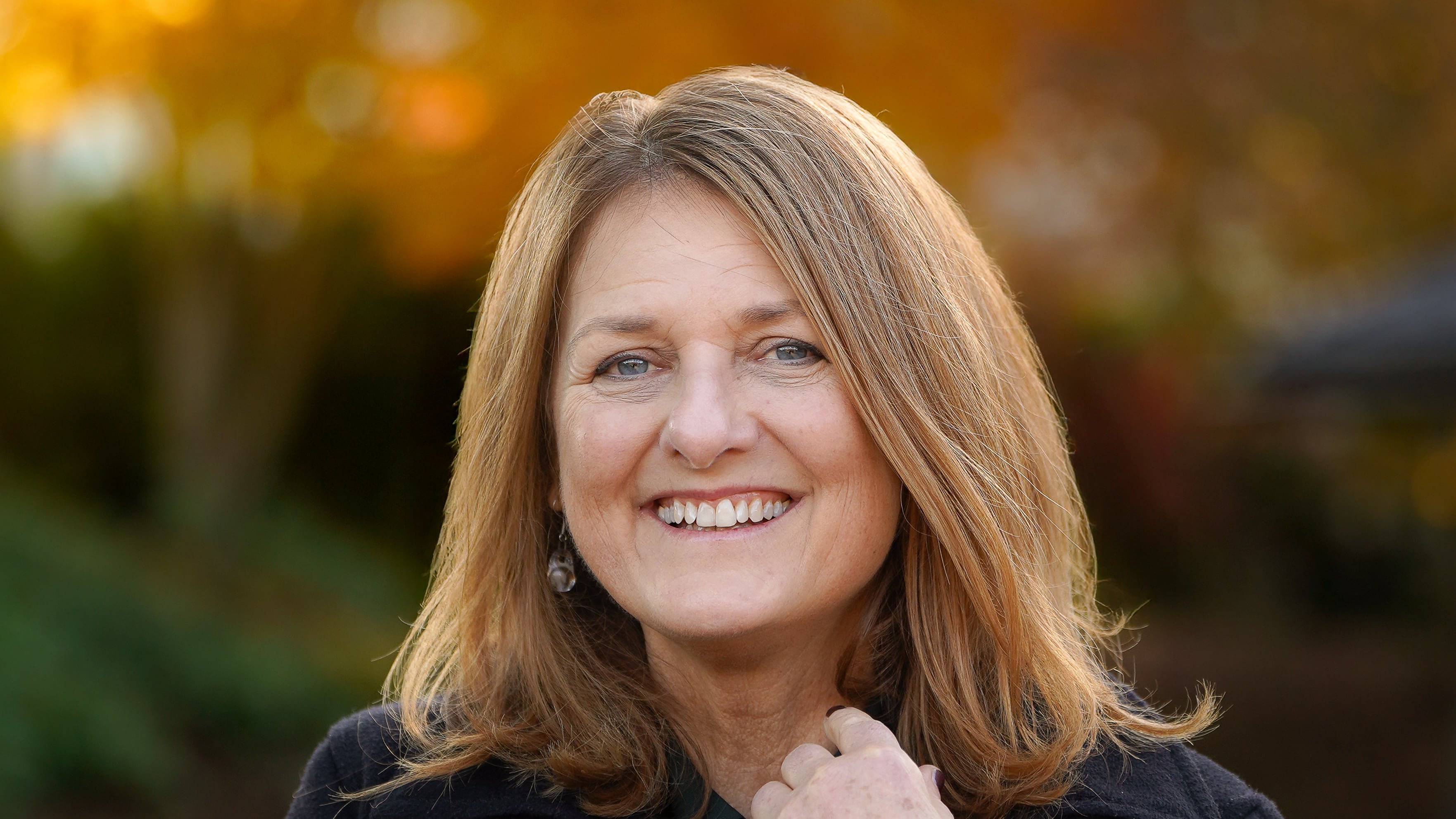
Karen Chenier did a lot of things right.
Raised by a single mother in Southern California, Chenier worked her way through community college, then transferred to a four-year school, and later went to grad school, completing her Ph.D. in 2000. She’s a practicing therapist in Lake Oswego; she also teaches psychology classes. She signed for her first student loan in 1986, and has been making payments faithfully for decades.
Asked how much she owes for her education, Chenier can give the number down to the penny: “So this week I have $29,473.30,” Chenier says. “That will change next week.” She’s paid $91,000 on her loans ($68,000 toward the principal and $23,000 toward interest), but the number keeps compounding even as she pays it down.
Last month, Chenier organized the first meeting of the PDX Debtors Assembly, at Friendly House in Northwest Portland. She says about 20 people showed up. The idea isn’t to help people get their finances under control, or help them budget better; most have years of experience living modestly as they work to pay off mounting debts. Instead, they want to organize and fight the systems that mean a higher education or a major illness can result in a lifetime of living with spiraling debts.
That means universal health care and free college, but also cancellation—not forgiveness—of existing debts. “There’s nothing to forgive here. I even hate that word. College should be free.”
But part of the idea is to destigmatize debt by talking openly about it, Chenier says. One attendee, she says, likened the February meeting to an AA meeting. There is a 12-step recovery program for people with mounting debt—Debtors Anonymous—but it’s geared toward people who struggle with compulsive spending or shopping addictions.
PDX Debtors Assembly is linked with a national movement called Debt Collective, an outcropping of the Occupy Movement; in contrast with Debtors Anonymous, those drawn to it are more interested in systemic causes and remedies than in individual spending habits. Most of those who showed up to the February meeting, Chenier says, are buckling under student or medical debt, not credit card bills. Everyone who spoke to WW for this story described living with student debt in particular.
Activists have been calling for student loan cancellation for years. According to data published in February by the Education Debt Initiative, 42.8 million student borrowers in the U.S. have federal loan debt, for a total outstanding balance of $1.83 trillion—numbers that have climbed steadily upward over the past 20 years. A 2025 court ruling blocked a Biden-initiated plan to forgive loans for most borrowers, but the American Federation of Teachers appealed the ruling. Last fall, the Trump administration reinstituted some forgiveness plans while placing new limits on others, including the Public Service Loan Forgiveness Plan for those working for government or nonprofits.
There’s a common misconception that it’s impossible to wipe out student loans by declaring bankruptcy, but while that isn’t true, it’s still very difficult to do. The federal government requires evidence that making regular payments would place an undue burden on the debtor.
In 2022, Oregon hired an ombudsman to help debtors navigate student loans, but the system—which wasn’t easy to begin with—has gotten more and more difficult to navigate. Ask anyone you know who borrowed money to go to school, and they can tell you stories about shifting sums, federal loans being turned over to shady servicers, or simply spending hours trying to figure out whom to contact to make a payment.
But Americans are shy to talk about money. And talking about debt or financial struggle can feel like admitting to failure.
“I’m really embarrassed and ashamed of my debt, and I feel stupid for having taken it on,” Jean Kang tells WW. Kang attended last month’s meeting at Friendly House; she says she owes more than $200,000 in student loans for a graduate degree at the School of the Art Institute of Chicago.
Kang graduated from Johns Hopkins University in 1997 with no debt and a degree in writing. For a while she worked in the New York publishing industry, but after the 2008 financial crisis, she struggled to find work. A friend advised her to apply for a master of fine arts program, and that’s how she ended up at the Art Institute. Even while she was attending school, there were signs things were amiss: a financial aid officer advised her to “max out that loan” even though Kang told her she was living with her parents and had few needs beyond tuition and basic living expenses. One of her professors referred to the school as a “degree mill.”
She could see she was shackling herself with debt she was unlikely to repay—but also that people who seemed authoritative, like the school’s loan officer, actively encouraged her to take on debt.
“I thought that maybe the school would help me find connections to publishers or do something at the end of my career there,” Kang says, “but instead I didn’t even find a job at all.”
She also stopped writing. “You know, now I have a lot of disdain for anything that has to do with, like, art or writing, or any of it,” Kang says.
For the past five years, Kang has worked in the accounting department of a nonprofit, and has applied for Public Service Student Loan Forgiveness, or PSLF, which allows nonprofit or government workers to make reduced student loan payments and, after 10 years (or more precisely, 120 payments), have their remaining debt wiped out. Kang says though she has made payments monthly for the past five years, she has only 19 payments recorded, not the 60 that should appear when she logs in to the system—and she isn’t sure why. (This is not an uncommon story; a Brookings Institute study published this month shows the PSLF program has been beset by administrative issues that prevented many PSLF-eligible borrowers from accessing relief.)
Ryan Hofer graduated from the National University of Naturopathic Medicine in Portland in 2025 with $350,000 in debt. An English teacher before he went to school, Hofer is now applying for a naturopathic residency and substitute teaching; he also sees patients a couple of days a week.
“There’s so many dirty secrets about debt, but essentially, the debt’s not getting paid back. The federal government knows that, and so we kind of have this weird, tortured socialism going on where it’s like, ‘Well, if you suffer long enough, or if you do this particular certain job, then we’ll cancel out your debt after the fact,’” Hofer says.
Hofer found out about PDX Debt Assembly through Debt Collective, which he has followed for several years. He also writes a Substack called Debt By Natural Causes, about naturopathic medicine, acupuncture and higher education.
He likes Debt Collective both because it’s powerful to have a banner to be under and because the organization has done things like purchase debt from institutions to wipe it out. Debt Collective also provides tools like advice on disputing debts and organizing tenants unions—and advocating for cancellation of student debt.
Hofer also supports the idea of making college free, as well as wiping out existing student debt.
“For me, it feels like this kind of inflection point,” Hofer says. “Clearly, this hasn’t worked, and clearly this is affecting millions of people, and it will continue to affect them throughout their life. It’s kind of time to gather together, make it more visible and choose a few big-ticket demands on what a fair society should look like for everyone.”