Skip to main content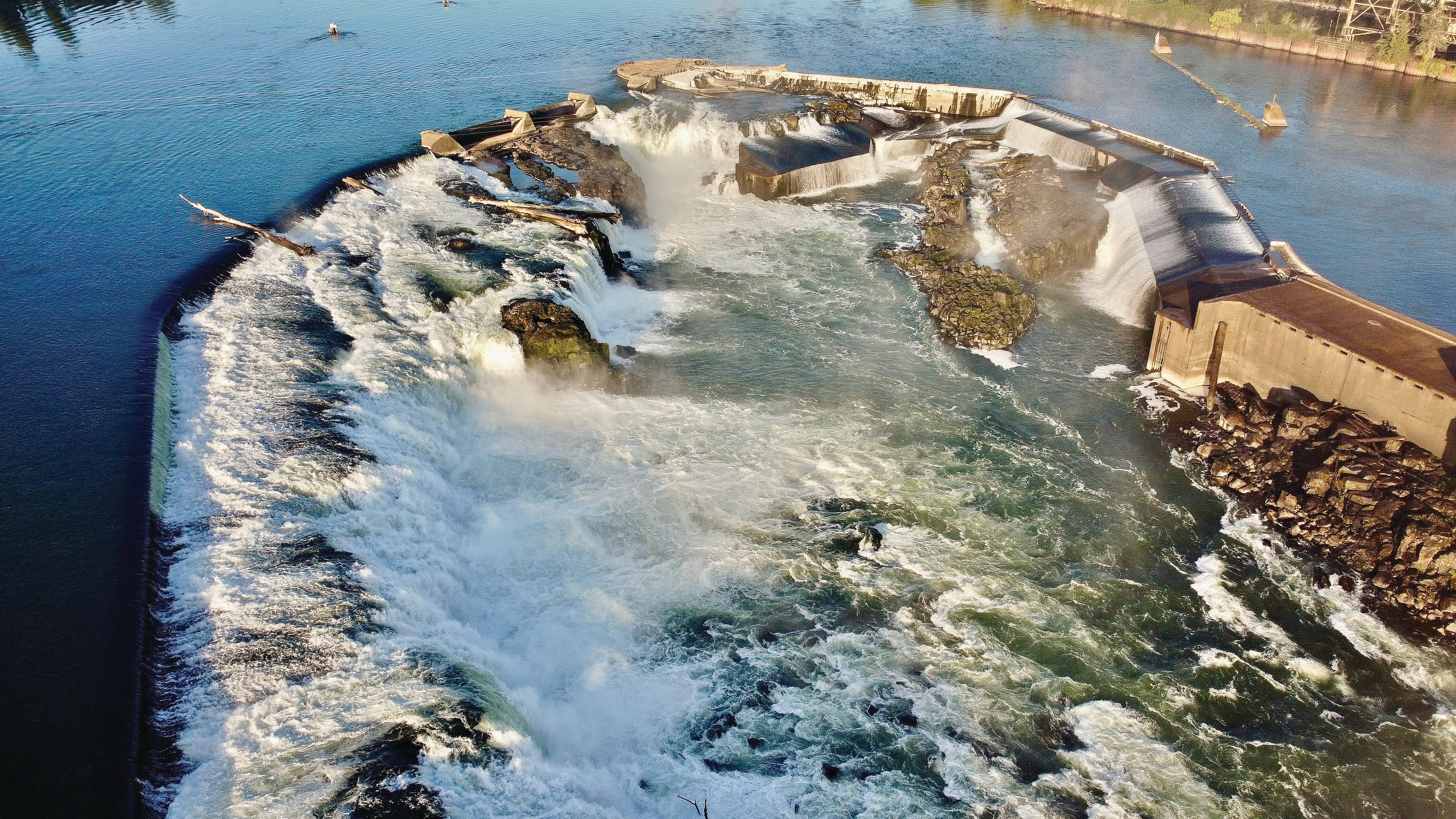
Willamette Falls might be the most spectacular sight in Oregon that most people never see.
It’s the second-largest waterfall, by volume, in the U.S., behind Niagara Falls, but here, there are no kitschy hotels nearby, no wax museums, heart-shaped tubs, or elephant ear vendors.
There are reasons for that. One is the industrial wreckage that crowds the falls like dead barnacles on a white whale. The Blue Heron Paper Company had a mill there until 2011, when it closed, leaving a pile of rusted buildings, teetering smokestacks and heavy metals.
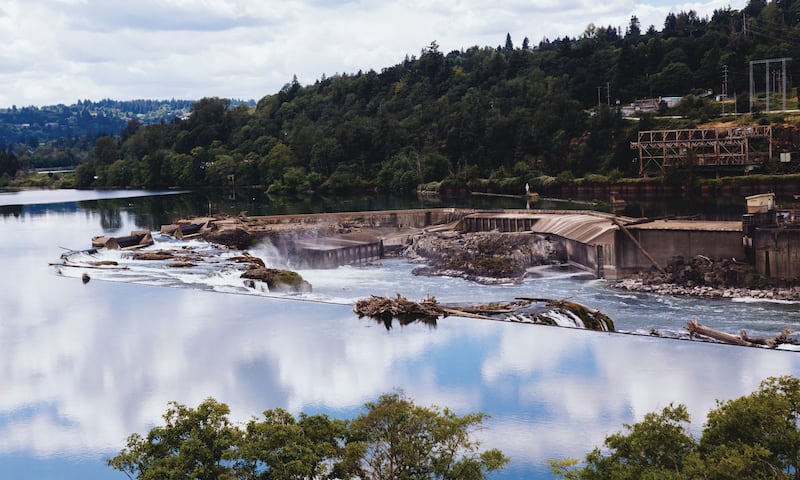
The wreckage adds a captivating steampunk vibe to the falls, which thunder down just above the decaying paper mill and a power plant owned by Portland General Electric that’s still humming 140 years after the first electrons left on long-distance wires.
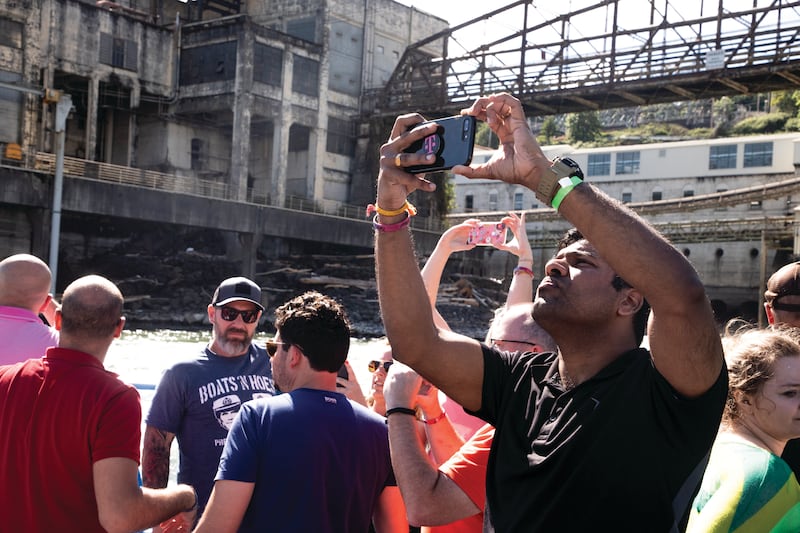
Willamette Falls is in transition, like so much of America, from industry to attraction. Fortunately, the metamorphosis is being handled by people who treated the place with more respect, though what precisely lies ahead is uncertain. The Confederated Tribes of Grand Ronde bought 23 acres under the old paper mill, near Oregon City; the Willamette Falls Trust, which includes four other Oregon tribes, has bought land on the west bank of the falls, closer to West Linn. The two entities are currently locked in conflict over the future of the area, but both intend to develop the land adjacent to the falls as a cultural resource.
What you can do right now is take a day trip to go marvel at the falls. You can certainly do that from spots along Highway 99E, but the gateway to grandeur is a kayak or, better yet, a standup paddleboard, which gives you a better view because you’re farther up and out of the water.
You can’t start your trip right at the falls because the land around it is either privately owned or dangerous because of demolition efforts. I started at Dahl Beach City Park in Gladstone, about 2 miles downriver from the falls. The beach slopes gently, making it easy to embark.
The difficulty of your trip will vary depending on the wind, and it’s harder, obviously, to go upstream than down. But you climb on the way out, so the way back is easier, unless the wind is in your face. There are boat wakes to contend with, and jet skis rip around, sounding like Harley-Davidson motorcycles and spewing white smoke and water.
The Clackamas River joins the Willamette right above Dahl Beach. Next comes the Clackamette RV Park in Oregon City on the eastern side of the river, and Lonesome Bottom on the West Linn side. You paddle under the Abernethy Bridge, which is under construction to become the first earthquake-proof bridge along the Willamette at a cost of almost $1 billion. It’s fun to see the huge cranes, diggers and barges needed for projects that America once did routinely, and the cars above you on Interstate 205 are thrilling in an urbanite sort of way.
Depending on the season, the water isn’t glacial when you fall in, which is almost inevitable on a paddleboard. The best time to go, of course, is summer. I mulled a trip recently but recalled the stumps and logs I saw biking over the Broadway Bridge to work and thought better of it.
All of the sights along the river pale in comparison to the falls, which come into view as you enter the industrial area. The whitewater cascades down a black basalt shelf that’s 40 feet high and a quarter mile wide. Ice Age floods carved the falls in a horseshoe shape out of the rock some 15,000 years ago (no time at all, geologically speaking).
Huge logs lie scattered below, conjuring shipwrecks. One can imagine Clackamas Native Americans fishing for salmon and lamprey for centuries before the U.S. government grabbed the place with a treaty in 1855, sending members of local tribes off to reservations. I saw a white guy fighting to land a sturgeon, which bummed me out because the fish was probably older (and maybe smarter, judging from the guy’s angling skills) than he was.
If you’d like to add a thrill to your sightseeing, you can maneuver your board into the rapids that pour out of the defunct Willamette Falls locks. Enter from an eddy beside the current and get ready for a ride. I surf, and I still found it difficult to stay on my feet. The key, I figured out, is to keep your paddle in the water and use it as a third leg and rudder. (Disclaimer: I’m not sure I was supposed to be doing this, so try it at your own risk. My wife wasn’t thrilled watching me get tossed off my board and churned in the swirling waters, with the falls looming upriver.)
AllTrails (alltrails.com) has a good guide to the trip called the Willamette Falls Paddle Route. It recommends putting in at the Sportcraft Marina (1701 Clackamette Drive, Oregon City), just above Dahl Beach. If you’d like a guided tour, try eNRG Kayaking (enrgkayaking.com). It offers a 90-minute tour, 1 mile up and 1 mile back, and promises herons, osprey and sea lions (in season).
Bring a waterproof case for your phone and you’ll come back with up-close-and-personal pictures of a rarely seen giant in our midst before the surroundings change, once again.
2
Willamette Falls
From Belmont Arco: 17.9 mi
Gas needed at 30 mpg: 0.6 gal.
Cost at $4.75 a gal.: $2.83