Skip to main content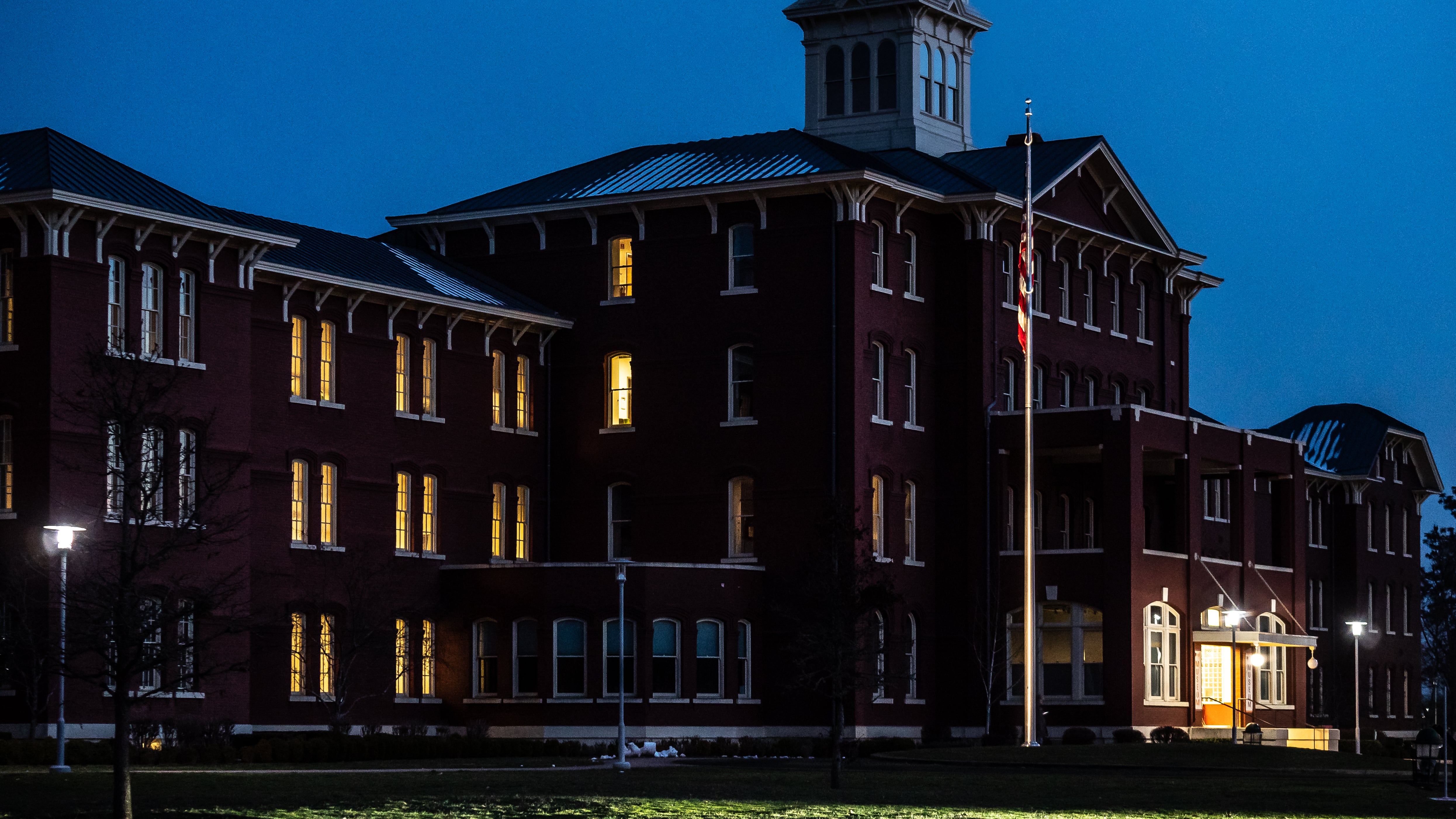
Marion County District Attorney Paige Clarkson says her office has convened a grand jury to investigate Oregon State Hospital and will likely issue a report by the end of the year.
Clarkson says she has grown increasingly concerned in recent years that the state’s flagship psychiatric hospital, which has its main facility in Salem, “cannot meet the challenge of the moment.”
Clarkson was among the prosecutors who sought to manage the effects of a long-standing, controversial court order that, in practice, pressures the hospital to process many patients at a heightened speed, such that it can clear space for the many new ones who would otherwise be warehoused in jails.
But she and other DAs withdrew from that case last September, stating they no longer felt they could achieve progress in their public safety goals through the federal court process.
Now, she is signaling a new tack.
State law requires grand juries to make an annual inquiry into the condition and management of corrections facilities, but in the recent past this requirement has been fulfilled by having a grand jury tour the facility, says Oregon Health Authority spokeswoman Amber Shoebridge.
This year is different. The review will be a “more thorough and robust review than the yearly process,” says Marion County chief deputy district attorney Brendan Murphy.
Shoebridge says Oregon State Hospital “will cooperate with the Marion County grand jury and welcomes collaboration and conversation with community and state partners as we all work towards the same goal: a safer, healthier Oregon for patients, providers and communities.”
Shaped by drug use trends, a shortage of beds statewide, and a two-decade-old court order, Oregon State Hospital’s patient population has over the years been increasingly dominated by people who entered it via the criminal justice system. Many patients were found guilty except for insanity, but increasingly, new patients are people who have been charged with a crime but found, for the time being, unfit to stand trial.
With the changing patient population, so too has changed the environment and health care objectives of the hospital. Where staff might take a more comprehensive approach to help make a civilly committed person well, in the case of pretrial defendant, the hospital’s job is in large part to “restore” the patient “to competency” to stand trial—which many observers note is an extremely low bar.
The institution has also struggled at every level with staffing. It’s overseen by an interim superintendent. Gov. Tina Kotek removed the previous interim superintendent last year following a patient death—an incident that prompted federal scrutiny. (Regulators decided early this year to let the hospital keep its accreditation.)
State officials recently reported that many employees were failing to show up for work, forcing the hospital to rely on expensive temporary staffers. And as The Lund Report first revealed, last month a key leader, the director of forensic evaluation services, sent in her resignation letter, which is effective March 31.
In the letter, reviewed by WW, Dr. Morgyn Beckman wrote that her decision was tied to a couple of factors. One was the “exponentially increasing workload” under House Bill 2005, a major new behavioral health care law that changed civil commitment standards and codified timelines in which the state hospital must discharge certain patients. Another factor, she wrote, was the “near constant scrutiny on [forensic evaluation services] in relation to the ongoing federal case.”
Beckman, wishing her bosses the best “going forward in these turbulent times,” added, “While I continue to find this work important, I must do what is best for me.”