Skip to main content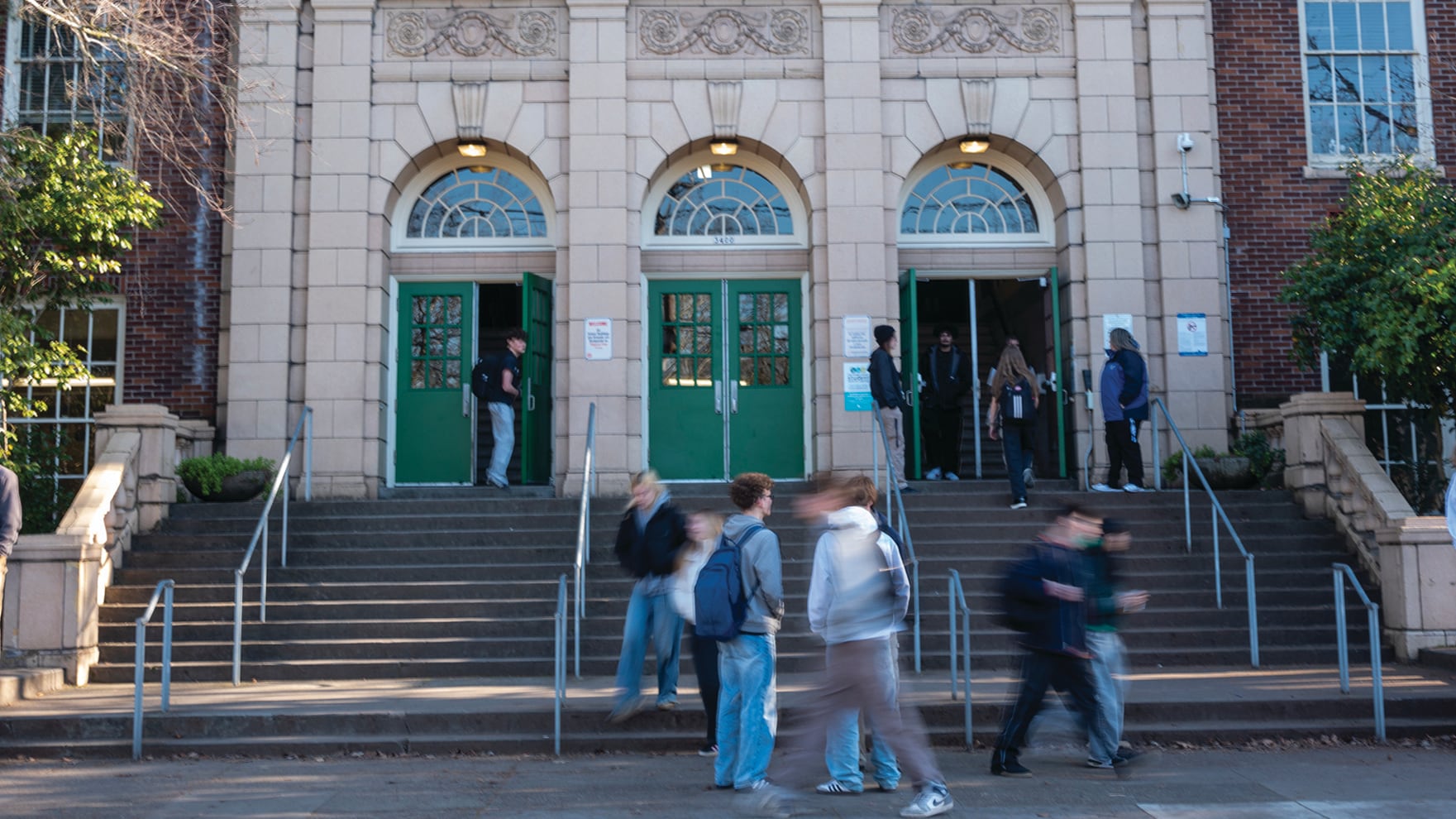
When the Portland School Board unanimously approved a plan to modernize Cleveland High School last October, some of the fiercest advocates in the school district felt they could finally relax.
The fight to get to a standing ovation that night had been a long one. Cleveland is one of the three final high school buildings in Portland Public Schools in line for an overhaul, and the community has watched for more than a decade as other high schools were rebuilt first. Meanwhile, the Cleveland building, parts of which were constructed in 1929, has been falling apart. Teachers spend the weeks ahead of the school year repainting old walls, and ceiling tiles sometimes fall inside classrooms during the day.
Parents, students and teachers banded together as PPS launched its $1.83 billion school bond campaign, ultimately securing a $472 million rebuild of Cleveland at the ballot box in May. They attended a seemingly endless stream of public hearings, canvassed in front of the school to get out the vote, and gave feedback at design advisory meetings about everything from wheelchair ramps to building materials.
Until December, no one in that close-knit group had ever heard the name Alex Krach.
For good reason: Krach lives in Ashland, a nearly 300-mile drive south. Nevertheless, he’s now staging an eleventh-hour challenge to a design that has taken about two and a half years to finalize. Krach, a historical preservationist, objects because in modernizing Cleveland, the Portland School Board has authorized the building’s demolition.
And the same 1929 building that poses safety concerns to students also, in Krach’s view, poses immense historical significance and merits preservation.
In the past two months, he authored a petition to save the school from demolition, which has amassed nearly 800 signatures. And he says he will pursue a legal challenge if the district does not course-correct on its own. On Feb. 2, he retained a land use attorney who is seeking a court venue.
Experienced developers and lawyers tell WW they don’t feel Krach has much of a case. Though preservationists say Cleveland could be easily eligible for a spot on the National Register of Historic Places, it currently has no such designation. They add he likely does not have much of a chance appealing to the state Land Use Board of Appeals, and the city of Portland does not have its own appeals process for demolition permits.
But Krach, who briefly lived near Cleveland in 2020 and 2021, has indicated he will take every step possible to stop the razing of a building he remembers fondly. He’s already built some momentum: On Jan. 26, the Portland Historic Landmarks Commission sent PPS a letter asking the district to reexamine the decision to demolish Cleveland, whether by relocating the school or by preserving the historical part of it, both decisions the design group had previously weighed and rejected.
Krach says he hopes the effort will alert others to the school’s planned demolition and will mobilize people to band together against it.
“School buildings are so beautiful, and if we can care for them, renovate them well, and update them to modern standards, our kids, when they come to this school, they will be exalted,” he says. “They will feel this society really cares about me and my future—look what they’ve invested in me to ensure my success. I think that’s ultimately what the school district’s job is to do.”
Even if Krach’s odds are long, he’s certainly managed to alarm the advocates who spent years fighting to rebuild Cleveland. Many of them view the challenge from preservationists as the latest in an unending line of roadblocks, and some tell WW they are losing hope that a new Cleveland will ever see the light of day.
The latest threat, however remote, reveals just how exhausted many people who love Cleveland High have become.
“[A delay] would be demoralizing for students, for the community, for the educators,” says Jan Watt, a longtime Cleveland journalism teacher who recently retired but is still heavily involved in advocacy for the school. “It would show a blatant disregard for policy and process that we have fully respected and contributed to. It demonstrates a significant obstacle and impediment that none of us have ever been made aware of.”
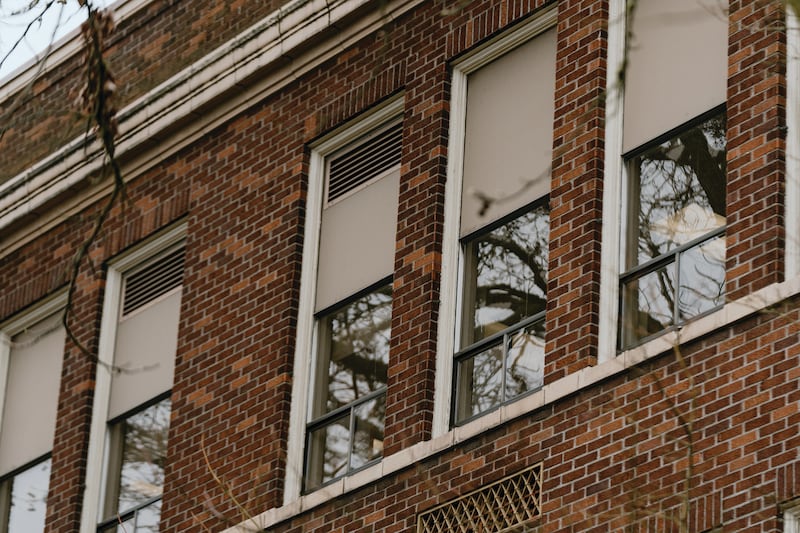
Krach’s concerns aren’t coming out of left field. Multiple preservationists who spoke with WW say PPS has done an excellent job over the years preserving distinct historical characteristics of other high schools, including Benson Polytechnic, Franklin and Grant.
But preserving Cleveland’s building presented unique challenges at an unstable time for the school district. In early design stages, architects estimated it would cost about $10 million more to retain the historic portions of the building. (Thanks to inflation and tariffs, that cost is likely higher now.) Other challenges included practical ones: To make the existing main entry of the building accessible to people with disabilities, for example, would require “significant” alterations, one report read. “Modifying the historic entry would compromise the goal of preserving the existing façade.”
Krach has said he doesn’t intend for his appeal to delay the start date of school improvements, scheduled to commence this summer. But going back to the drawing board this close to construction is not the plan and “would result in the project going significantly over budget,” says PPS spokesman Chris Lueneburg, who adds it would also “considerably delay” the school’s opening.
Preservationists say the architect of the main structure, George Jones, was a prominent early 20th century school designer and that the building has Classic Revival detailing on doorways and exterior corners, and its auditorium houses a prized pipe organ. (The district has said it’s working to find a new home for the organ, and the building plan contains some nods to installing older parts of the building in a new design.) Several say the architects behind Cleveland’s planning process skewed public opinion toward demolition.
“When they did the community survey, a number of us who looked at that survey felt that it was subtly biased,” says Peggy Moretti, advocacy chair of the Architectural Heritage Center and a longtime preservationist. “They kind of played up the replacement aspects and downplayed the preservation aspects.”
Cleveland advocates maintain that had preservationists felt that much concern, they would have intervened sooner. And many said they felt thoroughly engaged during the community process, denying it was skewed. “The current building is not safe for students and does not allow equitable access for disabled students,” says Cleveland parent Liz Super. “If there is any opposition to moving forward with the current plan, it only harms students and staff at Cleveland who deserve a comprehensive and safe high school.”
Moretti says local preservationists had other matters to attend to. (Portland State University has been caught in a battle with preservationists over two dorms, one of which is significant to Oregon’s women’s rights movement.) She takes a softer position than Krach does, noting PPS faces many challenges in the years ahead, and emphasizes that if the building must go, her hope is PPS can retain its historic elements.
But one of her top concerns with the Cleveland project is environmental. Demolishing buildings like Cleveland creates a “profound” environmental impact, she says. The demolition would certainly generate loads of construction waste, she says, which accounts for about 30% of total waste in U.S. landfills. And existing buildings embody carbon, the stuff of greenhouse gas emissions generated by building materials during the construction process. (That’s everything from manufacturing to transportation and installation.) When existing structures are preserved, developers can retain some of that carbon, thus contributing to greener infrastructure.
Indeed, the sustainability conversation around Cleveland has exposed a small hole in PPS’s Climate Crisis Response policy, which preservationists note has many guidelines for sustainable building practices in new buildings but lacks guidance on reusing old sites. Lueneburg of PPS says that while demolition and construction will impact the climate, energy efficiency in the new model will “reduce the school’s carbon footprint in the long term.”
The city of Portland does consider Cleveland a significant resource, meaning its demolition permit faces a 120-day delay. Ken Ray, spokesman for Portland Permitting & Development, says the purpose of that delay is to “allow time and consideration of alternatives to demolition” and enables the public to recommend ideas to preserve the historic resource. “The permit applicant (PPS) is required to respond to such proposals, if any are offered, and indicate what historic preservation efforts might be feasible and/or explain why alternatives to demolition are not feasible,” he says. The district will have until March 24 to do so.
If preservationists hope that those closest to Cleveland High will join them by then, however, that will be an uphill battle.
“It’s just one more despair. I am just so weary of fighting and battling for this school,” Watt says. “If people in the Cleveland community are in alignment [with preservationists], bless their hearts, that is their right to be that way. But they certainly haven’t come forward. I have no idea where this is coming from.”