Skip to main content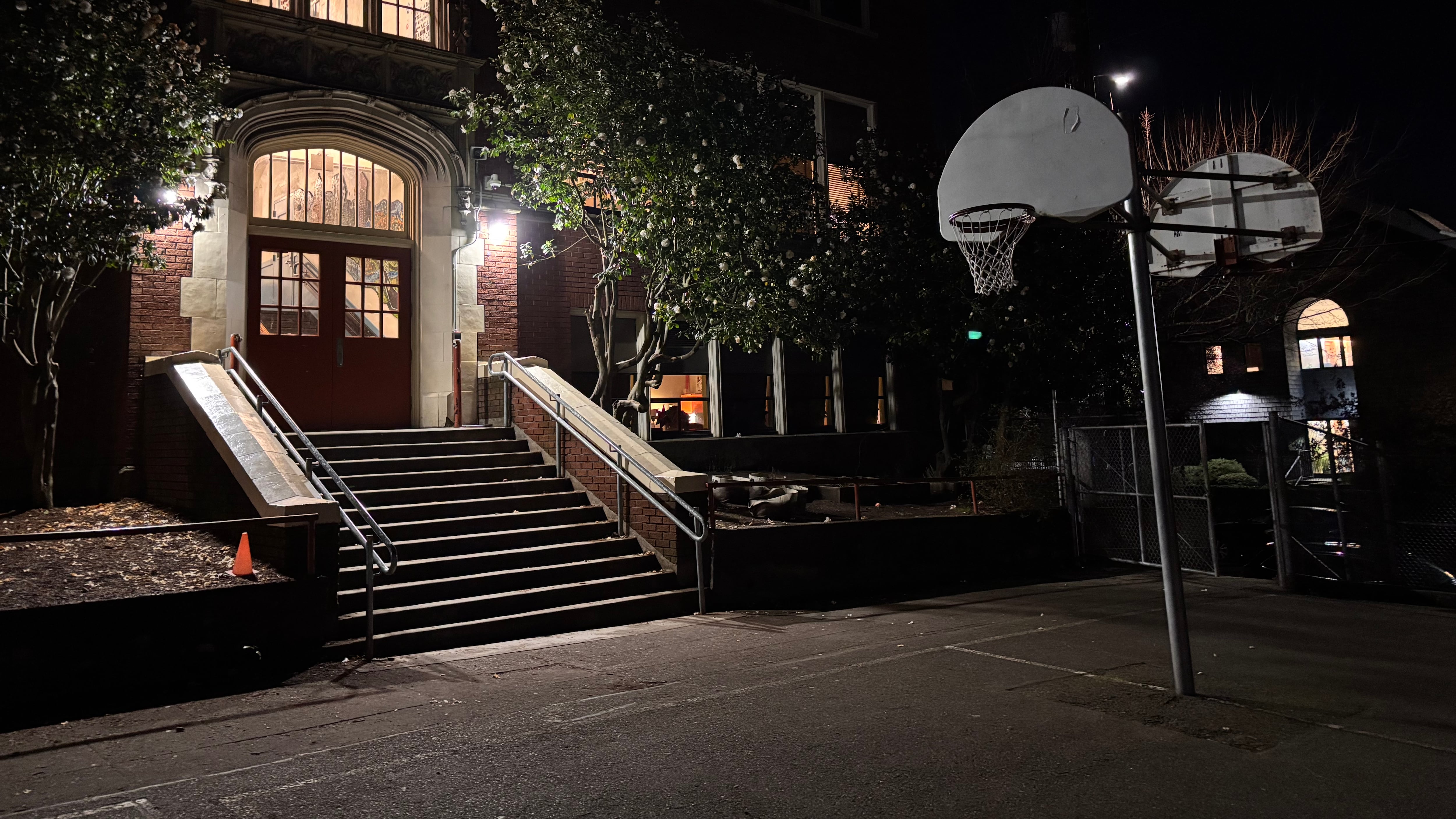
On Jan. 20, a Portland mom named Catie opened an email from Portland Public Schools. She had to refresh it five times to believe it. Only then did she feel a year’s worth of worry evaporate.
Her child had been accepted into Metropolitan Learning Center for high school.
Catie and her husband had been stressed about their eighth grader’s high school options all year. They hit a breaking point with PPS just two years ago and pulled their child out of their neighborhood school when bullying intensified and Catie’s child, then 12 years old, attempted suicide. (WW is withholding the family’s last name to protect their privacy.)
“We knew they had depression, they had anxiety, we knew that they were not being treated appropriately at their school either by teachers or by other students,” Catie says. “We were just left feeling so helpless because what do I do? Just keep my kid home from school every single day? That’s not an option.”
Neither is Metropolitan Learning Center. Not anymore. The K–12 alternative school that borders Couch Park will no longer offer high school grades starting next fall. Just weeks after Catie initially received an acceptance, she received an update on Feb. 10 from PPS notifying her of a status change.
Catie had to break the bad news over Chinese food and boba, her kid’s favorites. “Normally, my kid will scream, ‘What!?’” Catie recalls. “But it was so much more devastating because they looked at me, they shook their head, and they said, ‘Of course, yeah, something this perfect, there’s no way it’s actually going to happen.’ It was the worst moment of my life.”
The district’s decision to eliminate ninth through 12th grade at MLC was not only abrupt, it might also violate the district’s own policy around school closure.
That policy, approved in 2003 by the Portland School Board, says the board may decide to a close a school only after the creation of a “school closure report,” which must analyze financial impact, projected enrollment, facility conditions, and other factors. If such a report was crafted for MLC, the district hasn’t shown it to the public. And the board had no input in closing the high school. (The School Board was expected to discuss the issue publicly for the first time Tuesday after press deadline.)
Candice Grose, PPS’s chief of communications, says the district believes it is in compliance with its policy because the change “was evaluated as a programmatic adjustment based on long-standing sustainability challenges, not as a full school closure under that policy.” In other words, the district closed a program, not a school—so it didn’t have to produce a report in accordance with its policy.
As PPS launches a consolidation process for its elementary and middle schools, the way it’s handled MLC’s closure as a high school sets an unnerving precedent. And for those on the ground at MLC, there’s a more immediate concern about the consequences of an abrupt closure on an already vulnerable student population.
The district has justified closing MLC’s high school by pointing to low enrollment and budgetary concerns. The school enrolls just 41 students this year, and the district spends about $20,000 more per student there than it does at an average high school. Chopping the high school, officials say, would save about $1.1 million in a year when PPS is facing a $50 million budget deficit.
But supporters of MLC say the school is a haven for at-need kids, including students who are neurodivergent, part of the LGBTQ+ community, and transgender. They say there isn’t another high school option on the table that would work for its students, many of whom thrive in small class sizes and with the community-based learning model MLC uses.
In the days after PPS’s initial announcement, the tight-knit community has rallied to save a school they say is not replicated anywhere else in Portland, one that generations of alumni say saved their lives.
“The smallest consequence [of closing MLC] is that the students hate school, they hate learning…they don’t finish high school, they drop out, they don’t graduate,” says Regan Wozniak, a science teacher at MLC. “My biggest fear, and what has had my stomach hurting for a week and a half, is that students are going to die.”
There doesn’t appear to be a school quite like MLC anywhere else in Portland, one where high schoolers are allowed to guide and mentor younger counterparts, helping build confidence not only in academics but also in leadership skills. And the school sells itself on making the city its classroom.
Colleen Corbett, a parent of a high schooler at MLC, says that real-life applications help kids feel motivated to learn for the love of learning itself, not because they trying to pass any specific test. Parents and teachers say that means trips to museums, cultural institutions and art galleries.
And there are social perks, too. Students at MLC tell WW it’s the first school where they’ve felt at ease with their peers, and where they’ve felt supported to be themselves. So the idea of switching back to neighborhood high schools or other alternative programs, as PPS has asked, is daunting for many of them.
“This decision was made behind our backs, with absolutely no consideration for the people this is affecting. I am especially outraged with the way they have gone about telling us and communicating with us,” says Nick Peifer, a freshman at MLC. “I feel as though PPS has repeatedly overlooked and ignored its queer and disabled students, and this event really has cemented this idea into my mind.”
Many families have said MLC’s low enrollment is not because of a lack of interest, but because of the school’s reputation as selective. Crystal Hilton, mother of a freshman, says PPS made it “really hard to get into” MLC for her daughter, who faced hardships at her neighborhood school and was a prime candidate for midyear entry. Despite MLC staff telling Hilton her daughter should be eligible, PPS administrators initially blocked her application. It took several calls to sort the situation out. “I wouldn’t take no for an answer, otherwise she wouldn’t be there,” Hilton says.
In the couple of months that Hilton’s child has attended MLC, she says her daughter’s attitude toward education has completely changed.
“She felt like she was never going to graduate high school,” Hilton says. “Now she says, ‘I know I’m going to go to college. I can do all the things that everybody says they can do. I can get any job I want.’ She’s excited to go to school every day.”
If the district wants to turn MLC’s low enrollment around, parents like Hilton say it should market the many special qualities the school has to offer and not restrict enrollment. And they fear the high school is just the first to go: “MLC as a community is a flower, and the high schoolers are the roots,” one student said at a Feb. 18 hearing.
District officials held that forum as they realized the scale of the backlash and scrambled to set things right with MLC students. But that meeting, which stretched into Wednesday night, grew heated several time, as officials fielded criticisms about the lack of process prior to the closure.
“The news about MLC didn’t land in the way we wanted,” said PPS Superintendent Dr. Kimberlee Armstrong. More strikingly, Armstrong shared that the district was seeking outside legal counsel whether it had complied with its own policy. If the district is found out of compliance, “we will pivot and go back,” she told the crowd. (Grose, the district spokeswoman, maintains the district believes it is in compliance. PPS, she says, plans to follow up with the outcome of the external legal review when it’s over.)
The meeting also raised questions about the value of community engagement when the district has to make tough decisions. Early on, Armstrong asked if it was worth it to spend three to four months gathering feedback from the community and sharing information “for us to arrive where we’re going to arrive anyway.”
Families, including Catie’s, are unsure where they’ll go if the closure is final. “We’re still reeling,” she says. “We’re basically trying to weigh the best of our really bad options.” And she says the decision is having immediate consequences on her child’s mental health, which has spiraled in the days since the announcement.
Wozniak, the science teacher, says she has taught at a number of smaller alternative programs, including Alliance High School. She says kids she worked with at some other schools had different needs than the ones she works with at MLC. Those are programs often geared toward credit recovery, she says, and lack the support and care some of MLC’s students need.
Wozniak says if MLC’s high school is no longer a reality, at least her students have applied what they’ve learned at the school to their advocacy. In the fight to preserve the high school, students have reached out to School Board members, delivered public testimony, and circulated a petition that’s amassed more than 2,000 signatures.
“We are so proud of them. They came into my classroom and were googling School Board members, writing down email addresses and phone numbers, creating spreadsheets and fliers and petitions,” Wozniak says, recalling how, while doing so, her students referred to lessons from social studies about organizing and lessons from English about how to use stronger language. “It’s the ultimate experiential learning. It’s a really motivated group of kids who are doing everything they can.”