Skip to main content
The Portland School Board has been inching toward a screen-time policy at Portland Public Schools, which would, if approved, regulate screen usage at the district beyond cell phones for the first time.
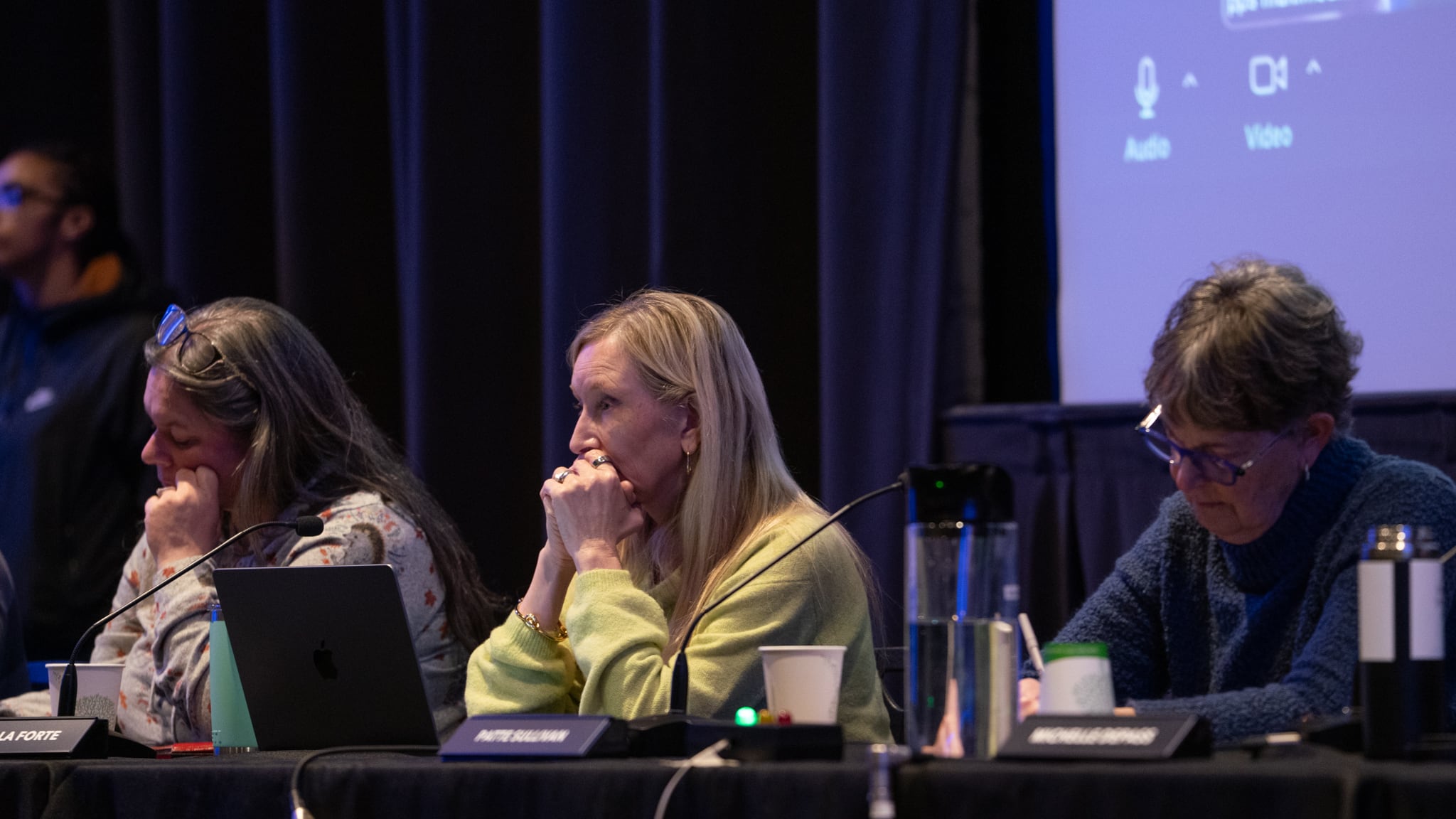
At a Nov. 16 policy committee meeting, School Board members heard a series of presentations from district officials and the Portland chapter of national advocacy group Schools Beyond Screens. The two groups have been jointly crafting a screen time policy that would cap usage by grade level and regulate what students can access online while at school.
The advocacy group has been going back and forth with the district, which last month made many edits to SBS’s initial screen time policy proposal. At the Nov. 16 meeting, it appeared there was still work to do to bridge disagreements on a couple of key topics, which include whether to make grades K-2 screen free and creating an independent auditing function to ensure the policy is rolling out smoothly.
While PPS in October tried to propose that students between kindergarten and second grade could spend between 45 and 90 minutes on devices each week, parent advocates have held firm on a proposal to eliminate screen usage in those grades.
“Our proposal continues to call for no routine individual device use outside of practice for mandated tests,” Holly Hofkamp, a co-lead of the local SBS chapter, told School Board members. “The district has not yet agreed to this provision.”
Part of the holdup in regulating screen time for early grades appears to be that PPS has already integrated some academic programming on screens for students in these grades, along with some concerns around test readiness. Hofkamp said that SBS had not viewed conclusive evidence that indicated computer tools were making meaningful differences in student outcomes. In some cases, computer-based testing worsened outcomes for low income students and struggling readers.
“Paper and hands-on alternatives exist for every tool here,” she said, noting SBS would be happy with a plan that gradually transitioned students back to those tools.
Parents also asked that the district’s auditor be allowed to track the implementation of a screen-time policy to build trust and transparency.
The local push for a district screen-time policy comes on the heels of screen time regulation efforts in other districts nationwide. New York City Public Schools and Los Angeles Unified School District, the largest two districts in the U.S., both implemented policies effective this academic year that cap the amount of time students can spend on screens. While PPS has some expectations of how long its students should spend on screens, the reality on the ground is inconsistent based on school and program.
Both of those districts, Hofkamp told School Board members, are consistent in not allowing screen use for early grades. (New York extends through second grade, while Los Angeles’ policy enforces no screens in kindergarten and first grade.)
Those policies also had a number of other additions, including more transparency for parents as to how screens were used in the classroom, and limits on the use of generative artificial intelligence in classrooms.
PPS is currently under a generative AI pause thanks to a School Board resolution. Passed in June, that resolution also asked the district to catalog any uses of that technology in classrooms. (At the Nov. 16 meeting, district officials said no generative AI programs are in classrooms at this point in time.) SBS has asked that the pause be extended, at least until PPS can develop its own AI policy.
School Board members have so far agreed that a screen time policy and artificial intelligence policy should remain separate from each other, especially given the rapidly evolving nature of the latter.
And while policies in Los Angeles and New York City are being hailed as trailblazing efforts to regulate screen time in schools, board member Virginia La Forte encouraged SBS to be more robust if needed. (SBS leaders said that they struggled to ask for more than what those policies had established.)
“I understand…using LA or New York as a road map certainly is a path of less resistance,” La Forte said. “But if there are improvements that you think we could make here in Portland, I would encourage you to bring those to us. I think there’s a lot of appetite for that on this board.”