Skip to main content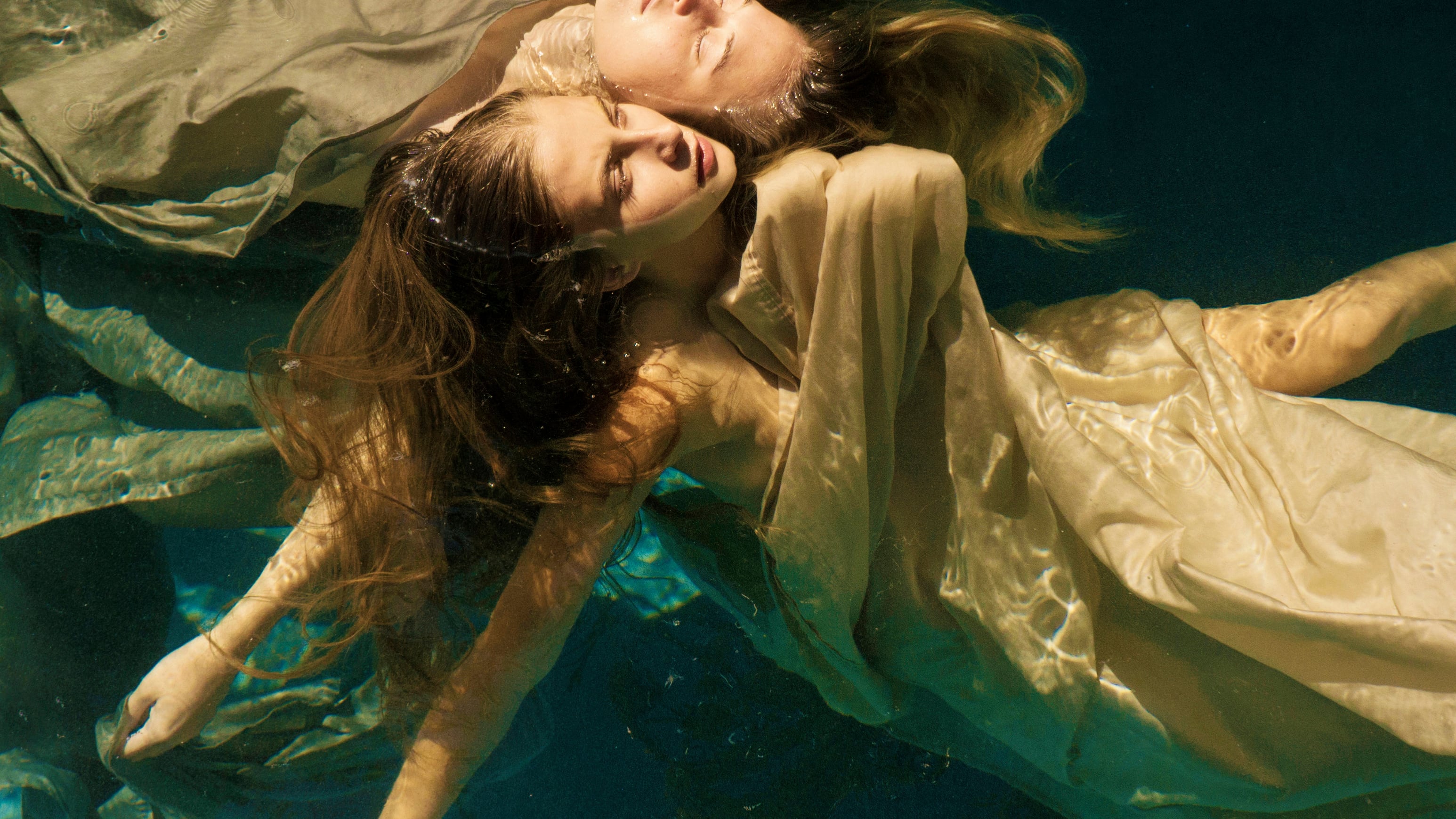
You can walk into the new Alberta luxury hotel Cascada and enjoy some services without spending a dime. Not at its onsite spa or restaurant Terra Mae, but at its art gallery Concrete Arcade, which used to be in the SolTerra Building on Southeast Division Street (a scaled-down re-creation of that building’s landmark Attitude of Gratitude mural is framed behind glass in the lobby).
Concrete Gallery’s current show, the Andrew Kuykendall retrospective Disposable Days, opened in December as the typical luxe hotel lobby gallery show one might expect. On view through February, Disposable Days is an easily digestible but ultimately pleasant introduction to the new year. A meditation on the passage of youth, Kuykendall’s work is an apolitical look back at road dog life during the politically fraught 2010s and 2020s that found calm moments of simple visual poetry while the world was at war.
And honestly, for what 2026 has thrown at us already? Let’s take a safe break from politics where we can find it before we fry our adrenal glands.
Kuykendall’s biography notes that he moved frequently during his childhood before committing to world travel. Based in Los Angeles, Kuykendall has worked for fashion retailers such as Hugo Boss, John Varvatos and Victoria’s Secret. Those companies’ understandings of gender roles are usually unambiguously traditional and cast young and lean (he lensed the Jenner sisters for PacSun a decade ago, and collaborated with fellow visual artist Langley Fox Hemingway). His images suggest cinematic storytelling, relying on the viewer to continue the narrative after framing conventionally beautiful women in visually commanding locations like the inside of vans or the edges of cliffs.
Yes, sticking to commercial norms is a political act, but that’s not the point of the show. With an ambient music soundtrack toning in the background, Disposable Days helps prepare 2010s nostalgia hounds and cultural historians by preserving trends as they were. A 2016 photo of a woman on a bike in Las Vegas just screams 2016, while a 2022 photo remembers that moist, particle-heavy images were in fact a post-pandemic trend. Concrete Arcade’s curatorial team presents a blueprint for how to have an apolitical portraiture show: be on an endless summer vacation around the world. It will be interesting to watch and see if the gallery’s future portraiture shows are more diverse yet as luxuriously divorced from political meaning as with this show.
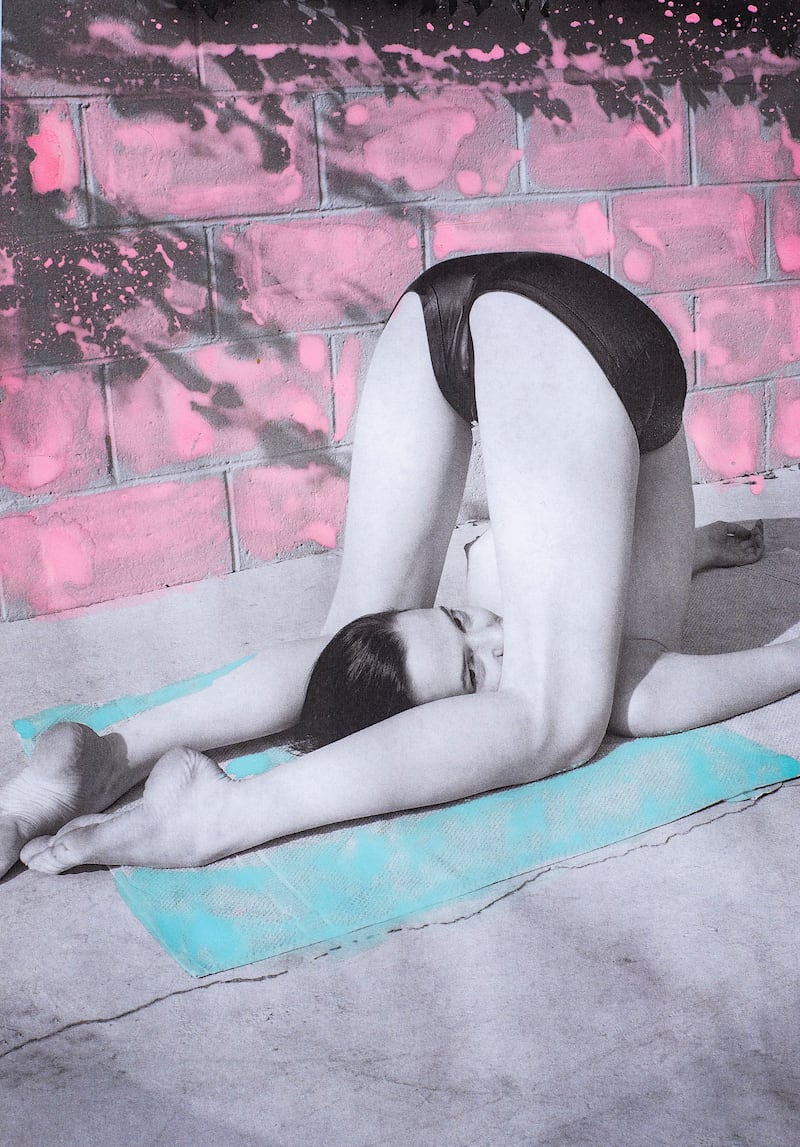
His ability to fill the corner gallery from floor to ceiling with his images suggests a healthy work ethic. Kuykendall’s fashion background seemingly makes his work easily understood for the common visual vernacular. To most people, seeing a nude female on a seaside cliff in warm open daylight facing away from the camera, or a brunette in a red dress walking toward the camera at night with direct, confident eye contact, elicits some sense of adventure. I genuinely don’t know what it is to form political allegiance without strong ties to any one place, which is maybe how global fashion works: You’re commissioned to visit the most beautiful places with the most beautiful people, not staying long enough to set down roots but returning often enough to form connections and memories nevertheless.
Though Kuykendall’s film prints have the clearest resolution even when grainy, some of his larger digital prints are regrettably overblown, as though the file size could only be printed so big. Some of these images are from earlier in Kuykendall’s career, and he’s not the only photographer to make this mistake, but it’s unfortunately noticeable. That said, this is the only real weakness to Disposable Days. The show’s strength is seen in ceiling-suspended silk banners of flora photos. Their distance, translucence and fluttering movement from the building’s heater movingly recalled memory’s fragile nature, while the show’s largely warm hues felt unavoidably nostalgic despite very obviously being documents of their moments in time.
Portland pops up among shots from some of the world’s most popular travel destinations in Kuykendall’s work. My personal favorite is a photo of three leather-clad people wrapped in each other’s arms with cigarettes dangling from their lips. Taken in 2017, the photo represents Portland’s spirit as seen by an enchanted visitor: rebellious, self-determined, individualistic yet community-minded, tough but ultimately friendly. They seem slightly androgynous, carefree and happy. Friends, cousins, a throuple? That’s where the viewer can fill in the blanks. Most of the people documented seem like Kuykendall’s personal friends, and/or people who at least catch his eye. The throwback to pre-pandemic and pre-Trump years shows people who really truly have no idea how good they have it, yet they seem to be living in their moment. Is what they were doing important? That’s hard to say. But they seem happy.
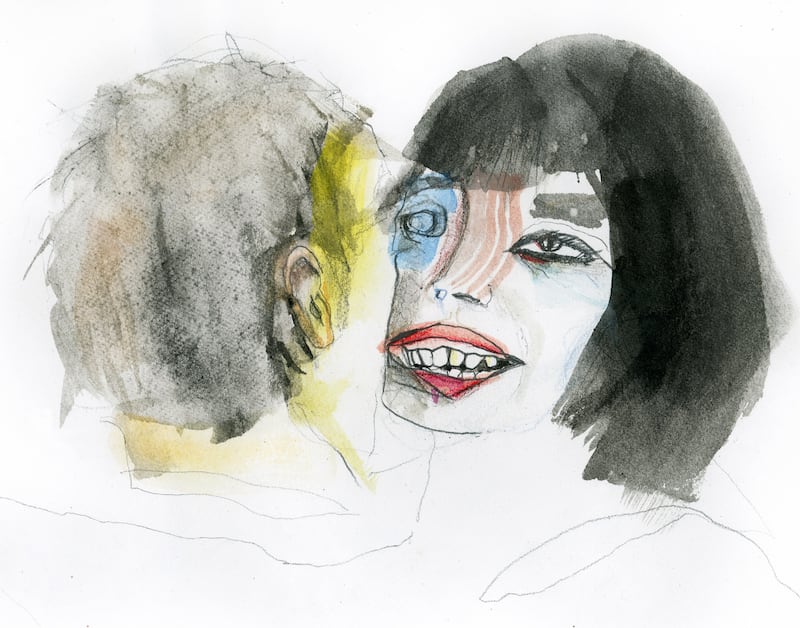
Along with a collection of framed Polaroids, Kuykendall also shows paintings. Some of them remix his photography, while others have a similar L.A. aesthetic quality: murky colors and nonuniform yet precise linework that’s both dirty and clean. Some of these works look like they could be book covers for neo-noir pulp antiheroes, or drawn during witching hours in the company of angels. They allude to the shadow side of his photography’s sunniest images, a balance that hints at what he might make if fashion campaigns hadn’t hired him. Disposable Days is well-balanced and relaxing, ultimately a little deeper than a cursory glance suggests.
SEE IT: Disposable Days by Andrew Kuykendall at Concrete Arcade at Cascada, 1150 NE Alberta Street, 503-816-0211, cascada.me/pages/art. 10 am–5 pm daily (occasionally closed for private events), through Feb. 4.