Skip to main content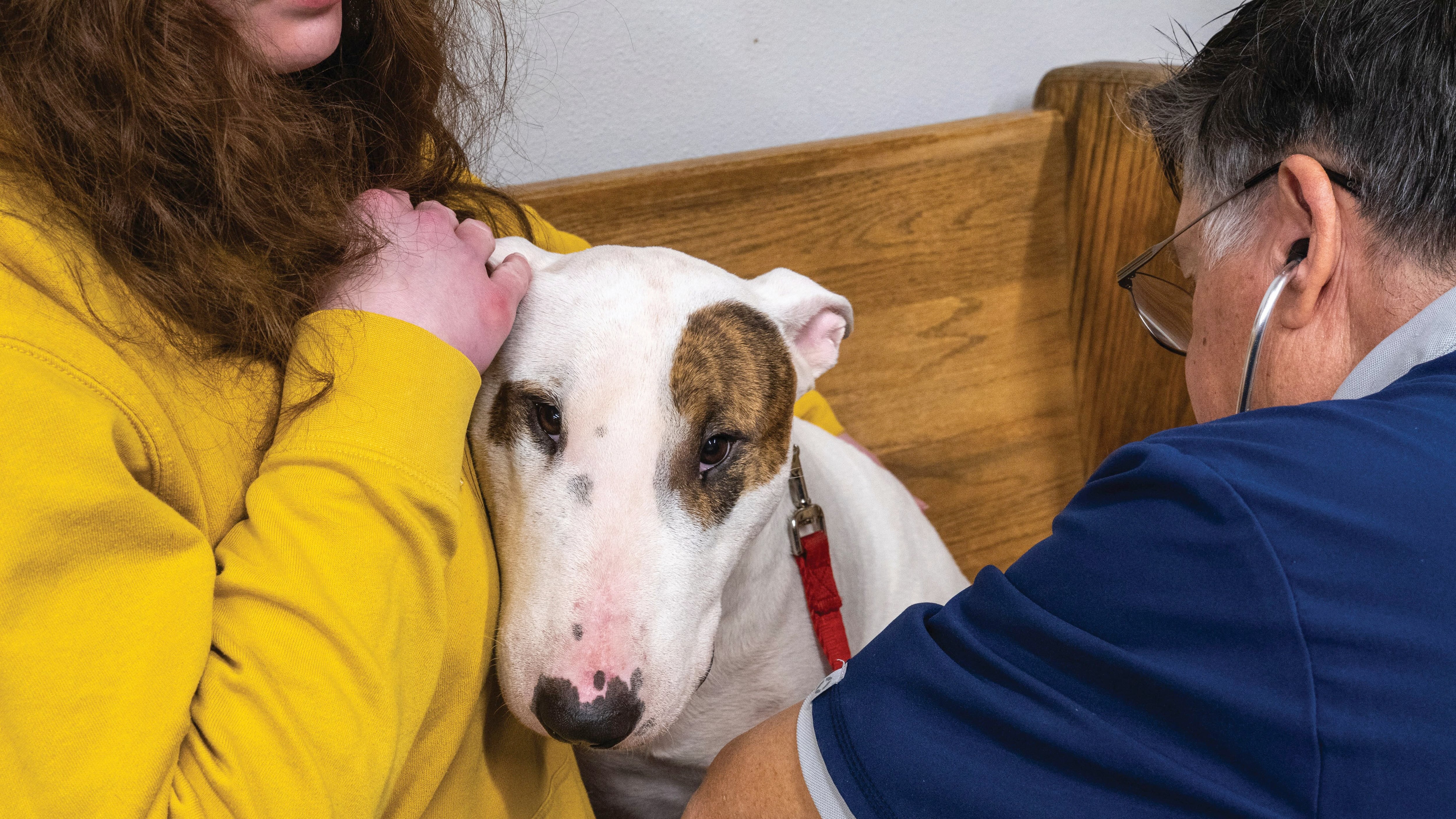
The line of animals at the pop-up veterinary clinic at Southeast 146th Avenue and Stark Street last month was long—and the needs of the animals in line varied. Aardvark the Bull Terrier’s feet were swollen and red from skin allergies. Daisy the Staffordshire bull terrier was there to get spayed. Seraphina the cat needed a round of vaccines, and Mama Bitch the chihuahua came to get her nails clipped.
It was all in a morning’s work for the Street Dog Coalition, a national nonprofit organization that started a new chapter in Portland last year. A team of volunteer veterinarians, vet techs and assistants provided free medical care to pets of people experiencing or at risk of homelessness. And despite the name, cats are welcome too.
Demand at the Feb. 28 clinic was intense. All of the patient slots were full by 8:30 am, says SDC team co-lead Nichole Sykes, and the clinic didn’t even open until 9.
“We can’t even get people in before turning them away, essentially,” Sykes says.
Angel Ticknor arrived at 6:30 am to stand in line with her dogs, Aardvark and Daisy. Aardvark—who looks a lot like the Target mascot Bullseye—was a first-timer at SDC’s clinic but Daisy had been once before. Neither of them have regular veterinarians they see for care. In a pinch, Ticknor has taken Daisy to DoveLewis Animal Hospital for care, such as when Daisy had problems after birthing a litter of puppies. They saved her life, and did it for a reduced fee, Ticknor says.
That won’t be a problem again since, by 10 am, Daisy was already at her spay appointment. SDC’s spay-and-neuter program is brand new and a passion project for Sykes, a former vet tech who now works in travel nurse staffing. She gave owners a hard sell to get their pets on the list. (“We don’t need more animals in shelters,” she says.)
Ticknor was already quite familiar with Cultivate Initiatives, where SDC held its February clinic. The nonprofit organization pays for Ticknor’s Northeast Portland apartment. Before that, she lived in a tiny home. Coming to Cultivate to get help for Daisy and Aardvark just made sense.
“These guys really help us,” she says of the Street Dog Coalition. “We’re really grateful for this program.”
Aardvark is 5 years old, but Ticknor has had him for only six months. The terrier’s original owner is in jail for domestic violence—he threw both Ticknor and Aardvark out of a car. The two have been extremely bonded ever since.
“He’s just a cuddle bug, really. He’s so sweet,” she says. “He loves me and he doesn’t go anywhere without me. He doesn’t like men, really. I love him to death.”
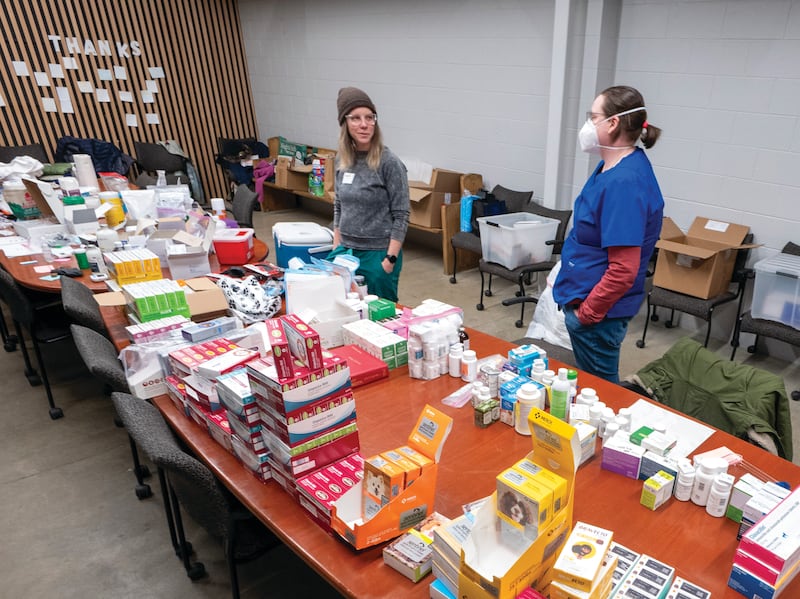
The checkups took place in Cultivate’s offices, the vets turning conference rooms into exam rooms with boxes of prescription flea, tick and heartworm medication all over the tables at the ready. The vet examined Aardvark’s infected paws, diagnosed him with somewhat severe digital dermatitis, and gave him medication and his owner at-home care instructions.
During the exam, the vet looked at Ticknor and said, “He’s so lucky to have you taking care of him. That’s really important.”
Upon exit, Ticknor and all of the attendees had their choice from a massive heap of donated pet supplies, including food, treats, harnesses, leashes, bedding and blankets.
But the Portland chapter has many more needs, chiefly for veterinarian volunteers. Three vets worked the February clinic—with one more, SDC could help seven more pets. SDC isn’t the only nonprofit organization in town serving homeless pets, though. The Portland Animal Welfare, or PAW, Team operates under a similar model, and Blanchet House feeds dogs meals, just to name two examples.
Mariah Kimball is medical director of Mt. Scott Animal Clinic and the co-lead of the Portland chapter of SDC with Sykes. The pets at Street Dog Coalition have nearly identical needs to the ones she sees every day in her office—help with skin issues because it’s allergy season, flea and tick prevention, vaccines, microchips. The one big difference is with the humans, Kimball says.
“The population that we’re serving is so much more appreciative,” she says. “These are not necessarily services they could otherwise afford to provide for their pets, and these are family members. They’re so very important to their quality of life and their mental health and their progress through whatever it is that they’re going through, because of the support the human-animal bond provides.”