Skip to main content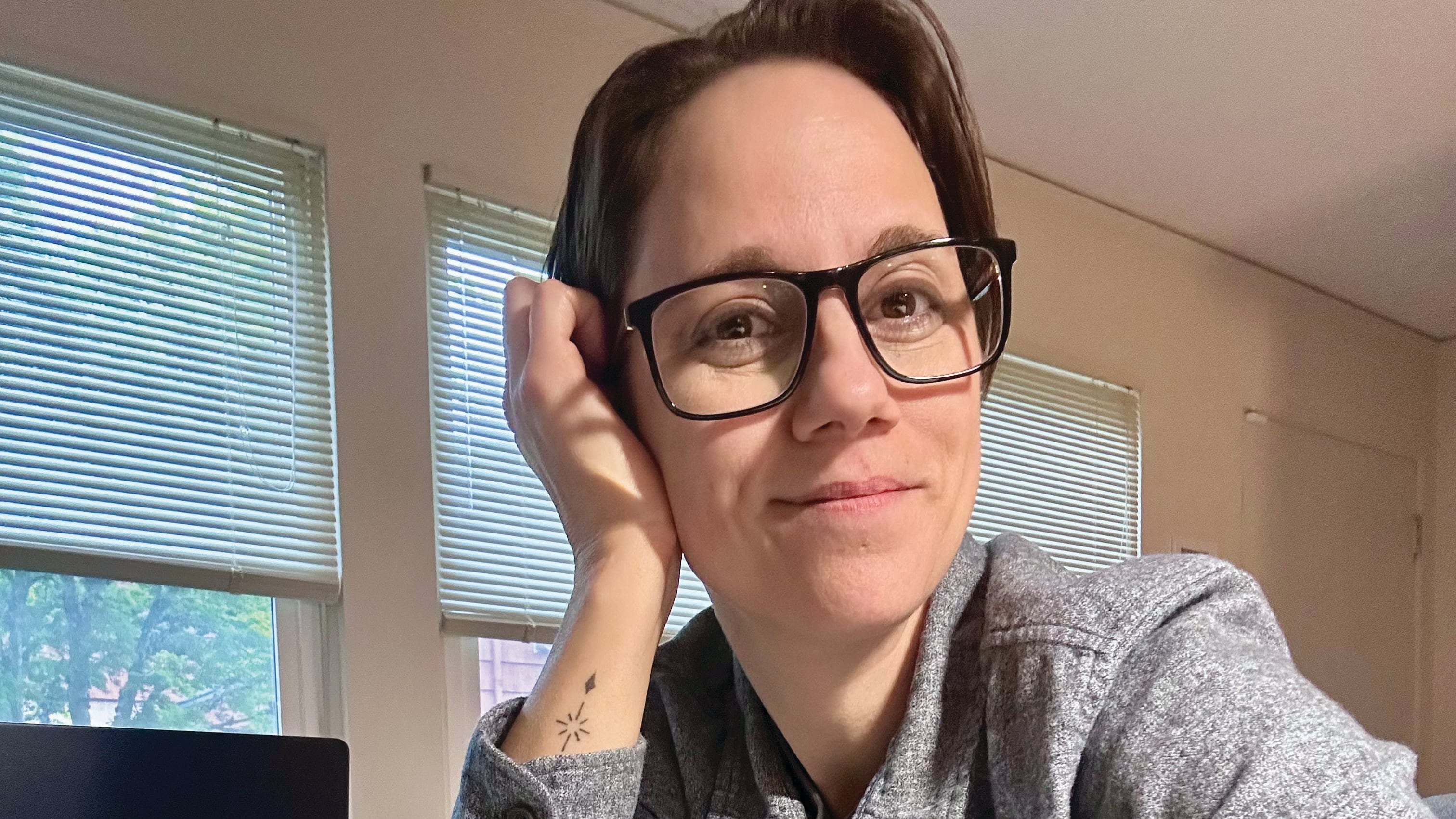
Dungeons & Dragons is typically perceived as a boys’ club. Any number of adventure movies featuring nerdy male outcasts support this theory. But in the game’s fantasy role-playing, world-building and collaborative problem-solving, Star Dell’Era saw a powerful form of collaborative art, one capable of fostering empathy, strengthening friendships, encouraging self-discovery, and creating genuine community. And she saw it as a place for women.
“Back in the day, when you had a crappy dungeon master who wanted to pummel the hell out of the group—because that’s the way D&D used to be—it was always a slog fest,” Dell’Era says. “I don’t like all the rules. It slows the flow.”
This is what makes Dell’Era the Anti-Dungeon Master: She prioritizes building and exploring stories with players rather than forcing a narrative upon them.
She also hand-builds elaborate three-dimensional sets using foam, miniatures, lighting, fog effects and painted terrain that transform each session into an immersive theatrical experience. (Dell’Era is not a dungeon master for hire, per se, though she runs several campaigns with friends and acquaintances and is down to give advice and discourse on Instagram @theantidungeonmaster.)
Given a fictional world with meaningful stakes but no real-world consequences, Dell’Era says players often make surprising choices that illuminate who they are—or who they’ve always wanted to be. Some of the most law-abiding people relish playing thieves, Dell’Era says, while others use fantasy to explore gender, vulnerability, courage or anger in ways unavailable to them in everyday life.
Dell’Era emphasizes that she is not a therapist before pointing to a growing movement of licensed clinicians using tabletop RPGs in group therapy. “It works on safe emotional regulation,” she says. “It works on social skills and connection, cognitive flexibility—because you’re dealing with dice rolls and unexpected stories that turn everything on its head.”
See the rest of Willamette Week’s Best of Portland 2026 here!