Skip to main content
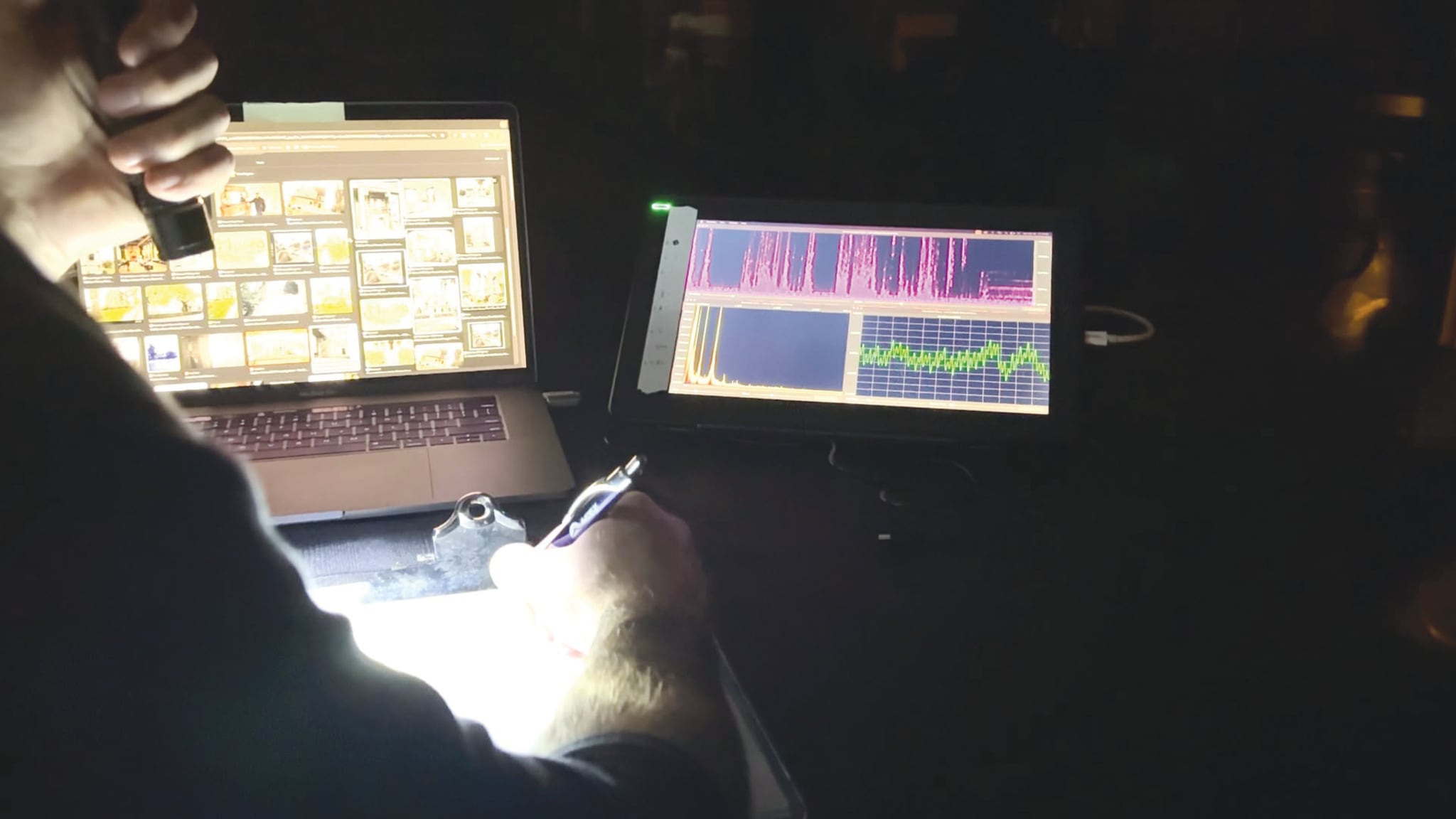
Most people are close to the edge by the time they call Oregon Paranormal. “We’re usually the last person they reach out to for help,” says co-founder Casey Goodwin. But when law enforcement, doctors and various clergy come up short, the investigative research firm is a beacon for Portlanders in the throes of a haunting.
“I guess I’ll call the local Ghostbusters,” Goodwin shrugs.
The team at Oregon Paranormal don’t balk at the Ghostbuster label. Goodwin and co-founder Scott Riedel have a fondness for films and TV shows about fictional paranormal activity. But these guys aren’t going to come in with proton packs and rid your home of pesky poltergeists. They don’t exorcise demons or consult Ouija boards. Nor do they “debunk”—a dirty word.
Their work is far more complex and holistic. Humane, even.
Riedel is a naturopathic physician by day. Goodwin works in marketing for Dark Horse Comics. They each got interested in the occult separately, as hobbyists, and decided to join forces after meeting while working at neighboring restaurants in the 1990s.
Oregon Paranormal officially launched in 2009. It’s funded by the co-founders and supported by members. Goodwin, Riedel and a team of three volunteers do not charge for their services. They do, however, have a high bar for cases, which they take on only after preliminary research and interviews. A single case can go on for six to eight months, with several return visits.
“Like children, ghosts and the supernatural don’t perform on command,” Riedel explains.
Working a case means employing the scientific method. The team observes the commercial or residential property, interviews occupants and conducts background research before formulating one or several hypotheses and running experiments to test said hypotheses.
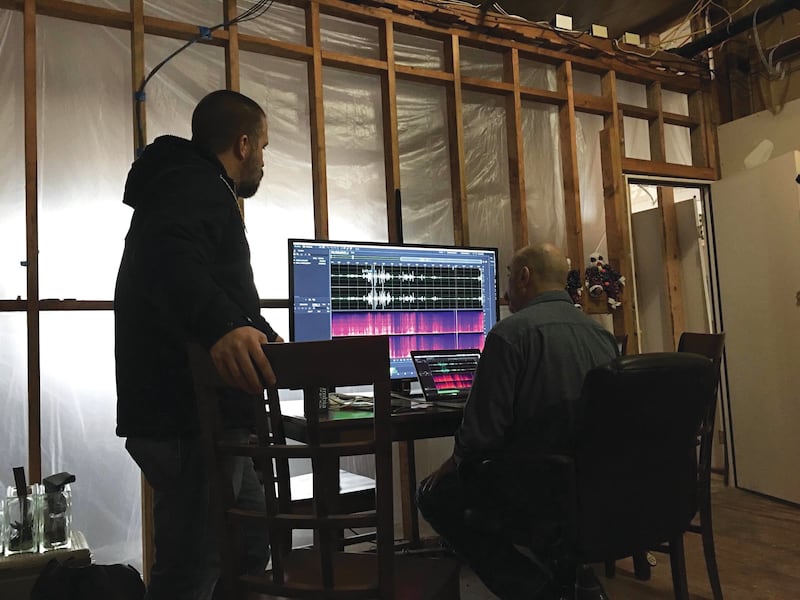
“It’s a far cry from what is seen on TV,” Goodwin says, “and at times is more on par with doing your taxes while watching paint dry.”
Frequently, there are nonoccult explanations for phantasmagoria. Goodwin mentions environmental factors like black mold, barometric pressure, electromagnetic fields and fluorescent lights that can make people see shadows, hear voices or have vivid night terrors.
Riedel often puts his doctor’s hat on when first approaching a case and asks people to get evaluated by a physician. Undiagnosed mental illnesses can often explain what they’re seeing, hearing or experiencing. Riedel mentions a person who reached out after experiencing sensory phenomena and who, once they were checked out, found out a tumor was causing their symptoms. “It ended up saving their life, and the manifestations they were dealing with dissipated.”
Sometimes, however, after exhausting all other avenues, Oregon Paranormal finds that the activity present is actually paranormal. In such cases, the approach is not what you might expect.
“We don’t claim to get rid of anything,” Goodwin says. “We’re literally there to observe and report and make people feel more comfortable in their homes and, hopefully, you know, prove that they’re not losing their mind.”
The guiding theory is to avoid assuming a presence is an evil intruder. Riedel compares a ghostly presence to a roommate that preceded the living. Instead of ghostbusting, they work to help people come to terms with paranormal activity. The living’s stress—about money, relationships, ghosts; whatever it is—stirs up ghosts, too.
“A lot of times acknowledging the entities in the house, if there are in fact entities in the house,” Goodwin says, “can alleviate a lot of the stress and make things a lot better.”
In the end, you might open your mind to an ethically noncorporeal relationship.
A selection of useful terms borrowed from Oregon Paranormal’s glossary
clairsentience: The ability to feel the present, past or future physical and emotional states of others, without the use of the normal five senses. Psychics who are clairsentient can retrieve information from houses, public buildings and outdoor areas.
discarnate entity: A spirit or non-material entity. Often used to refer to the personality of a deceased individual.
intelligent haunting: A term cooked up by television shows.
psychometry: The ability to discover facts about an event or person by touching inanimate objects associated with them.
poltergeist: A manifestation of energy that is often associated with electrical disturbances, objects moving by themselves, the rearranging of furniture, and scratching or banging on walls.
recurrent spontaneous psychokinesis: The technical term for poltergeist phenomena.