Skip to main content
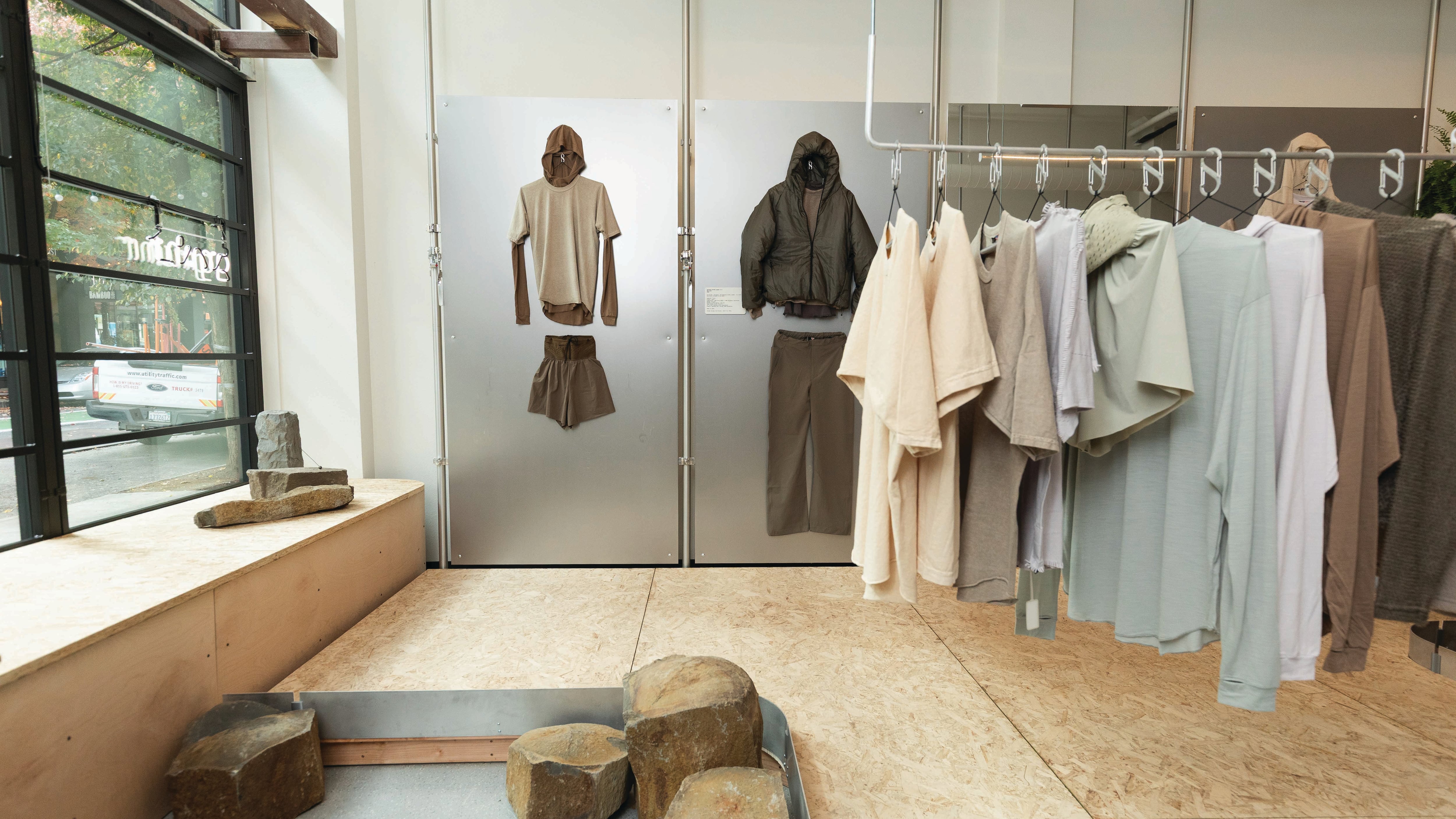
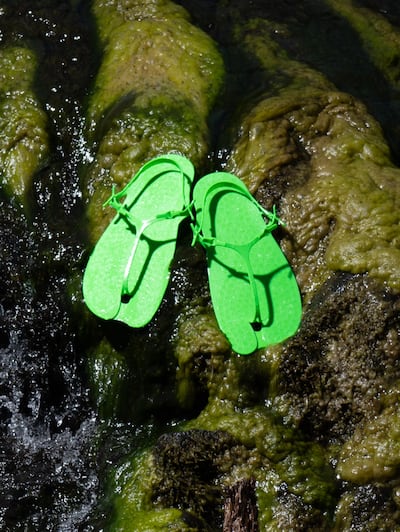
The ice sculptures arrived 30 minutes before the opening party. It was late October, 5:30 pm, and a man worked hard to hoist the pair of sofa cushion–sized ice blocks into the downtown storefront window, just off the corner of Southwest 11th Avenue and Harvey Milk Street. Soon enough, they stood vertically in the display. Futuristic, alien flip-flops were suspended in one. In the other, a fuzzy brown T-shirt appeared to be blowing in an endless breeze.
“The dimension is incredible,” Nur Abbas, the owner of the shop, gnuhr, said to the iceman.
“Dude, it floats,” the iceman told Abbas, assessing the frozen T-shirt. “It floats, so it was really hard.”
Abbas smiled and turned toward me. “That’s the quote right there,” he said with genuine enthusiasm. “It floats.”
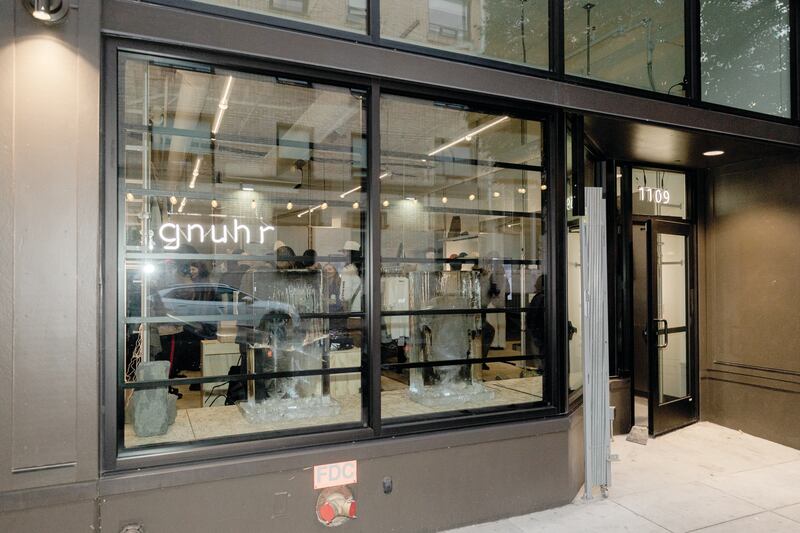
In his crystalline British accent, Abbas’ first name and the name of the brand he runs with his wife, Marilyn Smith, rhyme with “sure.” In American English, it’s closer to “shore” or “more.” The company, gnuhr, makes clothes for the minimalist backpacking style known as “ultralight,” which is all about using high-tech materials and clever design to lighten one’s trekking load. A T-shirt that refuses to absorb enough water to sink certainly fits the bill. But for Abbas, who got his start designing runway clothes in Paris ateliers like Maison Martin Margiela, Gucci and Louis Vuitton, aesthetics are just as much of a concern. In fact, outside of online sales, gnuhr clothes before opening this flagship store were sold exclusively in a handful of fashion boutiques around the world.
“Opening this gives us the opportunity to show things in our way,” Abbas says, “to present the pieces together, communicate what’s special about them.”
At a glance, many of the brand’s garments look neither like runway pieces nor technical outdoors garb. They’re mostly basic shirts and sweatshirts, cargo pants and running shorts. While technical performance is a clear priority—everything is made from ultra-engineered fabrics with impressive sounding names like Polartec Alpha—it would be hard to call the clothes “gear.”
That dissonance is exactly the point. The gnuhr website describes an ambition of “connecting ultralight functionality and everyday life.” In the realm of so-called sports style, where printed Arc’teryx skull caps and brightly colored Salomon trail sneakers signal to everyone at the coffee shop that you like to climb mountains (or whatever), gnuhr’s clothes look almost pedestrian. Almost.
Since launching in 2023, gnuhr has assembled an impressive list of stockists, including Dover Street Market in Ginza, Japan, and the luxury retailer Neighbour in Vancouver, B.C. Portland avant-garde boutique Stand Up Comedy, a few blocks away in the Morgan Building, was one of its first wholesalers.
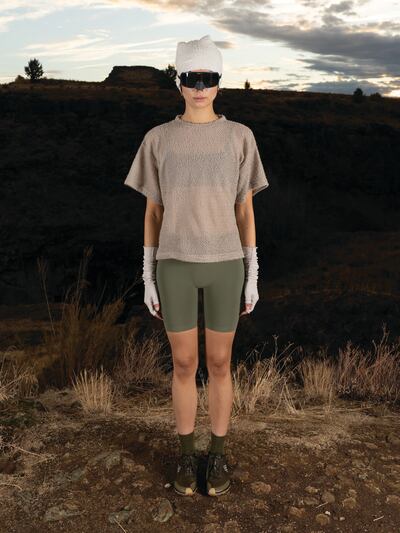
“I don’t think they get overly bogged down in this idea of, this has to be 100% the most technically perfect, apex item,” Stand Up Comedy owner Diana Kim says. “Obviously, they field test everything…and all of it works.” But it’s also about style. “Not only are you taking it camping or on your weekend farmers market trip,” Kim adds, “I have had guys wear these shag pieces with nothing underneath…and it’s, like, super sexy and kind of sheer.”
The shirt in the big ice brick was one of these shag pieces ($89). It’s made from Polartec Alpha, an insulating fabric renowned for its heat-regulating properties. It’s fleecelike, but also semi-sheer. These paradoxically shaggy and see-through shirts and sweatshirts are one of the brand’s most recognizable staples.
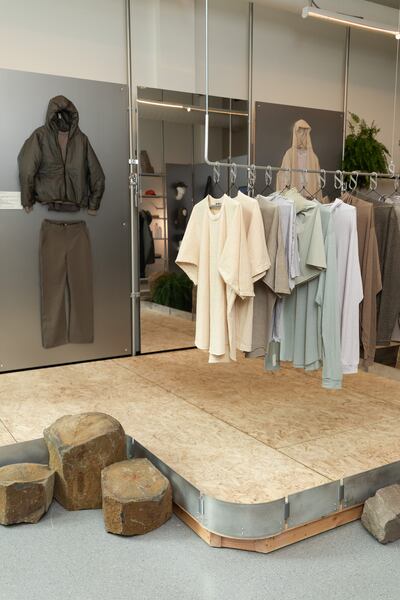
The gnuhr store, designed with local architects Observation Studio, mirrors this straddling of the fashion and outdoor spheres: unfinished plywood, some big rocks and ferns, surgically precise steel panels from which humanoid mannequins spring modeling a pair of shorts or tights. On one wall, a video screen functions as a “thermal mirror”—an artful gimmick to prove how well the products work. To demonstrate, Abbas held a newer puffer jacket design up to the camera. “It’s going to block all the heat coming off my body,” he said. “So, everything white is hot, and anything that’s blocking it is darker.”
Instead of brash graphics, a subtler aesthetic language sets his pieces apart—tasteful earthtone fabrics and ever so slightly askew iterations of familiar shapes. Or perhaps it’s the single seam that runs across the back and down each sleeve of a T-shirt that catches your eye. The company just received a patent for that design, its “Tubular T” ($59), which is made from a woven tube of cotton jersey and completed with just that one seam, instead of the usual five to seven of a standard T-shirt.
Eliminating seams is a big thing for Abbas. It often makes clothes more comfortable and durable and requires less manufacturing labor. But it also affects the look. The Warp T Tank ($159), for instance, looks almost like a shirt pattern instead of a finished shirt. And it kind of is—perforated lines throughout mark where you can cut the sleeves or neck to adjust the design.
“This just gets knit all in one go,” Abbas says, meaning that shirt, which is produced from a single, very intricately designed sheet of woven nylon, has zero seams.
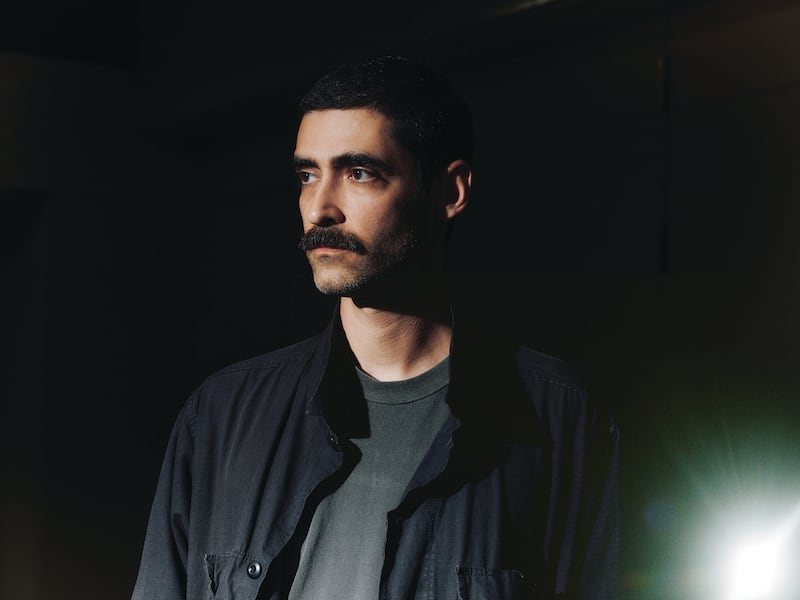
After a 10-year stint at Louis Vuitton, Abbas, 46, moved from Paris to Portland for a job at Nike in 2018. There, among other projects, he helped relaunch the hiking and outdoors subbrand Nike ACG, or “all conditions gear.” As you might guess, backpacking was the outdoor hobby he picked up after moving to the Pacific Northwest.
After Nike, and a brief tenure at Yeezy, Abbas pivoted to consulting full time in 2022, and opened a design studio in an office off Southeast Water Avenue. Today, the studio employs a dozen people and counts clients around the globe, including the high-end Japanese outdoor apparel company Goldwin, and Uniqlo, one of the largest clothing manufacturers in the world.
Developing the gnuhr brand happened somewhat by accident, Abbas says, while tinkering on client projects and making clothes for himself. “I’m very particular,” he says; the tight, gear-oriented clothing previously available on the ultralight market wasn’t his thing.
But the simple and direct sensibility of a prototype has carried through and become a hallmark: There are almost no logos or branding, and seams, when present, are often made intentionally visible instead of being tucked away. Fabrics are leveraged to be shown off, too, perhaps by leaving a hem unfinished and frilly instead of concealing it as a larger corporate brand would.
The effect is like spotting a nice road bike that lacks a paint job, or an undecorated advance reader copy of a forthcoming novel. The refined but unpolished appearance signals that whoever’s riding the bike or reading the book—or wearing the slightly funky, semi-transparent hoodie—likely knows something about it.
As intentional—and effective—as the aesthetic is, it’s also a byproduct of how the clothes are actually made. One of the designers, Jack Dorrance, worked closely on the Footprint Camp Sandals ($69), those alien flip-flops frozen in the window display—a project that managed to reach market without ever growing past the prototype phase.
Dorrance says he was interested in making a flat sandal, something that could be broken down into a panel and was packable. He 3D printed a prototype, took it on a backpacking trip, and realized the model worked just fine. So now they print them all themselves, even shipping them flat in an envelope instead of a shoebox. “Kind of like flat-pack furniture,” Abbas explains. “The customer can connect it together themselves.” (They can also print them themselves at home, if they want: The digital file is available for $9.)
The new store adds another layer to this testing cycle. Watching customers interact with and react to the clothes mimics a focus group—and gives customers a chance to experience what all the fussing over seams is about.
Dorrance mentions the satisfaction of watching ideas click for customers browsing and trying on the products. “I’m kind of there and watching it happen in real time.”
Abbas has been pleasantly surprised by the new dynamic, too. Though he’s designed clothes that millions of people have bought and worn, this is the first time across two decades of work he’s had direct experience actually selling clothes to those people. Global pedigree withstanding, he’s become in some respects yet one more guy selling things he’s made out of a little shop in Portland.
SHOP: gnuhr, 1109 SW Harvey Milk St., gnuhr.com. 11 am–7 pm Thursday–Saturday, noon–6 pm Sunday.