Skip to main content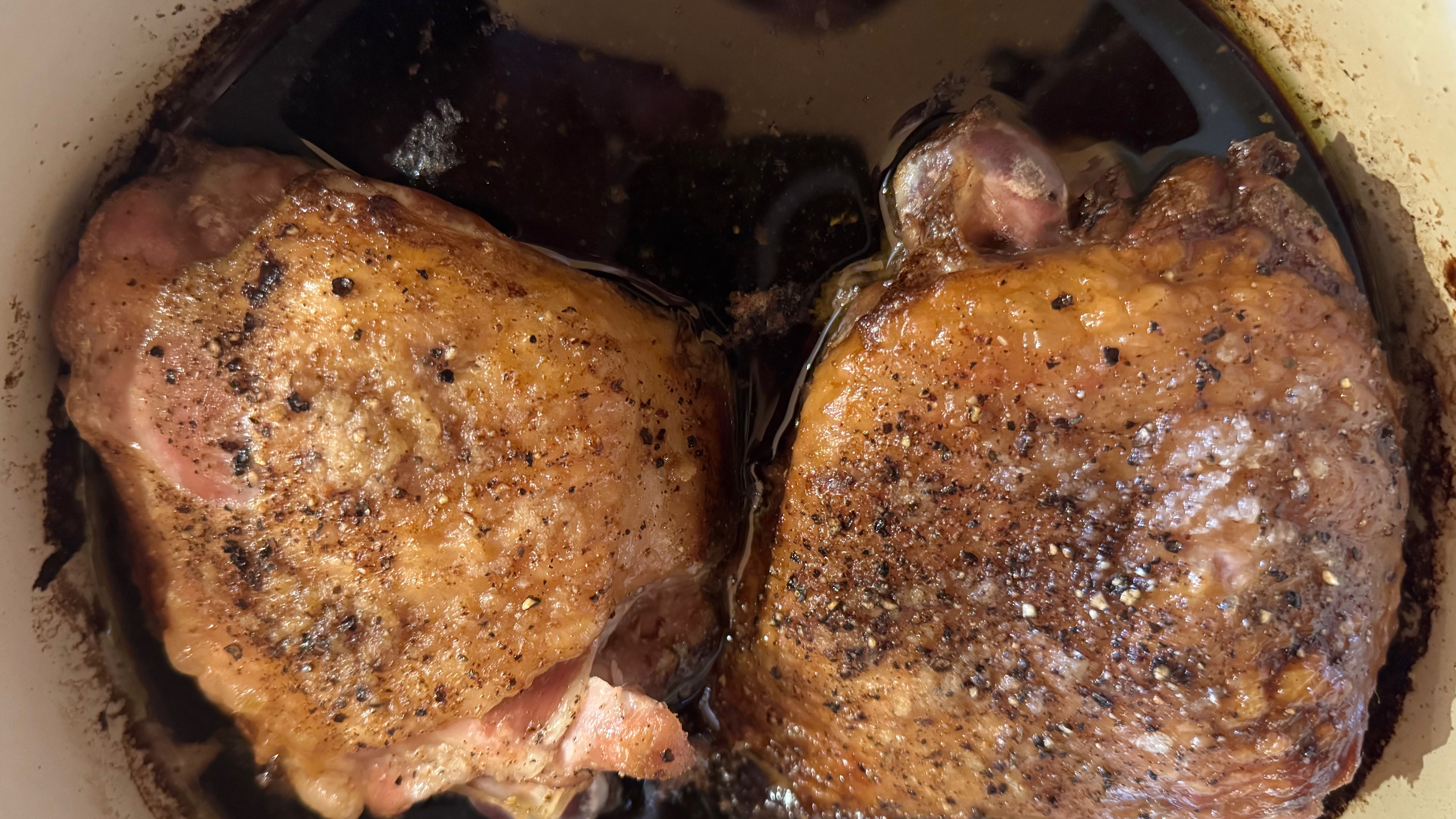
Jim Dixon wrote about food for WW for more than 20 years, but these days most of his time is spent at his olive oil-focused specialty food business Wellspent Market. Jim’s always loved to eat, and he encourages his customers to cook by sending them recipes every week through his newsletter. We’re happy to have him back creating some special dishes just for WW readers.
The first time we cooked a Thanksgiving dinner together, my wife, Judith, told me her father always poured a can of beer over the turkey. Ernie was a first-generation Sicilian American insurance agent and frustrated chef who made his own sausage and pasta. While her schoolmates ate peanut butter and jelly sandwiches at lunch, Judith’s lunchbox might contain leftover eggplant Parm on a hard roll. If Big Ern basted his turkey with beer, so would I.
But while he’d grab a can of Schlitz, here in Beervana the obvious choice was a local craft beer. Over the years, I tried different brews, and after a near-disaster with an IPA that had me trying everything to cover the hoppy bitterness, I settled on old-school stouts and porters. Their dark malted grains add a sweet, nutty flavor, and the bitter hop note is restrained (although I always taste a new stout before I use it). These dark beers also made the best gravy, to me the most important part of Thanksgiving.
You might think this tip is coming a bit late since we’re a few weeks past the traditional day for roasting turkey. But after Thanksgiving, grocery meat departments thaw the unsold turkey and cut them into parts, so it’s fairly easy to find thighs. And since they’re usually between $4 and $5 a pound, the thighs are the best deal in the meat case.
As much as I like the thighs, I’ll admit I cook them so I can make gravy. You can make a roux and add the cooking liquid, but I use my Aunt Margaret’s technique of mixing some flour in cold water (hot water makes it lumpy), then adding it to the roasting pan. Sometimes I replicate the Thanksgiving flavors and make mashed potatoes and a stuffinglike panade as a gravy vehicle, but rice, beans or even pasta can provide a tasty substrate.
Recipe
1–2 turkey thighs, about 2–3 pounds each
Extra virgin olive oil
12–16 ounces dark beer, preferably a stout or porter
Kosher-style sea salt
Freshly ground black pepper
Pour a healthy glug of olive oil into a Dutch oven or roasting pan, then roll the thighs around in it so they’re well coated. Generously salt and pepper them on both sides, then arrange them skin side up. Add enough beer to come about halfway up the thighs (have a drink if you like, but save most of the rest if there is any).
Cook uncovered in a 325°F oven for an hour, basting once or twice and adding a little more beer. While an internal temperature of 165°F means they’re done, I prefer to cook them to between 170 and 180. Thighs have more connective tissue, and it takes longer and a little more heat before its collagen softens to gelatin to create that fall-apart texture. If you don’t have a thermometer, stick the thighs with a fork to test them, but don’t let them cook too long or they’ll dry out.
Remove the thighs from the pan and let them rest while you make the gravy. Stir together 2 tablespoons of flour and enough cold water to make a thin paste. Add it to the roasting pan, stirring to mix completely (if you’ve got a stick blender, use it). Bring the mixture to a gentle boil and simmer until it thickens, about 10 minutes.