Skip to main content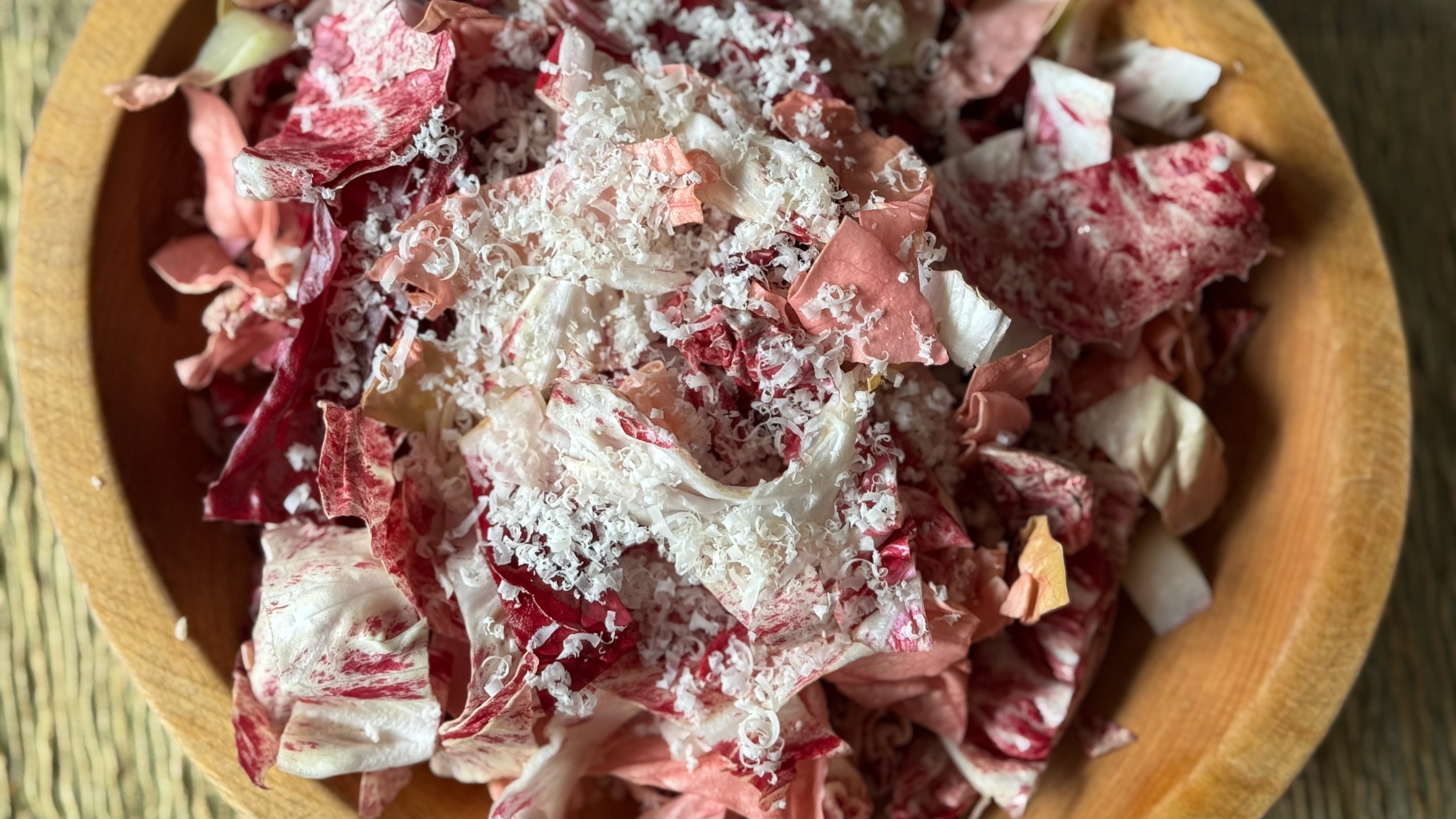
Jim Dixon wrote about food for WW for more than 20 years, but these days most of his time is spent at his olive oil-focused specialty food business Wellspent Market. Jim’s always loved to eat, and he encourages his customers to cook by sending them recipes every week through his newsletter. We’re happy to have him back creating some special dishes just for WW readers.
It’s been more than 100 years since Caesar Cardini first tossed romaine lettuce with a garlicky dressing and created the eponymous salad that spawned a seemingly infinite number of variations. While the history is a little murky, Cardini’s version supposedly combined olive oil, lime juice, coddled eggs, Worcestershire sauce and Parmesan cheese with croutons and whole leaves of romaine that were meant to be picked up and eaten with the fingers. He mixed the ingredients tableside, and the egg helped emulsify the dressing into a mayo-like consistency that clung nicely to the crispy lettuce.
The ancient Romans ate salads, and it’s not much of a stretch to assume that a similar mix of olive oil, vinegar, garlic, eggs and cheese flavored more than a few. They cured anchovies and made a fermented fish sauce called garum, and either could stand in for Worcestershire. But Cardini tossed his version at his restaurant in Tijuana, a popular destination for Hollywood celebrities who needed a drink during Prohibition. When legal booze returned in the 1930s, the salad came north.
This radicchio version, inspired by the insalata Nostrana at Cathy Whims’ restaurant, combines the colorful chicory with a streamlined dressing made from pantry ingredients. Radicchio thrives in the Pacific Northwest. During the winter, farmers markets and better produce sections offer more varieties than the more common red balls of Chioggia. Look for the deep purple and conical Rosa del Veneto, the red-flecked pale green Castelfranco or the stunning pink Rosa del Veneto, and buy a few heads. Radicchio keeps for weeks in the refrigerator.
While its intensity varies, all the radicchios have a characteristic bitter flavor, but soaking the cut leaves in cold water can tame it. It comes from a compound called intybin, or (to hair-splitting chemistry fans) lactucopicrin. It’s water soluble, and the soaking removes some of it. The strong flavors in the Caeserish dressing also offset the bitterness.
Recipe
About 3 cups chopped radicchio, preferably a mix of varieties
2 tablespoons mayonnaise
½ teaspoon garlic powder (or 2 cloves garlic, finely chopped)
1 tablespoon wine vinegar
1 teaspoon fish sauce (or 2 anchovies, finely chopped)
¼ teaspoon kosher-style sea salt
Freshly ground black pepper to taste
3 tablespoons extra virgin olive oil
1–2 ounces Parmigiano Reggiano cheese, about ¼ cup finely grated
Croutons, optional*
*Packaged croutons are too hard to spear with a fork and make eating a salad too complicated, so I usually leave them out. If I do want something bready, I’ll toast a slice of good, crusty bread, drizzle it with olive oil, and cut it into bite-sized pieces. For a larger batch, I cut the bread first, toss it with olive oil, and bake at 350°F for about 15 minutes. Either way, you get a slightly crunchy crouton with a softer interior that’s easier to eat with a fork.
Make the dressing first in the bottom of the salad bowl by mixing the mayo with the garlic powder, vinegar, fish sauce, salt and pepper. Stir in the olive oil, add the cheese and radicchio, and toss.