Skip to main content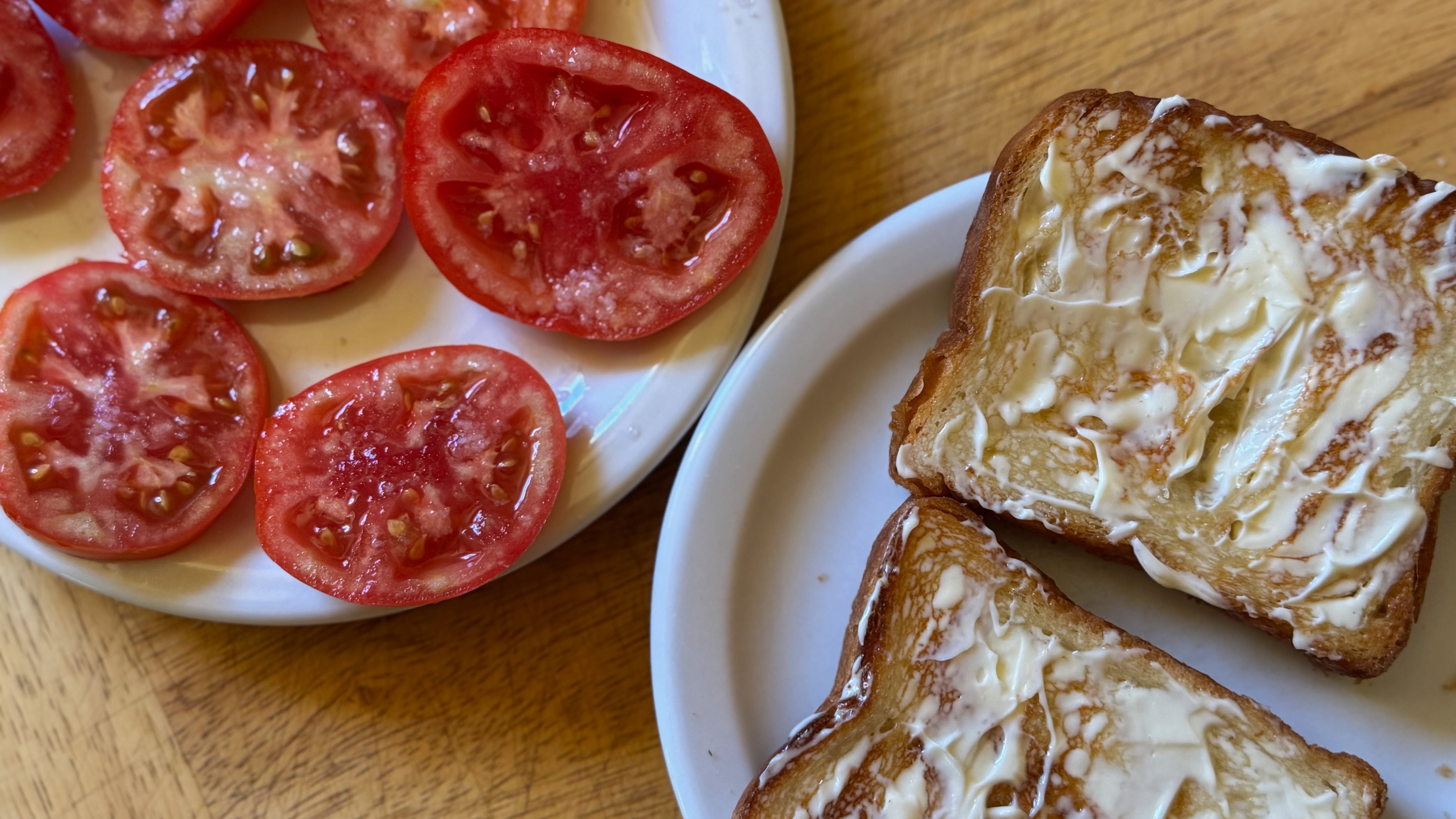
Wellspent Market founder Jim Dixon has been writing about food and restaurants for Willamette Week for a long time. He wants our readers to eat well, and he shows them how with the recipes he creates just for us by using simple cooking techniques and easy-to-find ingredients.
A confession: I’ve never called an open-faced sandwich a tartine. But the alliterative, more sophisticated, European-sounding “tomato tartine” makes a much more compelling title than the plain and more accurately descriptive “open-faced tomato sandwich.” So now that I’ve sucked you in, here’s why this is a superior version of tomato, mayo and bread.
The tl;dr is more tomatoes. It’s the same reason I prefer a deconstructed tomato sandwich over the traditional approach. When a favorite food hits its seasonal peak, I’m eating as much of it as I can. The handful of plants in my driveway garden produce more tomatoes than I could ever eat stuck between two slices of bread, but I can consume twice as many using the open-faced approach. And I don’t actually “make a sandwich” in the traditional sense. I just take a slice of tomato, set it on the edge of my prepared bread, eat the slice and underlying bread in one bite, and repeat.
Start with the tomatoes. As Guy Clark sang, there’s only two things that money can’t buy, and one of them is homegrown tomatoes. If you’re not growing any and can’t convince your neighbor to part with a few of theirs, the farmers market is the second-best source. The better grocery store produce sections carry dry farmed tomatoes, most often the tennis ball–sized Early Girls, and they’re very good. (An heirloom label is mostly marketing and doesn’t guarantee a good tomato, just a variety that hasn’t been hybridized.)
Choose your bread, preferably a softer loaf instead of the crispy crusted loaves we typically think of as good bread. It’s not that it wouldn’t be delicious slathered with mayo and piled with tomatoes, but for this dish you want that tender, white-bread texture. My favorite is the briochelike Sally Lunn from Little T American Baker, but I most often use the Japanese milk bread called shokupan since it’s a bit more widely available. Schwartz Brothers Bakery in Renton, Wash., makes an extra-buttery croissant loaf that amps up the rich flavors, and I’ll admit that the thick-sliced Texas toast from Franz, Portland’s own industrial bakery, isn’t bad.
Duke’s mayo is my favorite. It’s made with more egg and no sugar. But Kewpie, Best Foods (aka Hellman’s to the eastern half of the U.S.), or anything in a jar except the abomination called Miracle Whip will work. Skip the handmade aioli. More important is applying what famous New Orleans sandwich maker Mason Hereford of Turkey and the Wolf calls “wall-to-wall” mayo. The condiment should cover the bread from crust to crust in an even, not too thick layer.
Recipe
- Tomatoes
- Kosher-style sea salt
- Extra virgin olive oil
- Bread
- Mayonnaise
Cut a thin slice from the stem and blossom ends of each tomato, then cut it into ¼-inch-thick slices. Arrange them on a plate and sprinkle with salt.
Heat a skillet over medium heat and add a small drizzle of olive oil. Grill the bread on both sides until light brown. Eat the end slices from the tomato while you grill the bread.
Spread a thin layer of mayo on one side of each slice of bread and place them on a separate plate so they don’t get soggy from the juices coming out of the sliced tomatoes.
Place a single slice of tomato on the edge of a piece of bread. Take a bite, then another, and another until that slice is gone. Repeat until the end of tomato season.