Skip to main content
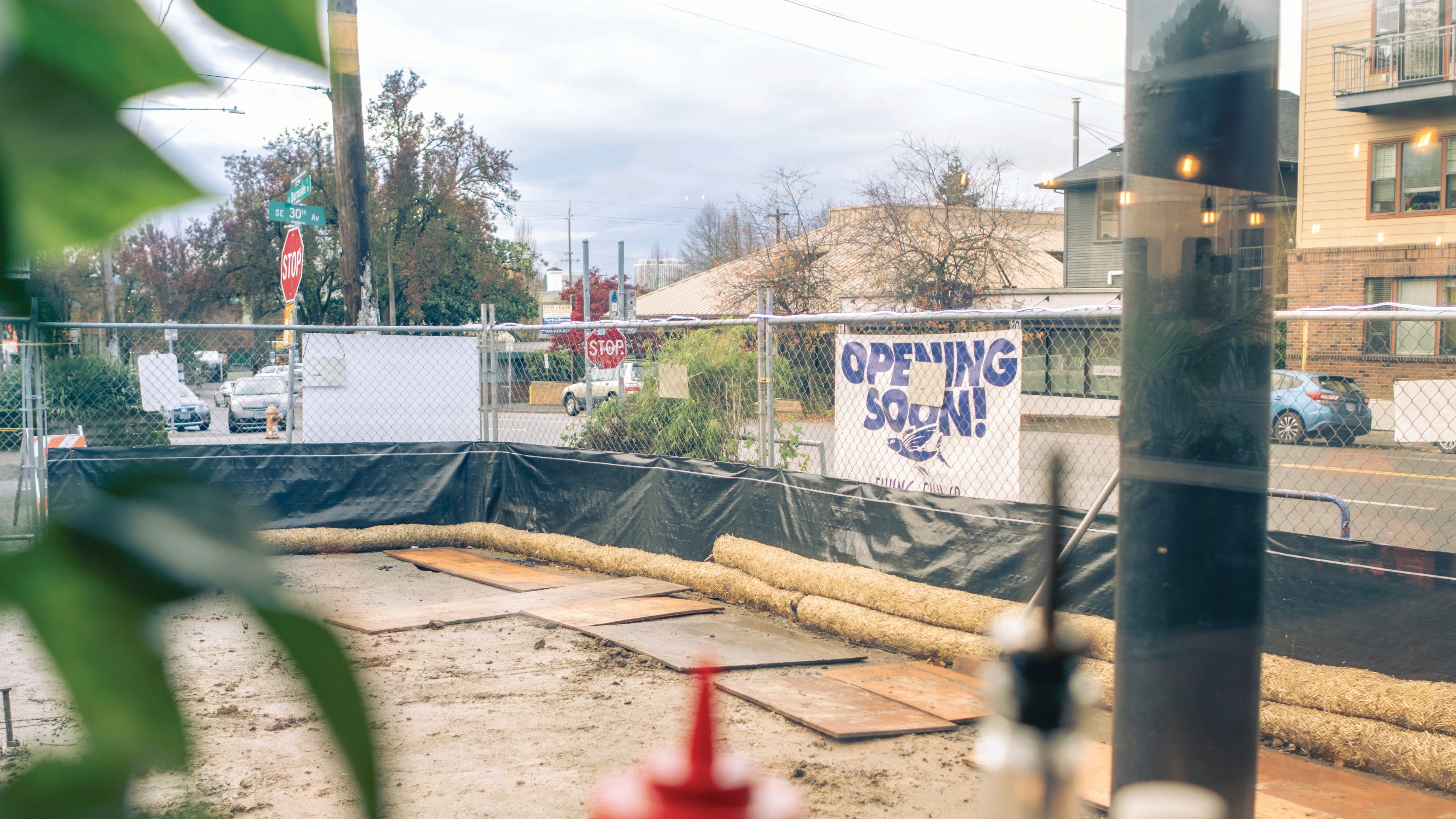
For the past year, Lyf Gildersleeve has been waging a one-fishmonger war against City Hall. While cities like New York and San Francisco make headlines signing year-round outdoor dining and home restaurants into law, Gildersleeve says his efforts to build a permanent outdoor dining area in Portland, for his critically acclaimed restaurant and seafood market Flying Fish, have been nothing short of Kafkaesque.
Gildersleeve’s predicament is not unique. Local COVID-era workarounds, like cocktails to go and certain outdoor dining plazas, have proven popular enough to become permanent. But the city is beginning to crack down on others, including many of the quasi-permanent shelters that sprang up to facilitate outdoor and on-street dining. Despite what he describes as an earnest effort to comply with local laws, Gildersleeve has been caught in a net of bureaucracy since October 2025.
The saga began with a fire marshal code violation citing “multiple structures constructed at exterior without permit” that put him out $25,000 in temporary fireproofing measures. After the inspection, Gildersleeve hired an architecture firm to begin work on a more permanent structure. The fireproofing was a temporary, if expensive, stopgap to buy his business six months with the city while the new structure went up.
The fire marshal “came in and verified that it’s safe,” Gildersleeve says. But the city took four months to approve plans for the new structure, and the temporary permit was backdated to the original citation on Oct. 30, 2025. Meaning the $25,000 he spent on fireproofing the tent only bought him a two-month reprieve. As of May 2026, Flying Fish is potentially on the hook (so to speak) for fines of up to $1,000 a day by the city. Gildersleeve says the city hasn’t started issuing those fines yet, but it’d put him out of business if the city did.
The expenses don’t end there. In order to comply with code, Gildersleeve would either have to disassemble the shelter six months out of the year, an unrealistic proposition, or build a permanent structure adhering to code. Between the architect, construction materials, and labor costs, Gildersleeve estimates such a project would cost somewhere between $100,000 and $150,000. He’s launched a crowdfunding campaign to soften the financial blow, which had raised around $64,000 by the time of publication.
The larger issue, however, has been getting a clear answer on which requirements, exactly, the new patio would have to meet to appease the city.
Michael Andersen, a researcher on zoning and building codes at regional sustainability think tank Sightline Institute, says Gildersleeve is far from the only restaurateur in town stuck between a rock and a hard place.
“The outdoor dining explosion during the pandemic revealed that it might be useful to also have a middle ground between a restaurant and a food cart,” Andersen says. “But unless the city is willing to make the conscious decision that it’s good for that middle ground to exist, our existing building code rules are going to squelch a lot of small business activity.”
Ken Ray, spokesman for Portland Permitting & Development, tells WW that Portland’s fire code is in line with international standards. However, some of the red tape Gildersleeve faces is because Flying Fish lies in what is known as a “design overlay zone,” meaning “certain areas of Portland where design and neighborhood character are of special concern.”
As for the allegations that the city keeps moving the goalposts? “Multiple city bureaus, including Portland Fire & Rescue, Portland Permitting & Development, and the Portland Bureau of Transportation, work with restaurants to make sure their outdoor eating areas meet codes and are safe for their customers,” Ray wrote in an email to WW.
Gildersleeve’s experience with the various interested city agencies has been less than collaborative. “Our assigned permit technician went on vacation,” Gildersleeve wrote as one example in an email newsletter to supporters Nov. 9. “Our architect had to track down an alternate technician. The fire plans examiner then issued a new comment, asking us to remove most of the notes required in the previous round.”
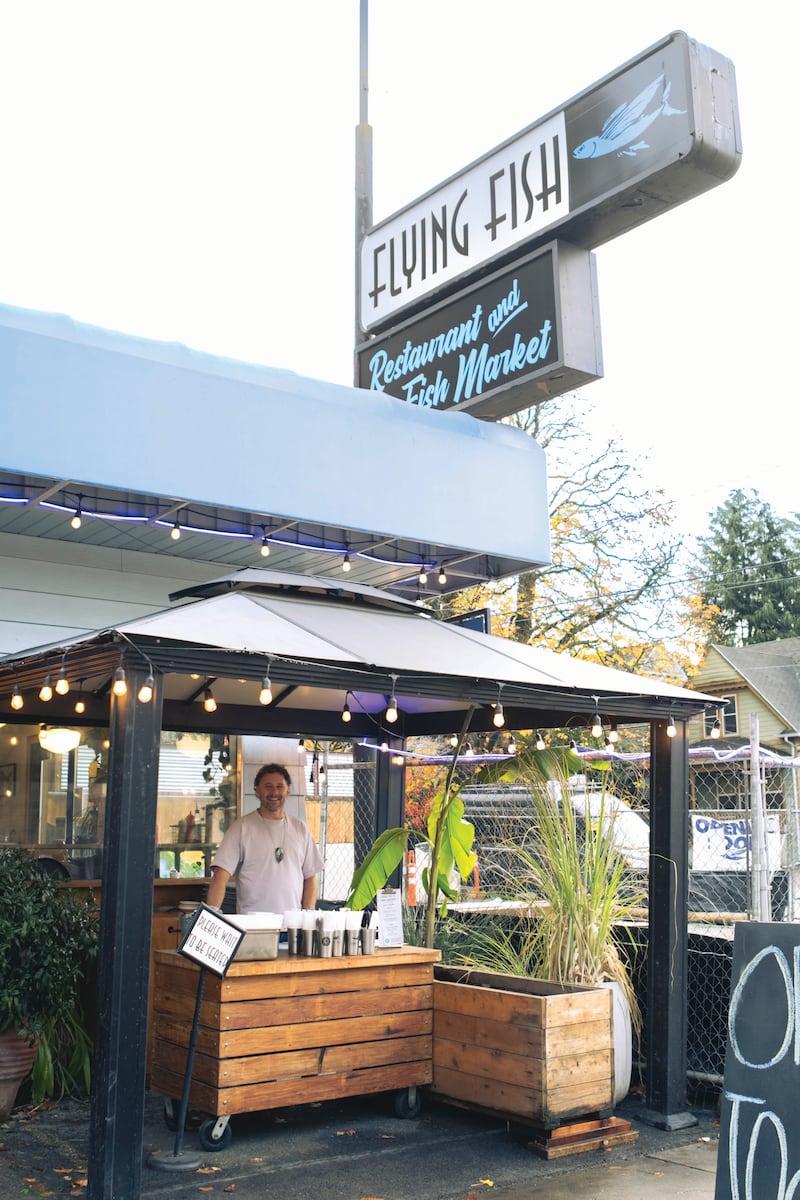
The story of how Gildersleeve got into this permitting imbroglio begins in Sandpoint, Idaho, which sounds like an inauspiciously landlocked origin for one of Portland’s preeminent fish markets. The small Northern Idaho town, population 8,639, is about 400 miles from the Pacific Ocean and a five-hour drive from the oceangoing fisheries of Puget Sound. In the early 1980s, that was Sandpoint’s closest source of fresh fish, so Gildersleeve’s father flew back and forth in a four-seat Cessna loaded with seafood for the Idaho panhandle.
Gildersleeve started his own version of the family business at a farmers market in Park City, Utah, in 2008 (no planes, but the name stuck) and landed in Portland in 2011. He converted a UPS truck into a mobile fish market and plastered it with sans serif declarations of “Shrimp” and “Alaskan Halibut” and “Food stamps + VISA.” Sustainable seafood options his family championed back in Idaho were the focus, along with rare catches from the fishing boats he’d developed relationships with over the years. A stint at Portland Farmers Market led to an oyster bar at Northeast Sandy’s posh Providore Market and finally his own flagship restaurant in a former Subway location on East Burnside.
The grand opening? Feb. 10, 2020.
At the time, Flying Fish was an indoor operation: fish coolers on one side and a small bar and 15-seat dining area on the other. “There were some picnic benches against the side of the building” Gildersleeve remembers, but most of the outdoor area was a long nose-in parking lot. The market side picked up the slack when indoor dining shut down in 2020. “We were a fish market for nine years leading up to there, so people were used to coming and getting their fish from us,” Gildersleeve says. But he wanted Flying Fish to serve the neighborhood as a restaurant too, and people tend to like to sit down for that part.
Gildersleeve put up umbrellas in the summer of 2020. With the rainy season approaching, he installed a 600-square-foot tent his family used back in Sandpoint. That was less than the 750 square feet that would have triggered outdoor permitting regulations. But soon a second tent pushed past regulations. Then came wooden reinforcing, heaters and fire pits in winter, as well as plastic sheeting to keep in the heat. He decorated the space with aquatic murals and a row of wooden planters, and put in a beer garden waiting area and a spot for his old fish truck to serve as an impromptu oyster bar.
The resulting covered dining area has always been hodgepodge. It’s not exactly a Hooverville shanty or the anarchist architecture of the Kowloon Walled City, but the space maintained a certain DIY flavor as it evolved during the pandemic.
His quasi-legal open-air dining room went on more or less unbothered until the complaint in October 2025. Gildersleeve describes the year that followed as an arduous, if not downright byzantine, experience of trying to get the permits the city says he needs through the proper channels.
The architects drew up plans and cleared them with the Bureau of Planning and Sustainability and the fire marshal. “They said that we were exempt from the Burnside Design Overlay Zone,” Gildersleeve says, referring to a points-based city program that includes everything from historical plaques to bird-safe window glazing. “Eight months later, two months into our building permit process, they told us that we’re not,” he says, which meant the architects had to go back to the drafting table.
These kinds of administrative headaches have moved increasingly to the forefront of local politics, even breaking out into national news. New York Mayor Zohran Mamdani made early headlines when he pledged to eliminate the city fees tied to increased prices at famously affordable halal carts around that city, and his administration has followed through on a number of permitting reform measures. San Francisco Mayor Daniel Lurie has made a similar push to simplify and speed up the process in that city.
As much as Portland has become a dining destination, support for restaurants like Flying Fish has been slow to arrive. City Councilor Angelita Morillo met with Gildersleeve in October to hear out his concerns, and pledged on Instagram to look at “long-term and short-term improvements to help with outdoor dining structures.” (She declined to comment for this story.) But Portland has a long history of “looking” at permitting reform without much to show for it, according to the city’s own audits. The City Council voted to consolidate permitting under a single agency in 2024, and instituted a number of “code alignment projects,” with the next set of code changes scheduled for 2028.
Gildersleeve says he’s frustrated at the situation, but undeterred. “What I’m fighting for, it’s not even going to affect me. I’m already a year into this. I’m already $40,000 into the architecture fees and building permits and all that stuff, and we’re starting construction,” he says ruefully, “I’m just trying to get some relief for other businesses that are getting the same pressure, because there’s a big list.”