Skip to main content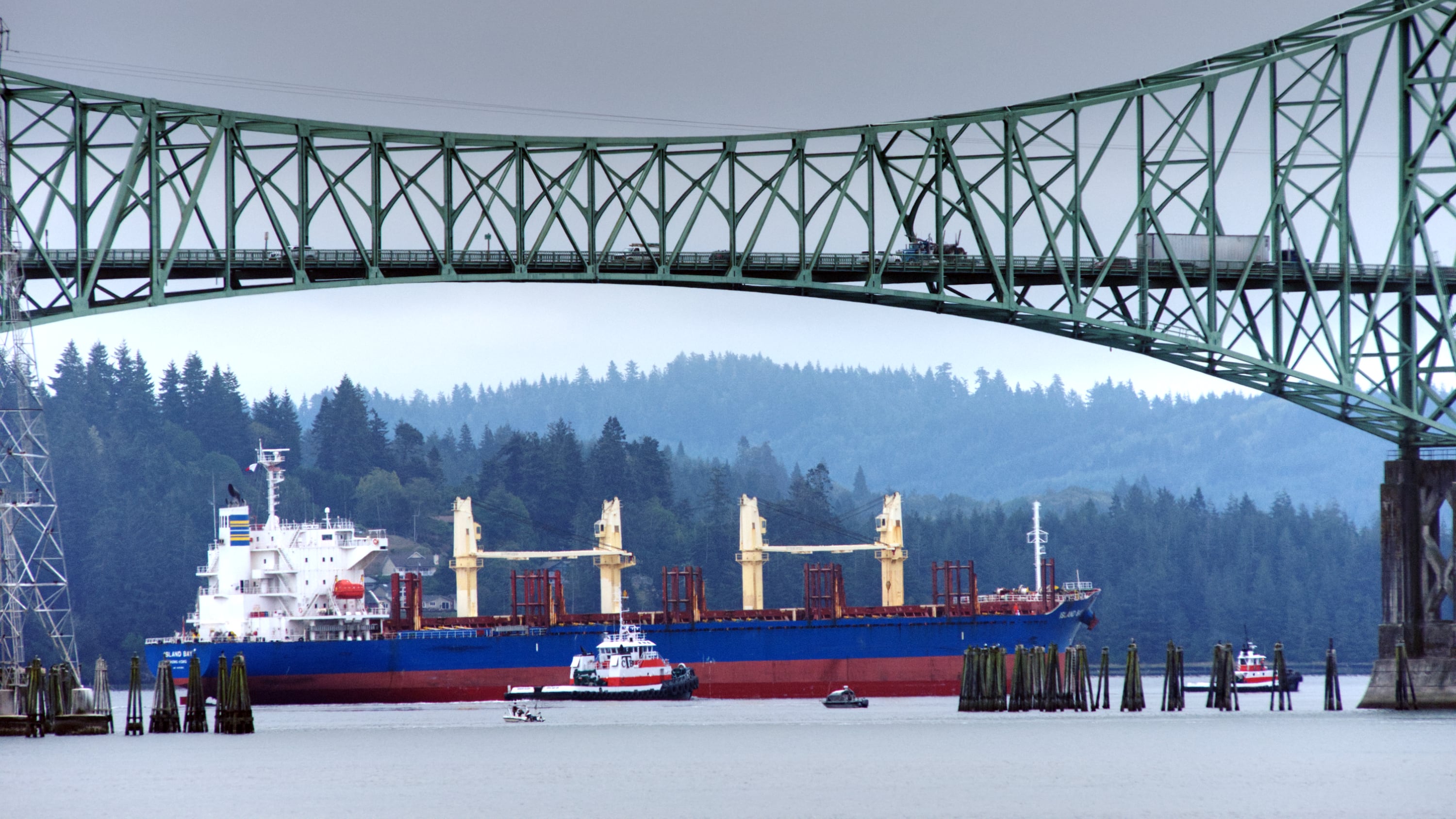
This story was produced by the Oregon Journalism Project, a nonprofit newsroom covering the state.
COOS BAY—City leaders recall when ships knifed between the jetties protecting Coos Bay almost every day. They came to load wood products at the deepest harbor between Seattle and San Francisco.
In its glory days, Coos Bay, which sits on the state’s largest estuary, just south of Oregon Dunes National Recreation Area, was lined with mills and was America’s largest timber port.
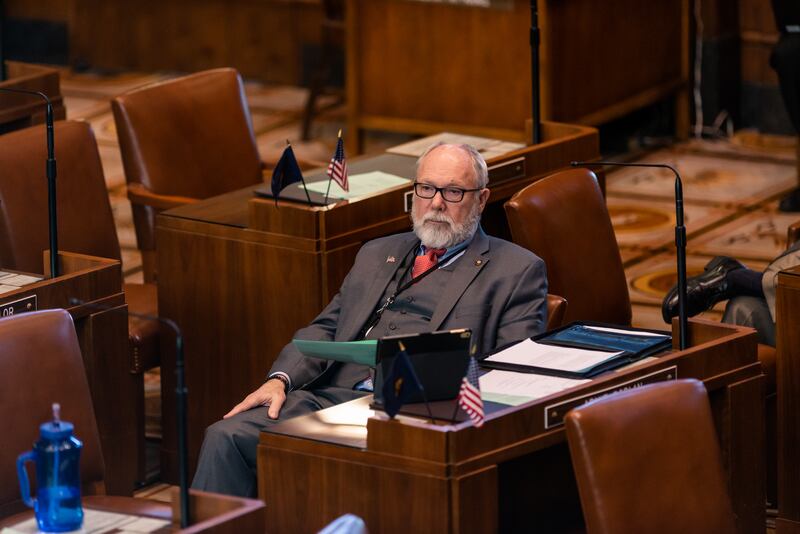
Today, the South Coast’s largest city (pop. 16,093) is lucky to see a ship a week. Since 1980, when forest products jobs peaked, the state of Oregon’s population has increased more than 60%; Coos County’s has remained the same—but it’s much older and poorer. Coos Bay’s most famous resident, University of Oregon track star Steve Prefontaine, died 50 years ago. In some ways, the city did, too.
For the past three years, Arnie Roblan, formerly the town’s high school principal and a onetime co-speaker of the Oregon House (see sidebar, page 15), has been working with a local boy made good, Brian Clem, also a former state lawmaker, on an audacious plan to bring the ships back. Not to export timber, but to import containers full of manufactured goods from Asia. It’s the latest of many attempts to revive the harbor.
“People say we need to diversify our economy,” Roblan says. “We’ve tried everything you can imagine.”
Roblan and Clem are at the vanguard of a team of local, state and federal leaders who have already appropriated more than $200 million in tax revenues to launch one of the largest economic development projects in Oregon history.
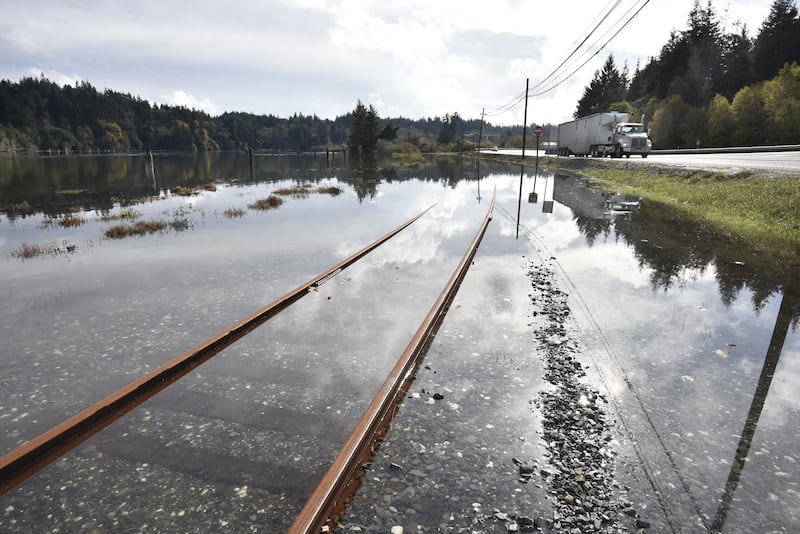
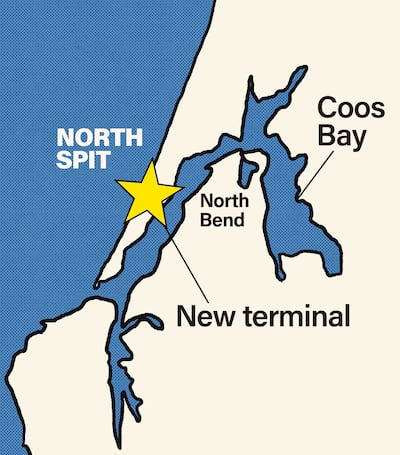
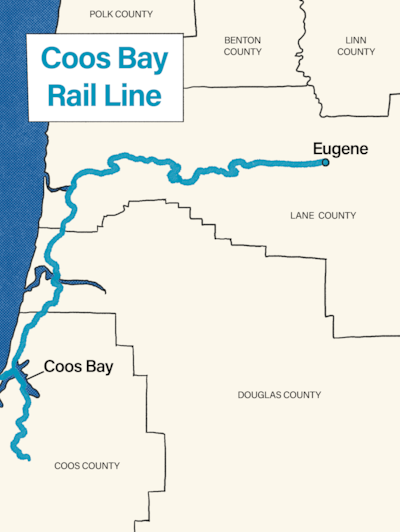
The plan is to carve an 8-mile-long trench into the bay floor, deepening the channel to accommodate ships 1,200 feet long, each ferrying as many as 13,000 containers. Also part of the project: building a new shipping terminal and fixing a decrepit 110-mile rail line to Eugene.
“It’s going to be a big lift, but Coos Bay desperately needs it,” Roblan says. “Things are bad and getting worse.” Early next year, engineering and planning firms will begin preparing the details that private and public funders will require to put up more money.
Whether the state government will ante up at least a half-billion dollars—its likely share of project costs (see table, page 13)—is a question that comes as Oregon faces economic headwinds. A housing crisis, lousy schools and rising unemployment have dulled the state’s shine. The jobless rate has risen above the national average as leading employers, such as Intel and Nike, struggle and others, such as Dutch Bros Coffee, flee.
Oregon leaders have long sought to replace the mill jobs that once sustained many rural communities. The proposed Pacific Coast Intermodal Port (PCIP for short) holds the promise of economic salvation for a once-proud slice of the state.
Supporters say converting a dying port into a hub in the nation’s supply chain—which broke down during the pandemic, causing port bottlenecks—would give the region a powerful economic boost. Gov. Tina Kotek and the state’s congressional delegation have enthusiastically jumped aboard.
“This project is essential in the long term for the nation’s continued economic growth, development, and resiliency,” says U.S. Sen. Ron Wyden.
“A project with this many positive factors—including several thousand permanent, good-paying jobs—doesn’t come along very often,” adds Sen. Jeff Merkley.
“The PCIP has also received strong bipartisan support in Congress and from both the Biden and Trump administrations—even in today’s political climate—which should tell you something about the soundness of the project,” U.S. Rep. Val Hoyle says.
For the past couple of months, the Oregon Journalism Project has examined the PCIP’s claims and its goals. That reporting, along with interviews of economists and transportation and supply chain experts, yields a starkly different conclusion than politicians have reached.
Coos Bay’s location and the highly competitive nature of transportation markets, experts say, make it unlikely the project can succeed. Wyden, Merkley, Hoyle, Kotek and the Legislature are operating on hope rather than facts—and, importantly, nobody has yet produced a feasibility study or demonstrated due diligence.
In short, experts say, the West Coast already has excess container shipping capacity, with more on the way. That means Coos Bay cannot compete with existing ports.
“It makes no sense from the supply side—or the demand side,” says Hans Radtke, a Yachats economist and member of the Governor’s Council of Economic Advisors, which visited Coos Bay for a briefing in August. “This could be a massive, massive boondoggle.”
Walter Kemmsies, a Savannah, Ga., consultant who has advised container ports on both coasts, posed a question that many of his peers echoed in interviews with OJP.
“Who is asking for another terminal on the West Coast?” Kemmsies wonders. “That’s what we all want to know. I haven’t heard any answers.”
Here are the claims the project’s backers make, along with responses from experts.
The claim: The West Coast desperately needs another container port.
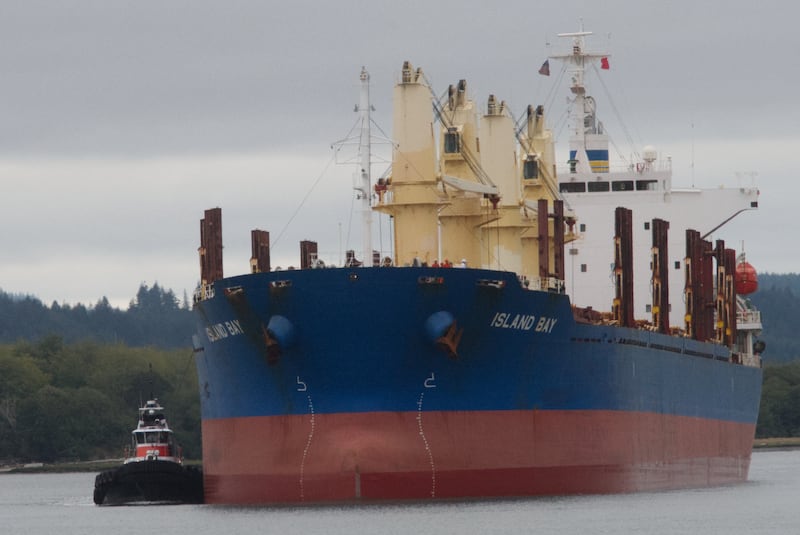
The response: There’s plenty of capacity today at established ports and more coming.
In the fall of 2021, more than 100 ships waited to unload at the nation’s largest container port, Los Angeles/Long Beach. The unusual bottleneck led to widespread shortages of goods.
“Remember when we all ran out of toilet paper?” Melissa Cribbins, executive director of the PCIP, the public-private partnership seeking to develop the new container terminal, said in a recent presentation to the Eugene City Club.
PCIP backers say the solution is Coos Bay. “With infrastructure at existing Pacific Coast ports being incapable of handling this future growth, establishing a new container facility in Coos Bay will add significant and much needed capacity,” PCIP says on its website.
The current effort to revitalize Coos Bay had its origins with a Kansas City, Mo., firm called NorthPoint Development. A privately owned warehouse company whose clients include for Home Depot, Target and Walmart, NorthPoint approached the Port of Coos Bay in 2021. Company representatives said it went looking for a place to develop a new port after the pandemic and determined Coos Bay would be the best choice. (NorthPoint, which has never built a ocean shipping terminal, didn’t respond to an interview request from OJP.)
A 2023 project fact sheet said, “We have an opportunity to turn this port…into the nation’s first direct ship-to-rail container EcoPort.” (Unlike major ports that transfer some containers from ships to trucks, Coos Bay would send all incoming containers directly to the Midwest by rail, hence the term “EcoPort.”)
Cribbins says the port expects to handle about 500,000 20-foot containers in its first year of operation and grow steadily to 2 million. For context, 2 million is the number of containers Oakland, the biggest port in Northern California, handled in 2023.
The problem is, experts tell OJP, the underlying premise—that the pandemic bottleneck exposed a need for additional capacity—is wrong. “The pandemic was an anomaly,” says John Wolfe, CEO of the Northwest Seaport Alliance, which includes the ports of Seattle and Tacoma. Wolfe says his organization, for instance, could handle nearly twice its current annual volume (3.5 million containers).
Container ships traveling from Asia already call at large West Coast container ports in Prince Rupert and Vancouver, B.C.; Seattle/Tacoma; Oakland; Los Angeles/Long Beach; and Manzanilla, Mexico.
“Today, there is a lot of excess capacity across several ports,” says Kemmsies, the Georgia economist. In addition, Los Angeles, Manzanilla, and Vancouver have announced multibillion-dollar expansion plans this year.
Unlike Coos Bay, which would have to move containers 110 miles on a private rail line snaking over lakes, rivers and mountains to get to a major north-south line at Eugene, the existing ports are all served directly by at least two major railroads.
“Coos Bay will not be competitive,” says Larry Gross, an intermodal freight consultant in Durango, Colo., who has been working in the field for more than 40 years.
Even the Port of Portland would be a rival. Its container port has struggled because of the relatively shallow Columbia River (the shipping channel is 43 feet, versus 50 or more at other West Coast ports) and labor strife. It recently got $20 million from the Legislature to upgrade its container terminal. And Portland is 250 rail miles closer to the Midwest than Coos Bay.
PCIP backers have also made claims about growth that are misleading. “Container traffic is loosely tied to population growth, which is projected to increase at a rate of 5-7% annually,” the PCIP website says.
In fact, the U.S. population will grow less than 0.5% annually over the next three decades, according to the Congressional Budget Office.
Asked about that discrepancy, Cribbins acknowledged the PCIP’s growth projections may be inaccurate. “We are currently reviewing this website language,” she says.
In fact, the recent trend has seen Canadian ports taking business from U.S. ports because of lower costs and a weak Canadian dollar.
“If Seattle and Tacoma are losing market share, where is the volume for Coos Bay coming from?” asks Jordan Royer of the Pacific Merchant Shipping Association in Seattle. “It just seems like something that makes no sense.”
The claim: “The PCIP is expected to have a total buildout cost of approximately $2.3 billion.”
The response: The price would be a lot higher.
When proponents first pitched a container port in December 2021, the price was lofty: “estimated probable cost $1 billion.” That figure “includes both terminal buildout and rehabilitation/enhancement of Coos Bay Rail Line.”
Six months later, in May 2022, documents show, the price tag had climbed to $1.7 billion. By October 2024, it had jumped to $2.3 billion.
Other than the proposed Interstate 5 bridge replacement between Portland and Vancouver, it’s hard to find Oregon infrastructure projects costing $2.3 billion. That’s pricier than the proposed expansion of I-5 through the Rose Quarter in Portland. It’s nearly twice the cost of the proposed new bridge across the Columbia at Hood River.
Backers have yet to produce hard numbers to justify the project—so far, officials are backing it on faith.
OJP asked Wyden, Merkley, Hoyle and Kotek and legislative leaders for the evidence or studies underlying their support for the Coos Bay project. Hoyle offered the most candid response.
“The state of Oregon will not release the bonding for the dredging unless a number of criteria are met and there is significant outside investment, both private and public, on the table,” she says. “The PCIP’s funding structure ensures that if the economics do not pencil out, it will not move forward.”
Gross, a transportation consultant with more than 40 years’ experience in the field, is incredulous the project has advanced this far without strong supporting evidence.
“It’s a lot of money for something that is completely unproven,” Gross says. “Economics is like gravity. It always wins in the end. The only way this makes sense is if they can offer a cheaper alternative—and I don’t think they can do that.”
One of the few official records the project has produced so far is a June 2024 application to the U.S. Army Corps of Engineers, which regulates dredging. In that document, project sponsors said the cost would be nearly twice as high as the one they’ve been sharing publicly: $4.36 billion.
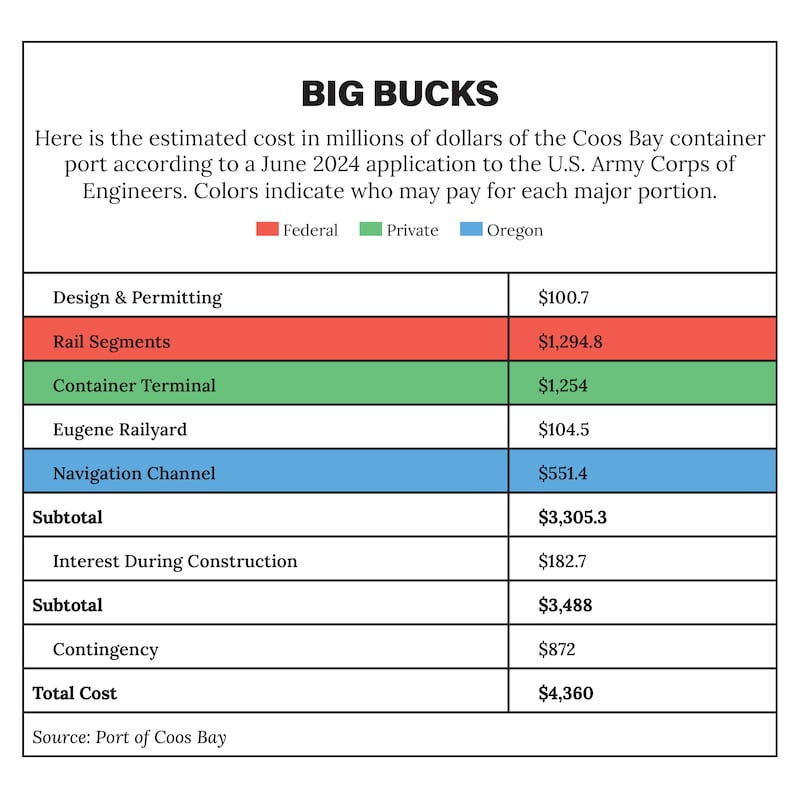
Cribbins tells OJP that the higher number in the Corps submittal was developed “to model a conservative, ‘worst-case’ capital cost.” She adds that the latest cost estimate is $2.6 billion to $2.9 billion.
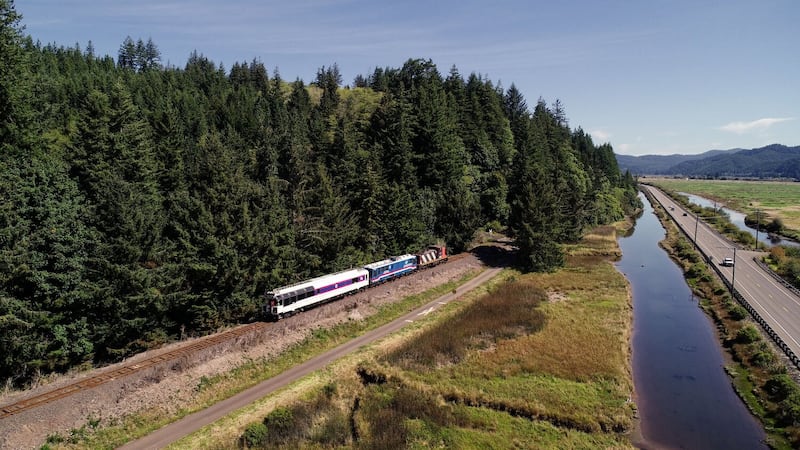
Part of the cost of the project would be the dredging of the channel and the building of a container terminal. But PCIP also has to invest in the rickety rail line linking Coos Bay to Eugene.
In 2009, the Port of Coos Bay bought the line from a private operator that was preparing to sell the rails for scrap. The port has since invested $100 million in it. Even so, moving double-stacked container trains from Coos Bay to Eugene would require massive upgrades, including modernizing 122 bridges and nine tunnels.
Keith Leavitt, a former Port of Portland executive consulting on the Coos Bay project, says improving the line could cost $1 billion.
To finance the improvements, big importers such as Home Depot or Walmart must show support. Their shipping volume would allow NorthPoint to develop the terminal and give the state enough confidence to fund channel dredging.
So far, however, project officials haven’t identified importers or shipping companies eager to use Coos Bay. Cribbins says a global economic consulting firm, Rebel Group, has been hired to conduct market and financial analysis.
One other consideration: Competing ports, such as Vancouver, Seattle, Oakland or Los Angeles, are all surrounded by millions of consumers who can absorb a lot of containers. “It’s pretty important,” says Jim Fawcett, a former Los Angeles port official and director of Marine Science & Policy at the University of Southern California, “but there isn’t any local demand in Coos Bay.”
Steve Hughes, a Long Beach supply chain consultant who used to import 5,000 containers a year of brake parts to the U.S., and knows how Midwestern distributors think; they care about speed, price and risk. Hughes doubts Coos Bay can compete on any of those factors. “Show me the customers,” Hughes says. “Show me proof of the business case. If they can’t prove that, then they are in trouble.” He predicts the PCIP will never materialize.
The claim: “Job creation estimates show approximately 2,600 construction jobs over a five-year period, and 2,500 direct and 6,900 indirect jobs.”
The response: Substantiation for such claims is flimsy.
Jobs are the carrot. They provide politicians the incentive to help rural Oregon. In this case, the benefits have to be something grand enough to outweigh the environmental risks of dredging, which would require the offshore dumping of 20.3 million cubic yards of sand and rock, enough to fill more than 6,000 Olympic-sized swimming pools.
In December 2021, officials offered early estimates of project benefits: “up to 500 construction jobs (short term)” and “up to 250 long-term, family-wage jobs,” they said.
Since then, backers have increased those numbers dramatically: “2,600 construction jobs over a five-year period, and 2,500 direct and 6,900 indirect jobs,” PCIP documents now say.
That’s a fivefold increase in construction jobs and a 10-fold increase in direct jobs. (The promise of 6,000 construction jobs kept Coos Bay’s last big failed project, the Jordan Cove liquefied natural gas terminal, alive for more than a decade before it died in 2021.)
Cribbins says a consulting firm extrapolated the current job numbers from the port at Prince Rupert, where “stevedoring and terminal operations employ 1,240 people and another 500 people work in marine activities, such as tug towage, marine pilotage, and ship repair and maintenance.”
Prince Rupert’s harbor, however, also includes other terminals for passengers, grain, petroleum products, coal and wood products. Also undermining the numbers: PCIP won’t use trucks to move containers, just trains, but projections suggests ground transportation would create about 750 jobs.
Bill Burgel, a former Union Pacific Railroad chief dispatcher, says the railroad would create few jobs. “The train crews that move the Coos Bay Rail Line trains from PCIP to Eugene will be a one-person crew,” he says.
Fawcett and nearly every other expert OJP interviewed for this story used the same word to describe it: “boondoggle.”
He says policymakers ought to be worried that an investment there could end up replicating other legendary busts, such the as fertilizer export terminal in Portland. It was built in the 1980s to export coal but never did.
“A lot of us old-timers remember the Portland coal terminal debacle,” Fawcett says. “They said, ‘If we build a terminal, everything will be fine.’ It turned out not to be fine.”
More recently, the state of Oregon spent more than $70 million on rail terminals in Millersburg (Linn County) and Nyssa (Malheur County) that out-of-state experts warned would fail. They were right.
OJP shared its findings with the politicians backing the project. Wyden dismisses the critics. “I remain confident that shoring up U.S. supply chains with this project is essential,” he says. “And I am just as confident that the port’s ongoing analysis of how its strategic and competitive strengths will help to answer those long-term national concerns.”
Merkley echoed his colleague’s confidence, and Kotek reiterated her support. “The governor believes the South Coast’s future is worth investing in,” says Kotek spokeswoman Roxy Mayer.
Hoyle says the project offers a chance to make good on promises made long ago—but not kept—to rebuild Coos Bay’s economy. “We should not forgo a once-in-a-generation opportunity out of fear,” she says, “particularly when there are multiple off-ramps if the business case fails.”
Radtke, the economist who lives 75 miles up the coast from Coos Bay in Yachats, says he’s dismayed to see politicians commit large sums of money based on little empirical evidence the terminal would work.
Before the state or the feds appropriate another dime, Radtke says, they ought to commission a rigorous, independent feasibility study: “You would think that before spending $4 or $5 billion, an analysis costing maybe $250,000 could get done.”