Skip to main content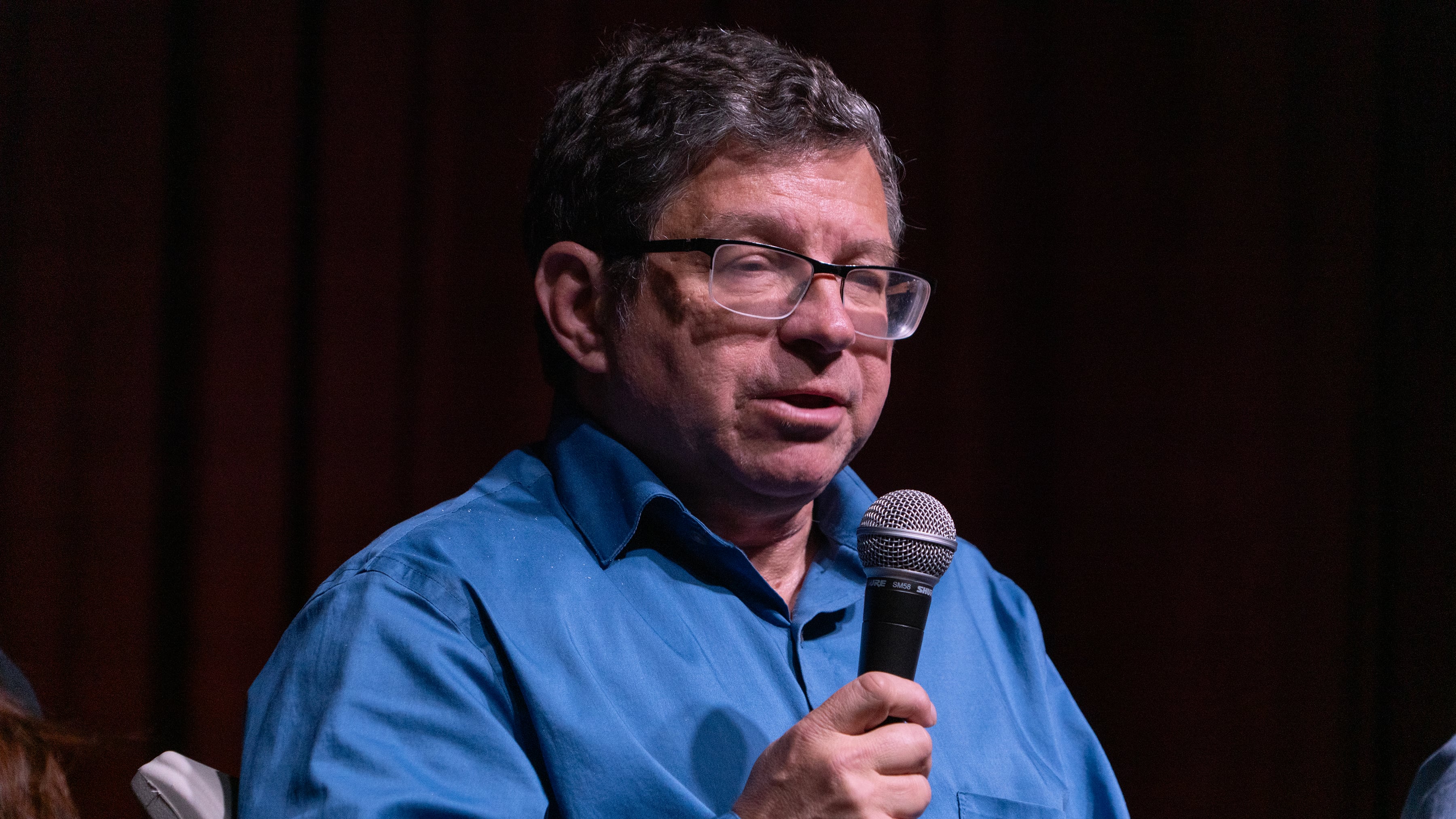
In recent weeks, the campaign to pour $600 million of taxpayer money into Portland’s basketball arena has started to look more like a victory parade.
Earlier this month, the Portland Trail Blazers and their platoon of lobbyists and consultants succeeded in persuading state lawmakers to pass a bill dedicating public funds to a renovation of Moda Center. Days later, NBA Commissioner Adam Silver flew to Portland to smooth out public opinion, taking in a Blazers game while sitting beside his longtime friend, U.S. Sen. Ron Wyden (D-Ore.), and Nike CEO Elliott Hill. Before the game, Silver gave an exclusive interview to the Blazers’ in-house media organ in which he described the arena rebuild as if it were a done deal: Prospective Blazers owner Tom Dundon gets his palace, and the league won’t let the Blazers skip town.
“I’ve had great conversations with the governor and the mayor, and it’s been a bipartisan effort…It’s just work that needs to get done, but it seems like the spirit is there. Everybody’s lining up,” Silver said.
Standing in the path of the procession is Steve Novick.
A city councilor on his second tour through City Hall, Novick, 63, is the loudest voice against siphoning cash from the Portland Clean Energy Benefits Fund, or PCEF, and sending it to a Moda Center overhaul. This has led him toward conflict with Mayor Keith Wilson, Gov. Tina Kotek, and other figures of the Democratic establishment who have helped push the $600 million subsidy package.
Their bond authorization—Senate Bill 1501, one-sided even by the standards of other recent arena subsidies—sailed through the Oregon Legislature after it was introduced a week into the body’s 35-day short session.
The Legislature’s $365 million portion of the total is, however, contingent upon both Multnomah County and the city of Portland agreeing to finance “binding and substantial” sums to bridge the gap to the $600 million price tag. (The terms “binding and substantial” are not defined in the bill.)
The team and its new ownership group, led by Texas subprime auto loan tycoon Dundon, has not provided any specifics from whence this figure is derived, and they have somehow managed to include none of their own money to this point. (Dundon has in the past been sued by Oregon’s attorney general for predatory lending practices; the ownership group also includes the founders of Panda Express and a man named Marc Zahr of Blue Owl Capital, a firm which made headlines in February for nearly tanking the private credit market.)
Early indications suggest that Multnomah County’s Board of Commissioners will vote to add $88 million on top of the Legislature’s $365 million. Portland would be on the hook for the remainder of the $600 million figure. Advocates for the subsidy like Mayor Wilson have circled PCEF as the major source for bridging the gap.
Novick disagrees with this strategy. As early as February, he told The Oregonian he couldn’t see how Moda Center upgrades fit into the charge voters gave PCEF in 2018, when they approved a 1% tax on retail sales by companies with more than $1 billion in revenues. The ballot measure’s backers said the money would be spent on hiring people of color to build clean energy projects that would offset the impacts of climate change.
The fund has raised $1.5 billion in eight years—far more than anticipated—and city officials in less flush bureaus have long eyed it with envy. On occasion, councilors have raided the fund to backfill other budgets so long as the spending was environmentally friendly.
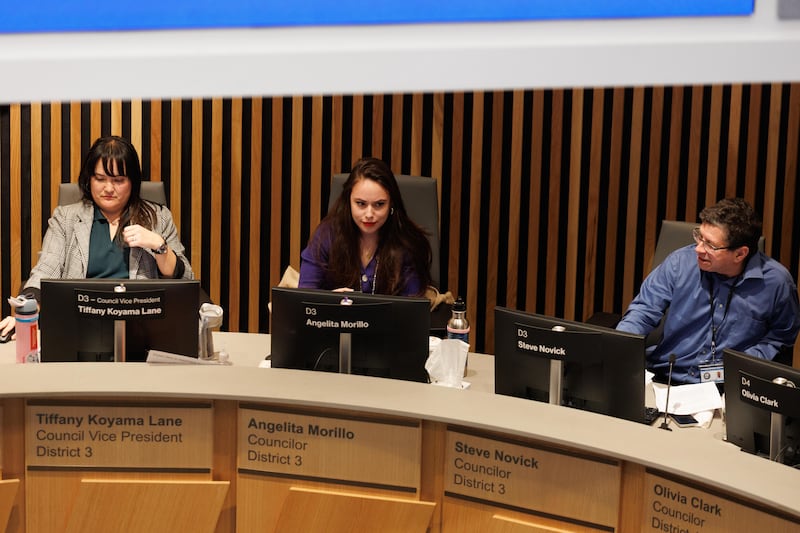
But to send some $75 million to a basketball arena, however green its infrastructure, strikes Novick as a step too far. In this debate, he both has some relevant experience—he first came to Portland as a lawyer for the Department of Justice in the early ’90s, and led a series of high-profile cases on behalf of the Environmental Protection Agency—and occupies a pivotal position. He has often been the swing vote between the council’s left flank (the progressive caucus, or Peacock) and its business-friendly wing.
Before all that, though, Novick was just another kid in Oregon who fell in love with the Trail Blazers.
Like anyone whose childhood includes memories of listening to the team’s early years on the radio, Novick reveres figures like Bill Walton, Lloyd Neal (he’s been trying to set up a meeting), and Bill Schonely. Last year, he went back and rewatched Game 6 of the 1977 NBA Finals, which saw the Blazers clinch their lone championship and their home crowd nearly tear the baskets down.
Last Thursday, Novick again made headlines when he sent a reply-all email to a Portland developer who had been observed texting racist and homophobic remarks about members of Peacock. Novick’s email featured quotes like “shut your racist mouth” and “fuck yourself in the heart.”
About an hour later, Novick spoke with WW. He was still feeling punchy.
The interview has been edited for brevity and clarity.
WW: The argument at the Legislature, voiced repeatedly on the Senate floor, was that if the public doesn’t pour $600 million into Moda Center, Tom Dundon takes the Blazers elsewhere. Do you believe that?
Steve Novick: I think that’s ridiculous. Dundon and his partners just poured $4.2 billion into getting the team. They’re not going to leave over a few hundred million dollars. And the NBA would not want this to happen. The NBA wants to expand to Seattle. They’re not going to want to kill the natural rivalry. Also, once they’ve made the decision to expand, there’ll be fewer places to conceivably move the team to. I don’t buy it.
So will you vote to send $75 million of PCEF money to this project?
No. PCEF was designed to fight climate change and help low-income people and people of color deal with the realities of climate change. And my consistent position on the council has been that I think we could spend PCEF money more effectively. In particular, I think we spend far too little addressing transportation, which is our largest source of carbon emissions and a huge expense for low-income people. This would take another $75 million off the table for transportation. And this is not transportation.
My understanding is that it’s not like somebody’s planning a renovation of Moda Center that would leave it less energy efficient and the PCEF money would make it more energy efficient. I don’t think there’s an argument that the PCEF money will make it more energy efficient than it otherwise would be.
Is there another pot of money you would consider tapping into?
If I were convinced that this is not all a bluff, and if I were convinced that there’s no way in hell Dundon and his partners would come up with the last $75 million, then I might be persuaded to go to the voters and ask them. And what we’ve been told is, “No, that would take too long. By that time, the team will already have left.” And I just think that’s silly. If we have to wait until November to see what the voters want, the Blazers will not be in Nashville by, like, Sept. 5.
Do you think this has been a sufficiently democratic process?
I mean, elected legislators in Salem voted for it. I would say that a number of electeds have been cowed and scared. But in a representative democracy, sometimes you elect people who are easily cowed and scared.
Other councilors were supposedly told that if they voted no, they’d be remembered as the officials who cost Portland the Blazers. If somebody said that to you, how would you reply?
If I voted to give the PCEF money to this project, I’d be remembered as one of the councilors that decided to raid a climate fund in order to subsidize some billionaires. And I think the politics of this are very much against putting public money into it. I know a lot of A’s fans, and absolutely none of them blame the Oakland City Council for not pouring in a lot of public money to keep the team. They just hate John Fisher.
I think, frankly, that I probably care about keeping the Trail Blazers here more than the average Portlander.
What are your first memories of the Blazers?
My family moved from Northern California to Oregon in 1974. And I was a Warriors fan. We didn’t have a TV at that point. And we started listening to Blazer games on the radio. That really made me an Oregonian: listening to Bill Schonely announcing that team.
One of the proudest moments of my life was when Bill Schonely was giving a talk at City Club and I got up to ask him a question, and he said, “Yes, Commissioner?” I was like, my God, Bill Schonely knows who I am.
Have you gotten a visit from Adam Silver?
I have not. And this brings up something that kind of sticks in my craw about this: Why aren’t we negotiating directly with Dundon? He’s the guy buying the team. I’d like to look the guy in the eye and to have a conversation.
Portland is obviously in a lousy negotiating position. Downtown looks rough, the last lease negotiation made the Blazers portable, and if the Blazers do leave, we’re never getting another team. Does any of that factor into your thinking?
I don’t think we will never get another team, for one thing. I’m optimistic on our chance of getting a baseball team. Portland is a city with a bunch of problems, but cities have cycles. Nobody would’ve thought 15 years ago of Detroit as a city on the rise, and now they do. I’m hoping it doesn’t take us that long to recover our mojo. But I don’t think that Portland is in an inevitable, permanent doom loop.
Let us play devil’s advocate: The proponents of PCEF told voters it would bring in $30 million a year in revenue. The actual proceeds are vastly more than that. Why isn’t the excess money fair game for discretionary spending?
Thirty million dollars a year would’ve been a piddling amount to try to address climate change. Even $200 million a year does not pay for what we would need. If we’re really going to do our part to address climate change, we would build the New York City subway system for one thing. We would drastically improve transit. We’d drastically improve bicycle and walking infrastructure. We’d do a whole mess of things. Climate change is not just the overriding issue of our time, it’s the overriding issue in the entire history of the human race. So spending $200 million a year in this city to try to set an example of what the country should be doing to address climate change, it is not overspending.
But the voters didn’t agree to a $200 million slush fund. That’s not what they said.
The voters voted for a 1% tax on large retailers. I don’t think the voters were thinking, well, if we wind up raising $200 million, we want to reduce it to a one-seventh of 1% tax. I haven’t heard anybody saying that.
How do you think that climate tax fits into this broader narrative of Portland and Oregon not being business friendly?
I actually had a conversation with a fairly prominent Portland business guy, whom I will not name, a couple of months ago where he said, “The things people complain about are the homeless services tax and the Preschool for All tax. I don’t hear anybody complaining about the PCEF tax.” There’s significant evidence that a gross receipts tax on a national retailer will not be passed on specifically to the people in the city that’s applying the tax. They’ll just fold it into their overall pricing structure. So there’s an argument that a gross receipts tax like that is a fine way to export your tax burden.
You’re often the swing vote between Peacock and the centrists. Do you have a sense of the temperature in the building on this one?
I really don’t know. I’ve only talked to a couple of people because public meetings law prevents talking to very many people. But I will say this: I rather suspect that the Peacocks would be embarrassed at the prospect of being to the right of Steve Novick on anything. So I think that if I have any influence, that’s the influence that I have.