Skip to main content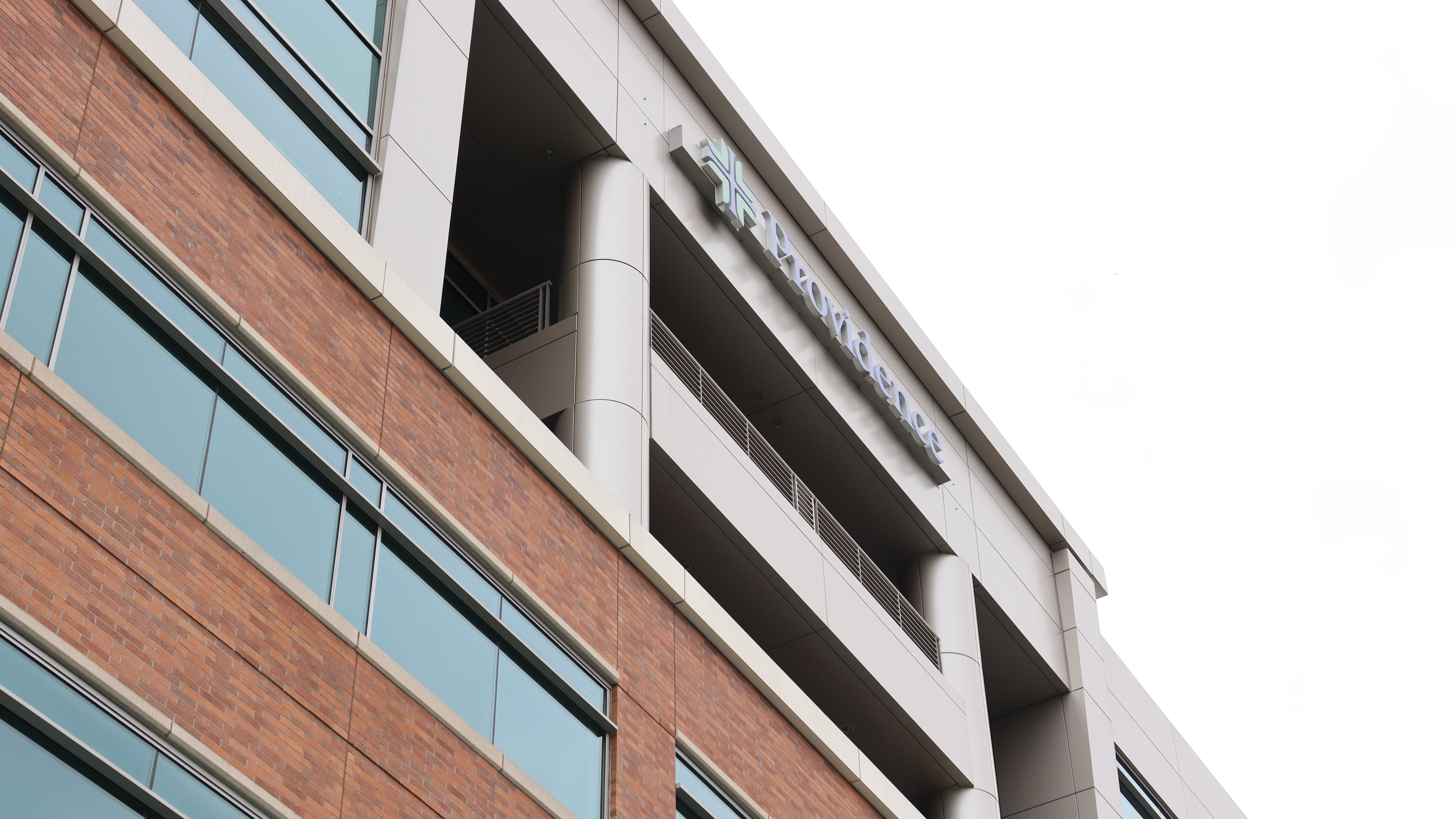
PROVIDENCE PREPARED POORLY FOR OUTSOURCING: The headaches and stress for numerous patients and providers were, according to some, quite predictable in the troubled early weeks of Providence Health Plan’s outsourcing arrangement with the tech company Collective Health (“Technical Hiccups,” WW, March 11). “It was pretty obvious that this was going to be interesting to say the least,” says one of two former Providence Health Plan staffers who tell WW that employees raised concerns early that the Collective Health subcontracting arrangement was rushed and would cause problems. WW reviewed an email a former staffer sent to Providence Health Plan’s chief compliance and risk officer well before the Jan. 1 launch, warning that Collective Health was not up to the task. Against this backdrop, the Feb. 26 letter from Oregon’s Public Employees’ Benefit Board director Ali Hassoun—summarizing the problem nearly two months after the troubled launch—bolsters the case that Providence Health Plan and its contractor failed to adequately prepare for the transition. One early red flag, for example, was that Collective Health’s system was not integrating well with preexisting ones. Once Collective Health took over, Hassoun wrote, health plan members couldn’t see prior authorizations that were approved before the new year—when Providence itself ran the plan. Also, the letter added, plan members had lost access to their historical health plan and medical record information. “Preauthorization approvals and records of employees are pretty important things to have access to,” says Georgetown University’s Karen Handorf, who studies the insurance industry. “It seems to me they should have made some effort to make sure that it was going to go smoothly.” Providence and Collective Health have said the transition was more difficult than they expected, and that they are working hard—and have made headway—to improve the quality of their services.
GOOD LUCK CROSSING THE TRACKS: Two elevators that allow cyclists and people with mobility challenges to use the pedestrian bridge over train tracks in Southeast Portland are both out of service. A Portland Bureau of Transportation spokesman says the north and south elevators that people ride to reach Bob Stacey Crossing, which allows pedestrians and bicyclists to traverse both Union Pacific train and MAX light rail tracks are down due to vandalism. The elevators are important for people who have mobility issues and cannot climb the stairs to reach the crossing. Because both elevators are down, affected individuals must walk 13 blocks when a train is present and six blocks when no train is running. The north elevator has been down for six weeks. A lag in securing the right glass panel delayed the typical repair timeline by weeks, bureau spokesman Dylan Rivera says, but the bureau expects the repair to happen as early as next week. As for the south elevator, Rivera says someone smashed one of the glass doors March 23. He did not provide a repair timeline. “We receive reports from security roughly two to three times each week regarding someone attempting to occupy the elevator for reasons other than gaining access to cross the bridge,” Rivera says. “We are looking into installing cameras and other security hardening measures. But with limited funds for transportation, we have to look carefully at any spending.”
OREGON’S FIRST COMMUNITY COLLEGE STRIKE ENDS: Portland Community College is up and running again after it reached a tentative agreement with the Federation of Faculty and Academic Professionals, whose members have been on strike since March 11. (The strike was over stalled negotiations around midterm contract reopeners that encompass salary and benefits.) The agreement, reached late at night March 30, returned about 1,600 employees to work starting March 31. It also prevents further delays to spring term, which the college pushed back a week to start April 6. Union members had been at odds with the college’s administration over whether workers should receive back pay for the time they spent on the picket line. In the end, the union closed on a deal with PCC that doesn’t explicitly list back pay, but instead offers lump sum payments to members that union leaders said would effectively accomplish the same thing. The package will cost the college about $16.1 million. In a statement, PCC president Dr. Adrien Bennings said the final package “is so far outside of our budget that it will result in significant additional cuts in the future.” For now, however, the agreement will bring thousands of students back to spring classes as faculty scrambles to submit final grades for winter term. Union leaders say they credit elected officials, particularly Gov. Tina Kotek, for applying pressure on PCC to end the strike. Michelle DuBarry, executive vice president of PCCFFAP, told WW on March 30 that the union had been bracing to make significant concessions to return to work, but ultimately left negotiations “excited” about the final package. In bargaining, “nothing happens for a really long time, and then everything happens,” she said. “That’s exactly how it felt tonight.”
OHSU CELEBRATES CANCER CARE EXPANSION: Portland-area leaders assembled around some oversized scissors the morning of March 31 to mark the imminent opening of the $650 million Vista Pavilion, a project five years in the making to expand cancer care capacity at Oregon Health & Science University. “This will ease the burden of a cancer diagnosis,” U.S. Rep. Suzanne Bonamici (D-Ore.) said in remarks before the ribbon was cut. Portland Mayor Keith Wilson said the building was a great application of his “boom loop” theory, a “simple but very powerful mindset” of contagious investment that is “helping to turn our city around.” Work is not actually complete at Vista Pavilion; levels 3, 8, 9 and 10 remain full or partial shells, waiting to be finished. But 128 beds go online with the floors set to immediately open. It’s a significant addition, OHSU notes, in a state with the second-lowest number of hospital beds per capita in the nation (Washington has the lowest). After a patient, Alan Lynn, told his story of surviving leukemia and then advising on the new cancer care center—recalling the antiseptic space where he’d received cancer treatment, he encouraged the mural art that lines the Vista Pavilion’s walls—OHSU leaders hoisted their large scissors to chop a large ribbon in two, and cheers went up all around.