Skip to main content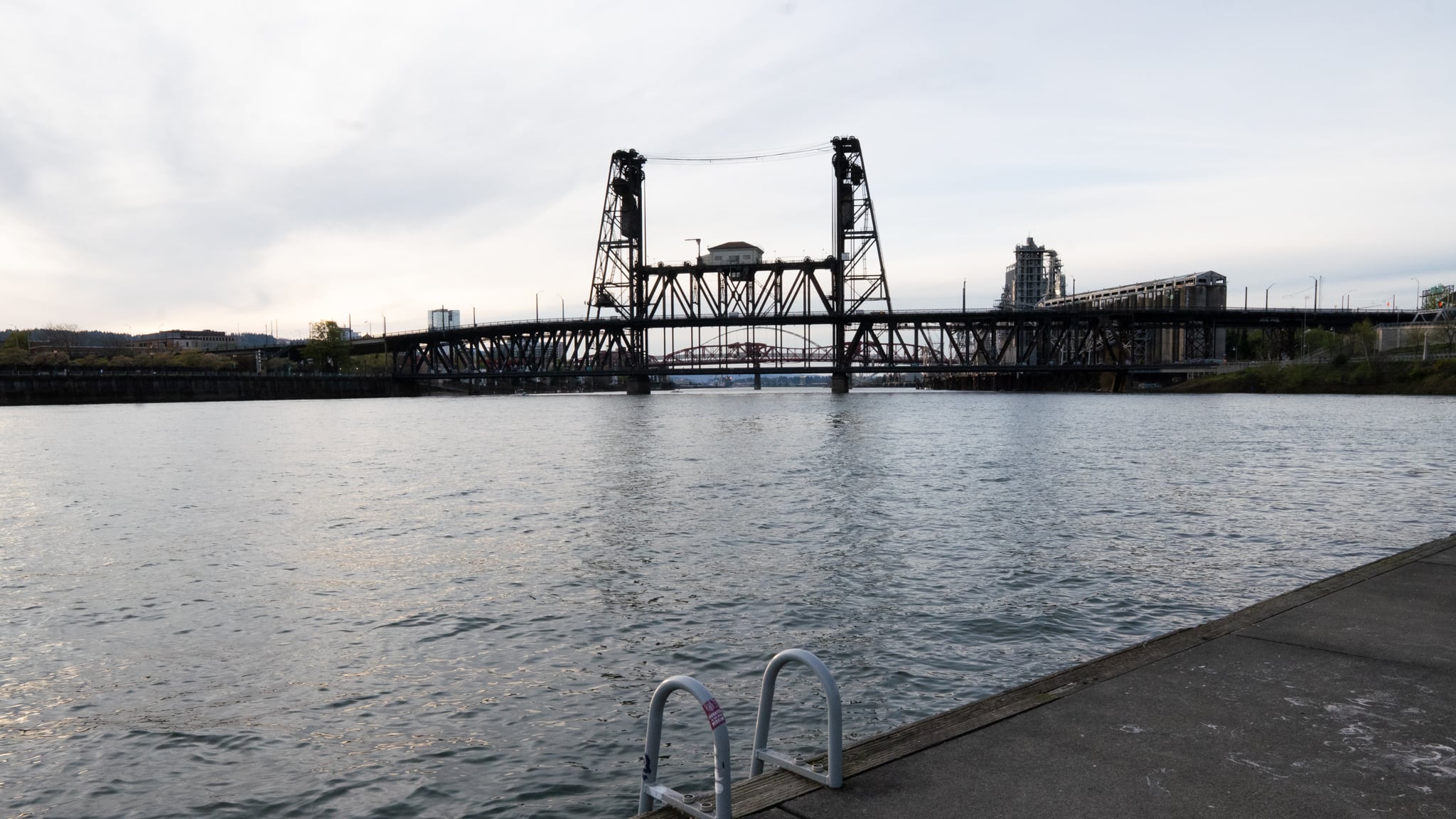
Location: East bank of the Willamette River between the Steel and Burnside bridges
Amenities: A swim dock and two ladders for swimmers
Champions: The Portland Waterfront Alliance and the Human Access Project
When the Human Access Project started in 2010, it was effectively illegal for people to swim in the Willamette River, and had been since 1924, due to unsafe water quality. That ban was lifted in 2011 following the completion of the Big Pipe sewer repair project. But it’s safe to say that most Portlanders didn’t want to get in the river—and even if they did, finding a place to safely take a plunge was a challenge.
“The Human Access Project’s mission is to get people to fall in love with their river,” says HAP executive director Scott Fogarty. “What that means is to provide access to get people in the water.”
HAP is probably best known for organizing The Big Float, a parade, float and beach party that began in 2012 and continued annually through 2022. Fogarty says the event got to be too large for his organization to handle, but HAP is looking to build capacity to bring it back in a future summer.
In the meantime, HAP holds regular river cleanup events throughout the summer to develop beaches along the river. Or, more specifically, to make them friendlier to swimmers than to motorized boats. That means removing concrete, litter and riprap (stones used to armor a river’s edge).
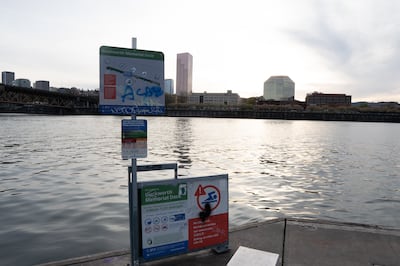
In 2014, HAP uncovered Poet’s Beach, a “semihidden” Willamette River beach under the Marquam Bridge; it became the launching point for The Big Float. The organization has since begun work on several other potential access points along the river, including the Kevin J. Duckworth Memorial Dock, which until 2020 was used exclusively for motorized boat access. HAP hired a landscape architecture firm, MIG, to develop the dock as a swim dock, adding bike parking and eight swim ladders to the dock. Now the organization is working on uncovering the area around it, with the goal of making it “towel- and toe-friendly” by summer 2026. Fogarty expects the beach will be ready within three to six months, adding that it depends on how many volunteers turn out for the next few cleanup events. “It’s honestly not too bad right now but definitely not 100%. But remember, neither was Tom McCall Bowl or Audrey McCall Beach when we ‘opened’ them!” Fogarty writes in an email to WW.
But even if the Willamette River gets easier for people to access on foot, they still have to get their toes in the water. As temperatures rise, toxic algae blooms are becoming more common in Portland waterways, with public health organizations regularly issuing warnings to keep people and pups out of specific lakes or rivers. Fogarty says this issue, largely caused by stagnant water in the Ross Island Lagoon, is “totally solvable,” and HAP has been working on it with Oregon State University’s hydrological and engineering departments. OSU is going to present a solution in mid-June, he says. How that proposal fits with an industry-backed plan to fill the lagoon with contaminated sediment (“Treasure Island,” WW, March 25) is a whole other kettle of fish.
But the stakes, at least, are clear. “You can’t swim in a dirty river,” Fogarty says.
Chance this will ever happen: 9
Get your sunscreen, loser. We’re going to the dock.