Skip to main content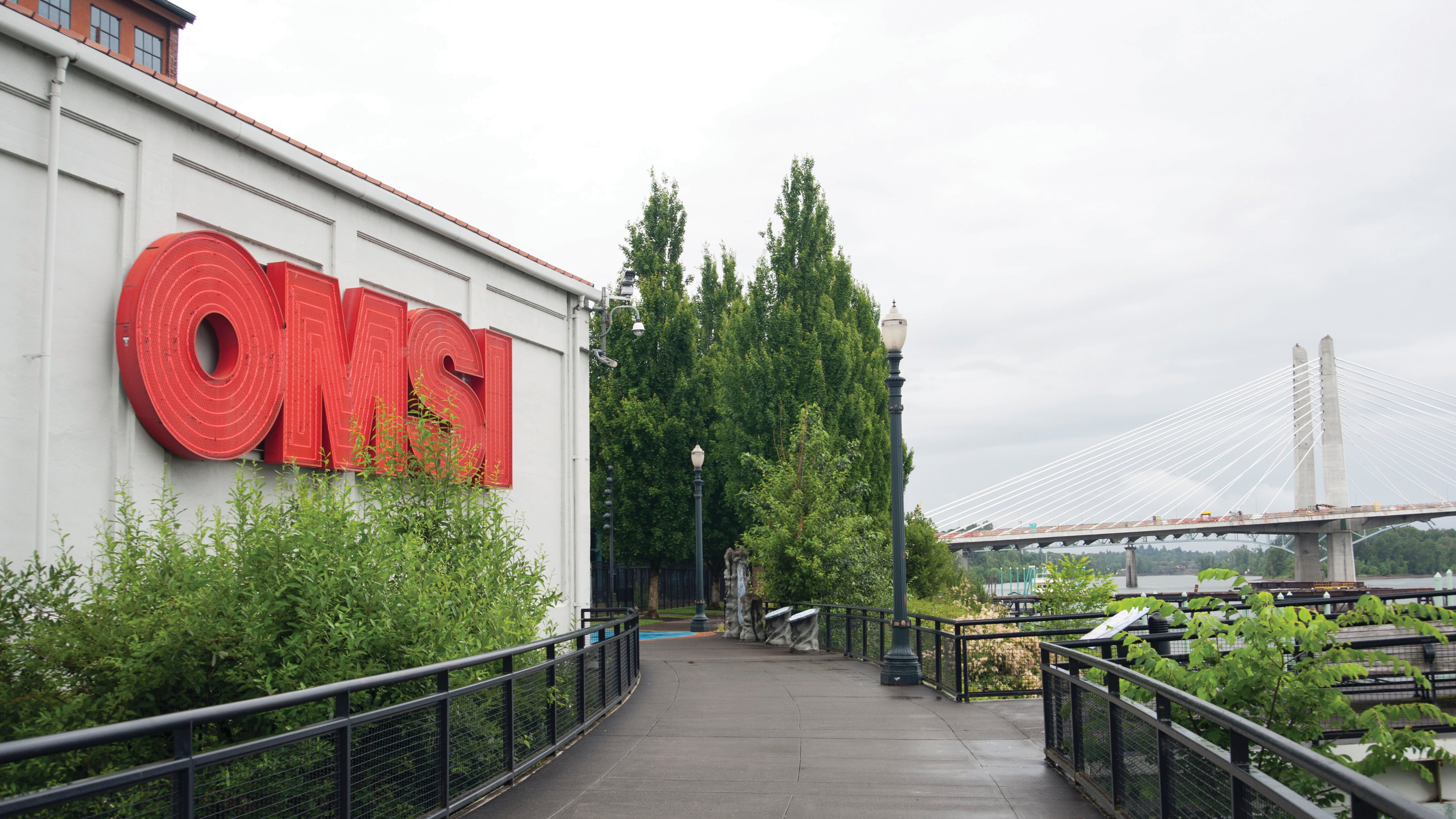
Location: OMSI District, 1945 SE Water Ave.
Amenities: A space that blends Indigenous history with science and innovation.
Champions: Center for Tribal Nations, Oregon Museum of Science and Industry
Long before the Willamette River was surrounded by gravel lots and interstate highway overpasses, it was home to Native tribes who traveled along the artery, harvested salmon and camas roots from its ecosystems, and found spiritual centering in its waters.
“I think the argument can be made that all Indigenous cultures all over the world are really cultures of place. [It’s about] learning what makes the place you call home special, but also about, what are your obligations to it?” says Jeremy FiveCrows, communications director for Columbia River Inter-Tribal Fish Commission. “Because it’s feeding you, it’s caring for you, it’s allowing you to live. But so often, people in modern culture were completely cut off from that.”
The highest-profile initiatives to reestablish that connection are about 12 miles upriver, where two tribal groups have ambitions for cultural centers overlooking Willamette Falls (“Put Your Paddle in Willamette Falls,” WW, April 1). But Native groups also want to forge new ties to the river in the middle of Portland.
They found an opportunity thanks to the Oregon Museum of Science and Industry, which has been trying to erect an “OMSI District” of apartment towers and tech startups in the Central Eastside for the better part of two decades. In 2020, FiveCrows’ organization and the Affiliated Tribes of Northwest Indians unveiled plans for a Center for Tribal Nations: two towers north of Tilikum Crossing that could feature housing, business incubators, restaurants, art galleries and a hotel.
It’s very ambitious, and largely unfunded. But the first phase of the development is simpler: a waterfront education park at the foot of the district. Like Albina Riverplace or the Botanical Gardens, the shoreline would serve as a kind of welcome mat to a larger attraction. It would run north from Tilikum Crossing and under the Marquam Bridge.
What goes in the park itself? It will blend tribal history with science and innovation. “Tribal participation in this park is an opportunity to emphasize the cultural values that connect tribes with rivers and the scientific expertise developed in our restoration efforts,” says a 2021 planning document. The park could, for example, feature native riparian plants alongside hydrodynamic education about how to fix stream flow, FiveCrows says, or it could display the myths different tribes shared about the river, alongside habitat restoration efforts.
In 2023, the Inter-Tribal Fish Commission joined OMSI and Prosper Portland to ask regional government Metro for a $10 million grant for the education park. Metro approved $7 million.
FiveCrows, a member of the Nez Perce tribe, says the current waterfront presents few opportunities for Portlanders to interact with the river. “It’s not just this dirty waterway that we drive over when we drive over the bridge,” he says.
Thanks to the Metro grant, FiveCrows says, the waterfront education park is currently in a full design phase. The hope, he says, is that the park could set the tone for the OMSI District’s broader development goals—think native plans extending up from the riverbed, for example.
“It could really inform the whole district and not just be the little ribbon along the river,” he says. “So many times you see developments where they build all the buildings and then the planting and the landscape part of it is kind of an after. This turns that on its head.”
Chance this will ever happen: 8.5
The overarching Center for Tribal Nation project, and the OMSI District, for that matter, is expected to take more than a decade—who knows what will happen in that time. But the Waterfront Education Park has strong support and financial backing from Metro—which, you may have noticed by now, holds the purse strings for a lot of these designs on the river.