Skip to main content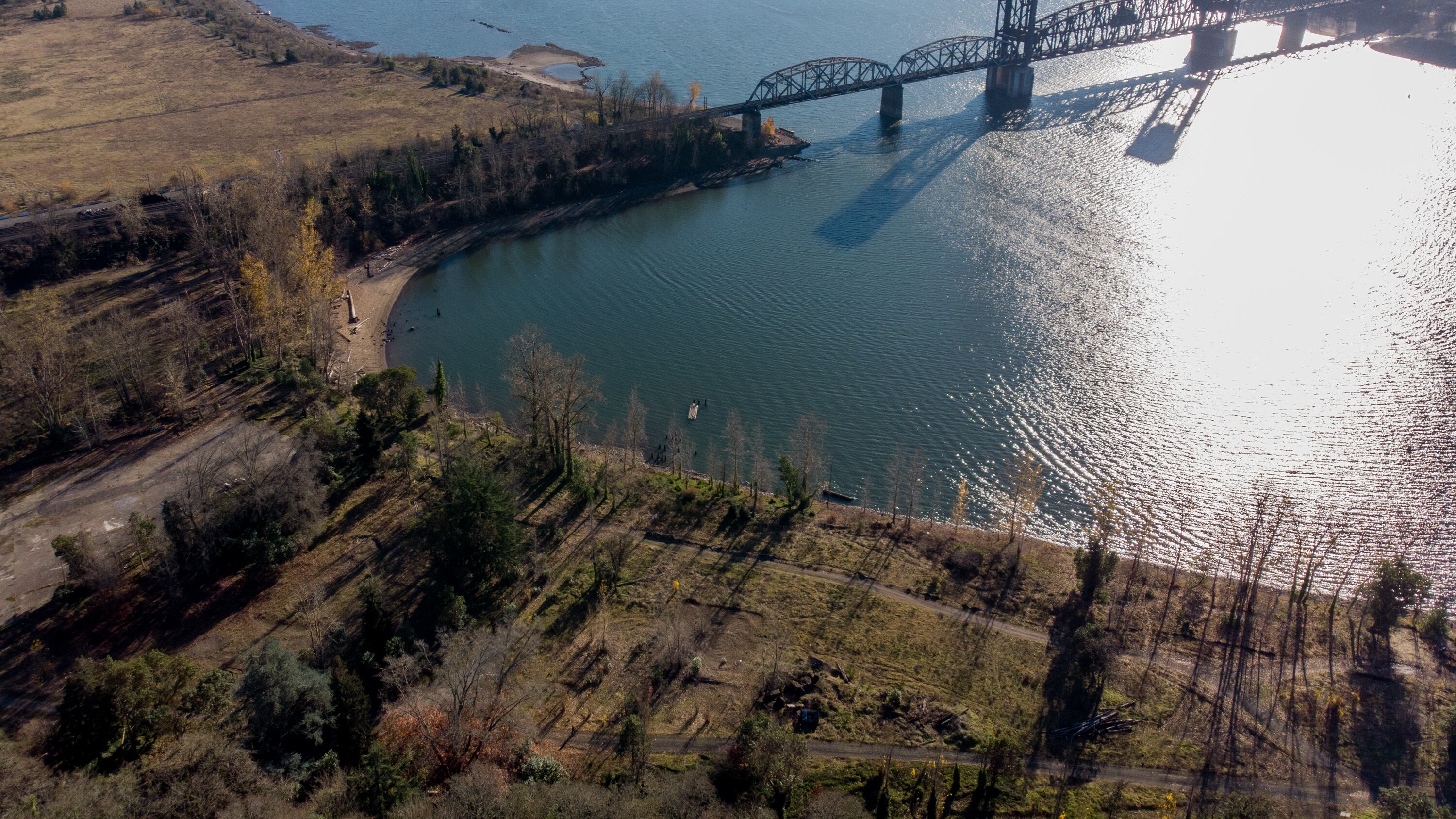
Location: 6900 N Edgewater St.
Amenities now: A 0.7-mile beach; cottonwood, white oak, madrone trees; slender-billed nuthatches and bushtits; dirt containing PCBs, dioxins, furans, mercury and lead; a sunken boat
Amenities later: Nature trails, overlooks, a staircase with boat slide, poison-free ground
Champions: Portland Harbor Community Advisory Group, Metro, Native tribes
Willamette Cove is a wide spot in the river just southeast of the St. Johns Bridge. It bumps on the east side of the river like a tumor on a snake’s back.
Given the amount of pollution there, it has probably caused a few tumors on snakes’ backs, and on the backs of other creatures that live there. It’s not so bad as Chernobyl, if only because there isn’t radiation. Years of industrial use back when rivers were treated like sewers have left the upland soil, beach and river bottom marinating in toxic brine.
The cove itself is a product of the anthropocene. Workers dredged the site and further changed water flow when they built the BNSF railroad bridge on the southern side of the property. The structure deformed the bank the same way rock jetties meant to preserve ocean beaches do.
A darker environmental horror festers on just the other side of the tracks: the disused site of the McCormick & Baxter Creosoting Co. (see Portland Botanical Gardens).
Five years ago, Google reviewer Shaun Foster wrote that he grew up a few blocks away and he and his friends swam in the cove “before this hullabaloo about Superfunds and toxicity.” Those were the days, he says. “I can still see the rainbow prismatic effect floating on top of the river water. Some may call that an oil sheen. I call that my aesthetic.”
Despite all the sludge, local advocates, including Portland Harbor Community Advisory Group chair Michael Pouncil have hounded Metro, the regional government, to remove the filthy dirt and give North Portland a park.
Metro bought the Willamette Cove property in 1996 using cash from a $136 million bond approved by voters a year before. Conservation plans changed soon after, when testing revealed high concentrations of industrial chemicals at the site. The federal government declared a long stretch of the Willamette, including the cove, a Superfund site in 2000.
After five years of advocate pressure, Metro now says it can clean up Willamette Cove and make it safe even for toddlers to crawl around in the sand and put pebbles in their mouths. The job requires removing tons of soil and all the trees growing in it. The estimated budget for rehabilitating the 27-acre site is $15 million.
“Following excavation and capping, upland areas will be restored with clean soil, with long-term protection provided through institutional controls, monitoring, and maintenance,” according to a Metro master plan for the site approved by the Metro Council last month.
These days, the site is listed as “temporarily closed on Google Maps,” and Metro discourages people from visiting. Metro’s own staff must wash their boots in a bucket after going there.
Chance this will ever happen: 5
Metro says Willamette Cove will be restored to its preindustrial splendor by 2032, but the master plan recommends caution: “At the time of writing, the cleanup plans are still being developed,” it says. “The final conditions of the site after remediation remain uncertain, and therefore the master plan will need to be applied flexibly in order to respond to these unknown conditions. There are details in this plan that may need to shift, and that reality is acknowledged here.”