Skip to main content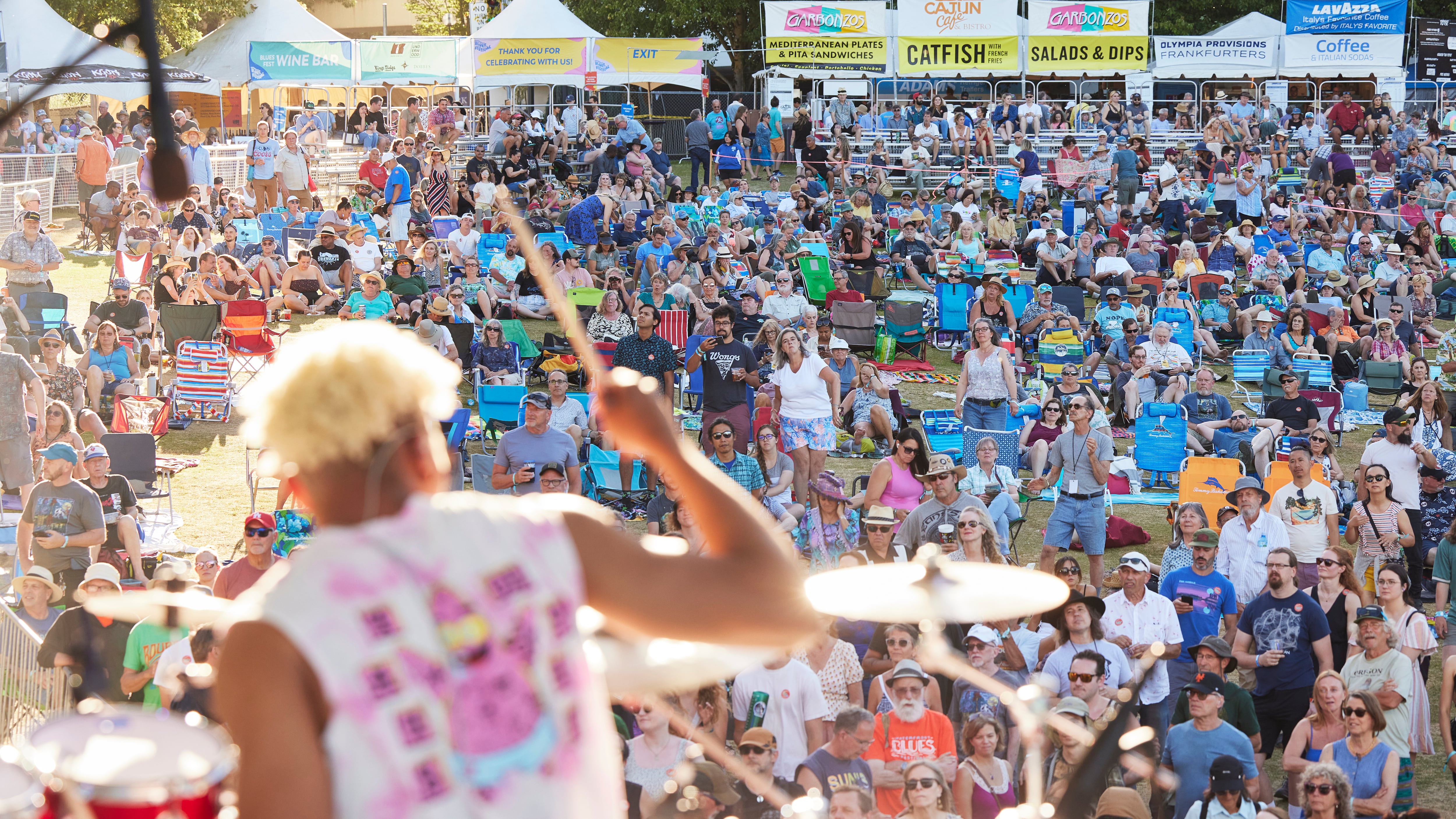
This summer, the Portland Rose Festival and the Waterfront Blues Festival drew throngs of Portlanders to the banks of the Willamette River for elote, fireworks and the New Orleans sound of Tank and the Bangas.
The good vibes papered over a bitter dispute between the city’s business lobby and Mayor Keith Wilson over how much the festivals are paying City Hall for the privilege of bringing people back downtown.
Just weeks prior to the flagship festivals, emails newly obtained by WW show, Portland Metro Chamber president and CEO Andrew Hoan wrote to Wilson asking that the city parks bureau waive for at least two years the permitting fees it requires to stage a festival at Tom McCall Waterfront Park.
As the chamber of commerce often does, it framed the issue as existential.
“Portland’s most iconic events—events that generate tens of millions in economic activity and bring millions of people downtown—are being financially pushed to the brink,” Hoan wrote March 12: “The alternative is clear: without meaningful relief, Portland risks shrinking—or losing entirely—the very events that bring life, visitors, and economic activity back to our downtown.”
Mayor Wilson held his ground. In the resulting communications, he offered partial relief to both the Rose and Blues festivals in 2026, reminding the chamber that the city had waived 100% of fees in 2025. But he wasn’t willing to relinquish the roughly $300,000 the two festivals supply city coffers each year—a signal of just how tight the city’s purse strings are. Portland faced a $160 million general fund deficit in the 2026 budget, and will likely face a larger shortfall next year.
Hoan described that response as “deeply disappointing” and charged the mayor with reneging on a commitment Hoan says the city made during the 2025 state legislative session. (Wilson maintains he broke no promises.)
The bigger picture: Tom McCall Waterfront Park, unlike riverfronts in other major cities like Milwaukee and Memphis, Tenn., is not particularly conducive to large-scale festivals. Because there’s no permanent entertainment infrastructure, like a concert bowl, the festivals must bring their own infrastructure—from a carnival midway to a floating stage—then truck it out.
And although there’s increasing public and private momentum behind waterfront revitalization projects (“River Relaunch,” WW, April 8), local governments are cash-strapped, while deep-pocketed benefactors haven’t lined up to fund the kind of amenities that now grace the north bank of the Columbia River in Vancouver, Wash. Most of the year, the biggest crowds at the Waterfront Bowl consist of Canada geese.
And the two festivals that anchor the waterfront are not sure how much longer they can continue without some public subsidy—or at least an extended fee holiday.
“Without [a fee reduction],” says Steven Bledsoe, senior event strategist for the Portland Rose Festival Foundation, “we cannot afford to do the event.”
It’s no secret that the 119-year-old Rose Festival has seen better days. WW reported last year that soaring expenses and declining attendance were threatening the festival’s prospects for the future (“Grand Finale?” June 4, 2025). This year, the festival combined its two signature parades into one.
Bledsoe, the senior event strategist, says the permitting fees indeed place strain on the festival’s finances, though they’re certainly not the only cost that jeopardizes the festival’s continued existence. Major sponsors like Spirit Mountain Casino and Portland General Electric dropped out, and CareOregon is decreasing its spending next year. Costs for security, fencing and personnel are up. And perhaps most importantly, an increased cost of living means fewer Portlanders pay for a ticket.
This year, Bledsoe says, the festival lost “over a quarter million” in overall revenues, meaning that the budget this year was firmly in the red. Income was 20% lower than what the festival had projected, Bledsoe says.
A five-year memorandum of understanding between the Rose Festival and the city that runs until 2027 already offers 50% permitting fee relief to the festival. So this year, with Wilson’s pledge to reduce fees by 50% for both the Rose and Blues festivals, the Rose Festival paid $100,000 for parks permitting fees—about a quarter of its bill without a discount. Renegotiation for another memorandum begins next spring.
“At this time,” Bledsoe says, he’s not worried the festival won’t receive continued permit relief in the coming years. “The talks have been going well. But if we did not receive a fee reduction, we will have a service reduction.” (The parks permitting fees alone would cost $400,000, Bledsoe says. Even with a 50% fee waiver in 2024, the Blues Fest paid $179,693 in parks fees.)
The Blues Fest has struggled, too, though it’s run privately rather than as a nonprofit, so its finances are not as publicly available. Its decision to pare down the festival to just two days in 2025 came after operating costs soared. After a full fee waiver from the city in 2025, the festival celebrated a return to a three-day schedule in 2026. Festival director Christina Fuller did not provide details of how much the festival has paid in parks fees in recent years, but said the fest’s continued existence “requires both public and private sponsorship and partnership.” (KATU-TV reported last year that the two festivals combined pay about $330,000 in permitting fees annually.)
The city has been aware for some time that the tentpole events on the waterfront are struggling. Of particular contention between Hoan and Wilson in their March emails was a difference of opinion about what relief city officials had agreed to during the Oregon Legislature’s 2025 session.
That’s when House Bill 2291 emerged after waterfront advocacy groups and the business lobby urged the Legislature to rethink how the Portland waterfront was managed. The bill proposed two things: setting up a multimillion-dollar grant or loan program managed by the Metro Chamber’s charitable arm that’s available to festivals and prospective festival vendors, and allocating $1.5 million to study what independent management of the waterfront would look like. The model that lawmakers and backers of the bill seemed most keen on: taking management of the waterfront away from the city and placing it in the hands of an independent governing body that could, in theory, unlock additional corporate sponsors and better support economic activity along the waterfront.
Supporters hoped it would fix what observers have long said is a waterfront that’s not conducive to large-scale festivals. There’s no permanent stage or amphitheater. There’s no security fencing held in a storage space that the festivals can share. “Currently, everything that goes in has to go out,” says the Rose Festival’s Bledsoe.
But despite support from Human Access Project, the Portland Metro Chamber and Portland State University for various versions of the bill, it faltered in the Joint Ways and Means Committee. Still, the state threw the festivals a bone: In its 2025 “Christmas tree” bill, the Legislature gave Portland Metro Chamber’s charitable arm $3 million to support waterfront festival operations. With that money, the chamber split $2.2 million in sustaining grants among the Rose, Blues and Winter Lights festivals and commissioned a study by PSU’s Institute of Metropolitan Studies to reimagine different funding and management structures for the waterfront, among other allocations. The resulting report is not yet complete.
Still, Hoan wrote to Wilson in the March emails that he believed the city had pledged to provide ongoing permit relief to major festivals moving forward.
“Our perspective is that Park Bureau event permit fee relief is a matter of upholding the city’s prior commitments,” Hoan wrote. “The Chamber has kept to its commitments that we outlined previously, the city has not.”
Wilson disagreed with Hoan’s characterization that the city had made any concrete promises about fee waivers. “The city has not made a commitment regarding permit fee relief that we have not upheld for the Blues Festival or Rose Festival,” Wilson wrote.
Regardless, Hoan wrote, the Rose Festival was in no position to pony up.
“Waiving the Parks Bureau fee would be the difference between breaking even and operating at a loss for this beloved festival that offers nearly all its programming for free,” Hoan wrote to Wilson.
Wilson responded the same day, saying he would offer a 50% parks permit discount to both festivals for 2026. But moving forward, Wilson said, the city couldn’t keep offering that. In 2027, Wilson wrote, the festivals would receive a 25% fee waiver unless attendance declined from the previous year, in which case the festival would get 50% off. In 2028, standard fees would resume. “No waivers or discounts,” Wilson wrote. (The Rose Festival’s memorandum of understanding would still stand, so the 50% waiver and the 25% waiver would be on top of existing relief.)
“We value both festivals as signature community events and want to support a successful transition,” Wilson wrote, but he added: “If you believe we are in breach of an agreement, please pursue the appropriate legal channels.”
Hoan fired back the next day, calling Wilson’s email “deeply disappointing.”
Hoan wrote that Wilson’s conditional offer of a 50% permit waiver in 2027 “fundamentally misses the point and underscores why we are not seeing eye to eye on this matter.” He wrote the city should “find its own path towards deeper partnership [and] doesn’t view these organizations primarily through the lens of being a financial resource for operations.”
Wilson responded March 18, holding his ground: “Given current budget constraints, a full waiver is not an option this year.”
Hoan tells WW that the Metro Chamber feels “strongly that we must do everything we can to ensure our most iconic and attended downtown cultural events are financially stable and remain in Portland for future generations.” He added diplomatically: “We want to thank Mayor Wilson for listening and his decision to reduce fees by 50%, and we hope this will continue in the years ahead.”