Skip to main content
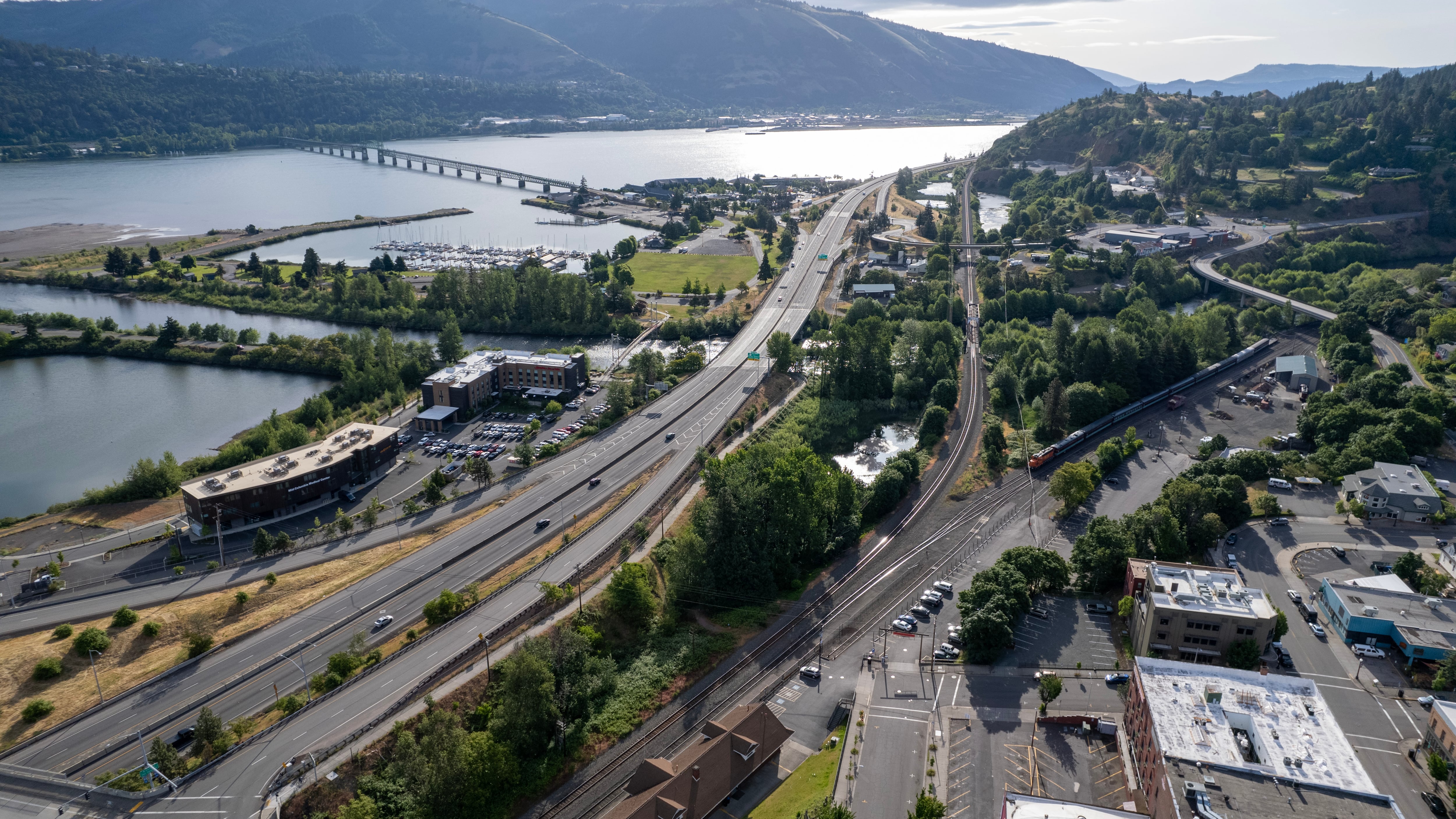
One Friday this past June, a man who lived in The Dalles with his wife and kids was making Walmart deliveries in Hood River. From the parking lot, he collected the order and left to bring it to the customer. Then, a federal judge recently wrote in a summary of the encounter, about six U.S. Immigration and Customs Enforcement vehicles surrounded the man. They told him to get out of his vehicle, handcuffed him and put him inside their own.
These officers did not, the judge wrote, ask the man questions, show paperwork, or declare they had a warrant, but as they drove along, they began making inquiries and checking his ID. After two hours by some train tracks in the Columbia River Gorge, the agents then drove the man to a secluded parking lot in Portland—at which point, after another two-hour wait, another ICE vehicle drove up, an agent forced the arrested man to sign paperwork without explaining what it was, and took him to Tacoma, Wash.,where he remained for nearly the entire summer until, in mid-September, a judge in Washington state got him out.
As it turned out, the judge concluded, the ICE agents seem to have taken the wrong man.
When the arrestee, who in court papers is identified only by the initials JCCV, got some of ICE’s paperwork, it turned out that it described the vehicle of his brother, not his, and misstated the location of the arrest, claiming that it occurred around Napa, California.
This story of a man “appallingly” detained for several months because of ICE’s errors was one of several that U.S. District Judge Mustafa T. Kasubha recounted in a blistering Monday ruling as evidence of the sloppiness and lawlessness with which the agency has been arresting people in Oregon over the past year.
The Eugene-based federal judge has evidently lost patience with the agency, which he has now ordered to supply drastically more documentation of its work—including body camera footage of all civil immigration arrests in the state of Oregon—after he found its agents routinely violated his past orders, lied in at least one case, and showed incompetence in many more.
ICE and the Department of Homeland Security did not respond to a request for comment. But the agency has argued the judge was hamstringing their efforts to enforce federal immigration law.
Moreover, the case of JCCV demonstrates how convoluted and contradictory the U.S. immigration system has become for millions of people. According to court papers, JCCV came to the U.S. over three years ago, was arrested but released and granted Temporary Protected Status, had that status revoked last year, but retains a pending asylum claim and authorization to work in the U.S.
While ICE, Judge Kasubha pointed out, did not offer any testimony to contradict the man’s account of his apparently accidental arrest, JCCV’s is the sort of immigration status that the Trump administration has routinely characterized as “illegal,” and the agency argued his arrest was justified.
Kasubha rejected this argument, and his scathing order adds his voice to the mounting chorus of judges who have found the Trump administration and its agents to be unreliable narrators of events.
Where courts would generally give the benefit of the doubt to a public agency, the judge writes, ICE has broken trust. Its many errors, he wrote in his order Monday, “prove that, without external accountability or supervision, ICE is not capable or competent in conducting its investigative and enforcement activities with integrity.”
The case in question, M-J-M-A v. Wamsley, originally centered specifically on the matter of Woodburn woman who ICE arrested in late 2025. But it soon expanded into a class action case, representing a broad range of people ICE has arrested in Oregon without a warrant.
Making an arrest without a warrant is not forbidden in itself, the judge writes, but it tends to require certain predicates, like probable cause and concern that the person would flee. To ensure these conditions were in fact met, Kasubha in February ordered ICE to record the circumstances of its warrantless arrests and provide the plaintiffs with basic documentation.
At the time, the judge wrote, he believed the disclosure of a particular form (called the I-213 narrative) would be sufficient for plaintiffs to monitor whether ICE was complying with the law. But 500-plus ICE arrests later, “evidence of Defendants’ poor recordkeeping has changed the Court’s stance,” he wrote, noting that ICE has failed to report all of its warrantless arrests, and those it did submit were inadequate. “The I-213 narratives produced by Defendants in this case have been boilerplate, vague, or outright fabricated.”
Indeed, the judge’s 50-page order began by describing an ICE officer admitting to falsely stating facts in documentation as the basis for an arrest. This was, the judge noted, the only ICE officer who had testified in the case, and “there is no telling how many other agents in Oregon engaged in similar misconduct, which calls into question the veracity of all I-213 forms completed by ICE officers in Oregon.”
For these reasons and others, the judge set down new terms. ICE will have to remind its workers of his orders every 30 days. It cannot redact documents (“the Court has little confidence that Defendants will comply with any instruction that would allow some redaction,” he wrote) and it will have to produce more documentation overall. This, he wrote, would include all body camera footage of civil immigration arrests in the state of Oregon.
Judge Kasubha made clear one of his goals was to produce a robust evidentiary record. “This case,” the judge wrote, “underscores what happens if people were not called to testify under oath in a courtroom, if as a society we do not demand that government agents explain their actions, and if the public fails to shine a spotlight on what is happening under cover.”