Skip to main content
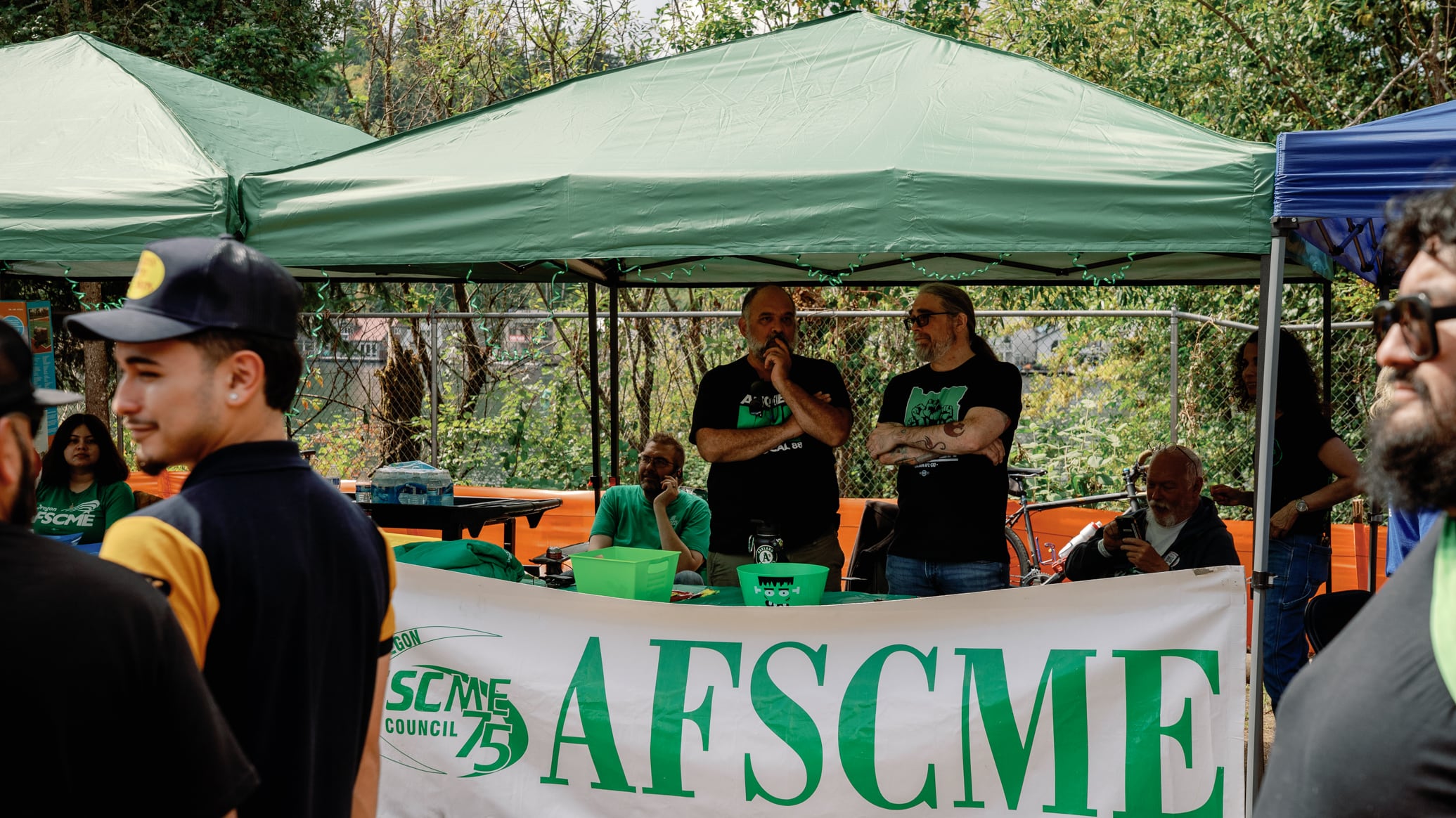
Last week, the union that represents 60 of Prosper Portland’s roughly 90 employees sent an explosive letter to Mayor Keith Wilson and the agency’s board about their boss, Cornell Wesley.
They painted a picture of an executive who has created a workplace culture of fear and silence at the city’s economic development agency, who awarded lucrative contracts to his friends but would not discuss the ethics or optics of such decisions, and who made subordinates fear retaliation if they spoke up.
The Nov. 11 letter from AFSCME Local 3769 to Mayor Wilson and the Prosper Portland board of commissioners came nearly a month after WW first reported on three no-bid contracts totaling $456,000 that Wesley had unilaterally awarded to two of his college friends. Many of the grievances the union listed were related to the contracts.
But the letter also revealed the agency’s workforce—or at least a meaningful portion of it—had been dissatisfied with their new director for most of his yearlong tenure before finding the situation so intolerable that it warranted public airing.

To be sure, Wesley was brought to Portland from his last job leading the economic development department of Birmingham, Ala., to clean up a shop in turmoil—one that had just suffered the humiliation of awarding a risky $7 million loan to a shoe manufacturing startup that promptly defaulted. More broadly, the agency—which supports small businesses through grants, offers loans for local housing and commercial development, and seeks to stimulate struggling neighborhoods and Portland’s overall economy—badly needed a leader who would revitalize it. Instead, the letter strongly suggests Wesley would not listen to concerns about potential cronyism and browbeat those who questioned his methods.
The letter unleashed a litany of concerns the union has never voiced publicly, not even piecemeal. The union requested that the board hire a third-party investigator to look into its claims, and asked that it place Wesley on leave while the investigation proceeded.
As of press deadline Nov.17, the five-member Prosper board had not responded to the union’s letter. It hasn’t signaled whether it will bring in an independent investigator, nor has it said whether it will place Wesley on leave. The agency has not responded to the union’s allegations, and neither has Wesley.
Board member Felisa Hagins told WW, however, that the board needs to address the letter.
“Receiving the letter from the workers at Prosper has raised serious concerns about the culture that’s happening there,” Hagins said. “The board needs to have a discussion about the union’s concerns and decide what action we should take.”
The union has made its stance clear: Investigate our boss or else we have more cards to play. It cited “additional concerns” that its members want to address with the board, and said that the “totality of these concerns cause us to question whether Director Wesley can continue to effectively lead this agency.”
City Councilor Elana Pirtle-Guiney called the union’s allegations “seriously concerning.”
“Prosper Portland plays an important role in Portland’s economic future, and its employees and the public deserve an agency whose leadership operates with integrity,” Pirtle-Guiney wrote. “Portlanders are right to expect their elected officials to take these concerns seriously and gather the information necessary to get answers and restore confidence.”
She chairs the council’s City Life Committee and said she would “ensure that we do exactly that.”
The union’s Nov. 11 letter made it clear that Local 3769 had been sitting on its grievances for months; in fact, one of the few time stamps provided in the letter is from early on in 2026.
The union wrote that it chose to take its concerns directly to Mayor Wilson only after he told WW on Nov. 5 he would hire a third-party investigator, at the behest of the union, to look into the three no-bid contracts Wesley awarded to his college friends earlier this year. The union wrote its members feared that “sharing these concerns would result in them either not being addressed or would result in retribution,” and that they were “only taking this step now in response to the Mayor’s statement and out of concern for both our members’ well-being and the public interest.”
The contracts, which WW first reported on Oct. 13, were awarded to Ancin Cooley and Jarrod Loadholt. Wesley signed the contracts valued at $456,000 unilaterally because he may sign contracts under $500,000 without board approval, and he exempted one of them from a competitive process. (The other two were automatically exempt anyway because they were with law firms, the agency has said, declining to disclose the scope of their work or even descriptions of their terms, citing attorney-client privilege.)
While the union remained quiet, public dismay about the secrecy of two of the contracts grew throughout October. Three city councilors said the contracts warranted further scrutiny. They were unconvinced by an internal investigation, conducted by two of Wesley’s subordinates, who cleared him of wrongdoing.

Finally, in early November, the union dipped its toe in the disturbed waters. It started by offering WW a Nov. 3 statement asking that Wilson and the Prosper board hire a third-party investigator to look into the contracts. But because the union didn’t send the request directly to Wilson or the board—union sources told WW its members feared retaliation—the mayor and Prosper’s board took no action. They said they wanted to hear directly from the union.
One week later, the union went directly to Wilson and the board—and unloaded a year’s worth of discontent.
In fact, one of the few clues to chronology offered by the union in its letter is a remark it claims Wesley made after “a prior external investigation.” That likely refers to a decision by the Prosper board in January 2026 to take no further action on a female staffer’s allegation that Wesley had made inappropriate remarks to her at an out-of-state conference. (The board had hired a law firm to look into the allegation, but did not disclose the findings of its review.)
“Director Wesley addressed staff at an All Staff meeting and gave an admonition that ‘if you shoot at the king, you better not miss’ (or words to that effect),” the union wrote. “This was taken by some staff to be a threat of retaliation should they file a complaint in future.” At that point, Wesley had led the agency for only five months.
The union’s letter offers a list of questions it suggested a third-party investigator should look into. Their nature and specificity make clear they are an artful presentation of the union’s allegations—and a suggested road map for the scope of an investigation.
Local 3769 requested that any investigator the mayor or board hires should ask:
- Did Wesley create a toxic workplace culture where employees were afraid to speak up about the contracts for fear he would retaliate?
- Did Wesley’s personal friendship with the contractors impact the awarding of the contracts, and did it sway the results?
- Did Wesley and the agency’s human resources director, Stephon Kibs, use “coercive and intimidating tactics to protect Director Wesley’s relationships with outside contractors and to dissuade union leadership from raising concerns about these contracts?”
- Did Wesley keep a list of employees who were “perceived to be disloyal or problematic—often based on hearsay—and who may have been singled out for retaliation, disciplinary action, and layoff/termination?”
- Did Wesley and Kibs create an “ineffective and toxic work environment and a workplace culture of fear, intimidation, bullying, and retribution”?
The union raised other concerns, too, like the hiring of a city official from Greeley, Colo., for “a newly created position at Prosper” and any subsequent retaliation by Director Wesley against individuals who expressed concern about possible harm such an appointment could do to the agency’s reputation. (City Administrator Raymond Lee previously worked as Greeley’s city manager. Lee has not responded to a request for comment about the circumstances of the appointment.)
And they asked for the investigator to look into “any other third-party complaints or ‘whistleblower’ complaints received” by the city or the board.
Finally, the union filed a formal labor grievance with the agency, alleging it had violated its contract with the union by allowing Cooley, founder of the contractor Synergy Consulting, to supervise unionized staff. The union demanded that Prosper “halt any work being completed by Synergy Consulting until a complete audit of the scope of work has been completed to ensure that supervision and management are no longer taking place.”
The agency has not responded to multiple requests for comment on the union’s letter. The board has also remained silent, as has Wilson.
On Oct. 29, Prosper’s legal team wrote to staff that Wesley would be out of the office until Nov. 13. The email provided no reason for his absence, and Prosper spokesman Shawn Uhlman declined to elaborate. Uhlman did say Wesley returned to work on Nov. 16.
The Prosper board is set to hold its monthly meeting Nov. 18. The description of an executive session planned for that meeting notes that the board will deliberate on matters relating to “information or records that are exempt by law from public inspection” and will “consult with counsel concerning the legal rights and duties of a public body with regard to current litigation or litigation likely to be filed.” It’s unclear whether either note is related to the union’s letter.
Wesley is set to deliver a routine update at the board’s Wednesday meeting; it will be the first public meeting of the board since the union sent its letter.