Skip to main content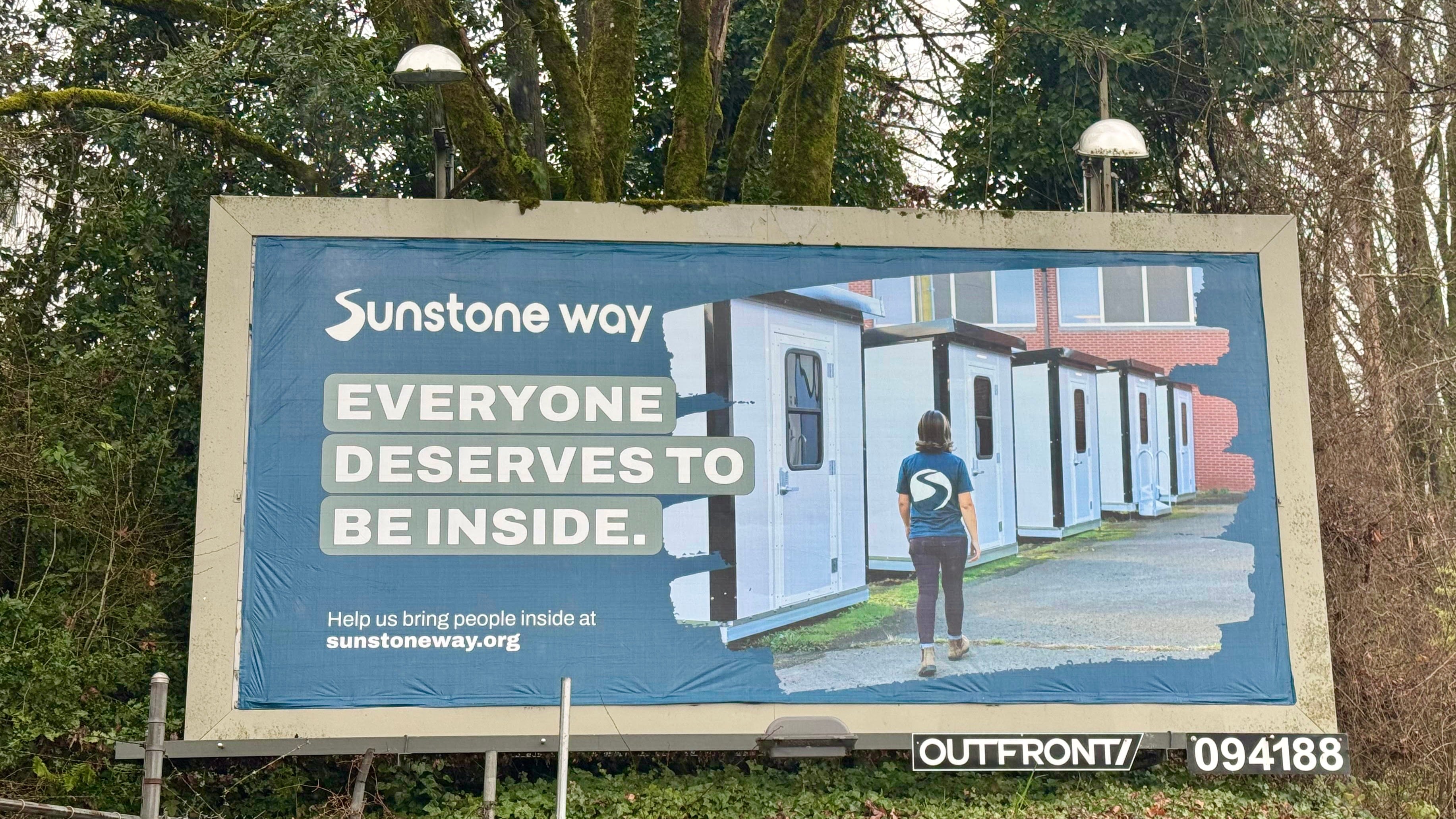
Last week, a month after a whistleblower lawsuit accused homeless shelter provider Sunstone Way of profligate spending, the nonprofit announced plans to close July 1. It blamed a crunch in its balance sheet. Its government contracts are shrinking and costs are rising, Sunstone Way told staff in a memo.
One cost the nonprofit appears to deem mission critical: billboard advertising.
After WW broke the news of the closure, several readers wrote in about billboards around town that tout Sunstone Way’s services. We’ve laid eyes on two, one on East Burnside Street and another on Northwest Nicolai Street. “Everyone deserves to be inside,” the billboards say. “Help us bring people inside at sunstoneway.org.”
Multnomah County, which pays Sunstone Way to run three shelters, has no line items on invoices that would allow contractors to seek reimbursement for advertising, spokeswoman Julia Comnes tells WW in an email. “That said, there is no county policy preventing our providers from using non-county funding sources to pay for marketing/promotion,” Comnes adds.
Similarly, organizational marketing is not a line-item expense “that would be/has been reimbursed by the city,” spokesman Robert Layne says in an email.
Sunstone Way didn’t return emails seeking comment on the matter.
Commissioner Meghan Moyer says she is confident the county isn’t paying for billboards, but she’s concerned about how diligent it’s been about reimbursements for administration and other line items.
“What is the expectation for ‘case management’ or ‘outreach’ and ‘service navigation’?” Moyer asked in a text message. “I am not convinced we are getting what we are paying for.”