Skip to main content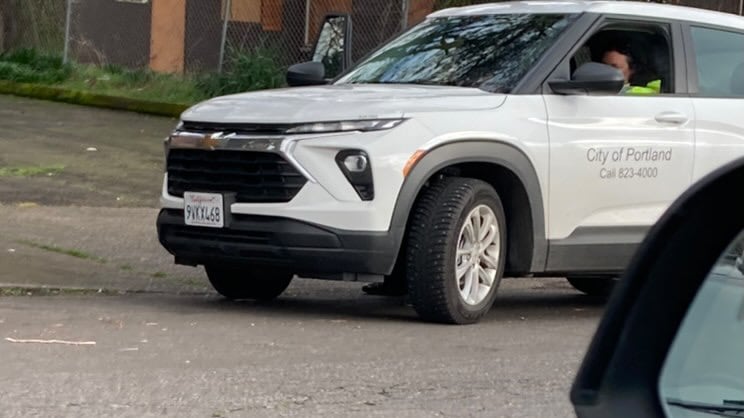
Earlier this week, I was driving through inner Southeast Portland when I spotted a city of Portland work vehicle with California license plates. How puzzling! Why would one of our local resources be registered to our neighbors to the south? —Teddy Love
Even more puzzling is how unconcerned that resource appears to be about following the law. When chumps like you and me wind up with a car that has out-of-state plates (whether we bought it that way or brought it with us in a recent move), we have just 30 days to outfit our vehicle with Oregon tags, which costs hundreds of dollars and usually involves throwing away old tags with months of perfectly good not-being-expiredness left in them.
Granted, this 30-day requirement isn’t exactly the most relentlessly enforced provision in Oregon’s traffic code. Still, you’d think that if anyone were going to obey this rule, city government would. Is Portland flouting state law deliberately, and if so, how are they getting away with it? We know cops tend not to ticket other cops. Perhaps, similarly, the city knows it can offend with impunity because there’s some shadowy, unspoken rule (probably originating with the Knights Templar) that bureaucracies must never direct their pettifogging at other bureaucracies. None dare call it conspiracy!
Before we run off to pitch all this to Candace Owens, however, let’s do some actual reporting. It turns out the city gets away with not registering this car for a much more boring reason: They don’t own it. Even though this vehicle and others like it are prominently liveried (using removable decals), it’s actually a rental, and rentals can be registered anywhere.
Renting fleet vehicles confers many advantages. It lets the customer offload major repairs onto the rental company, it minimizes depreciation risk, and it reduces the administrative burden from taxes, insurance, and—yup—vehicle registration. The city of Portland’s fleet includes both short- and long-term rentals, used for things like summer programs, leaf season and other uses too ephemeral to justify purchasing a vehicle outright.
So you see, Teddy? There’s no sinister deep-state collusion. It is true, however, that in cases where the city does own the vehicle, the state allows them to register it with so-called “E” plates, which only have to be paid for once and never require renewal. That does seem a bit like the state going easy on the city—almost as if one occult hand were washing the other—but what do I know?
Questions? Send them to dr.know@wweek.com.