Skip to main content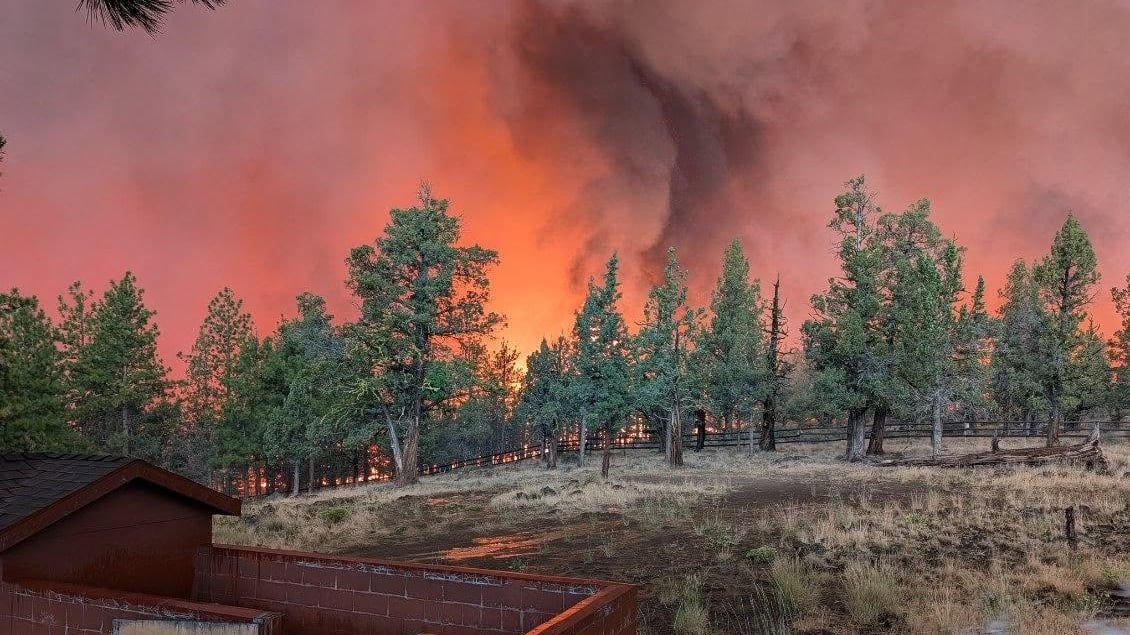
After thousands of lightning strikes across the state over the past two days, the Oregon Department of Forestry on Friday reported 30 large active wildfires and more than 80 in total.
Ten thousand-plus personnel have been deployed to the largest fires, according to the agency. More than 1,000 alone were fighting the Akawa Butte Fire in Central Oregon, which officials said was the highest priority fire for resource allocation in the nation.
As of Friday, authorities said the blaze, ignited outside Sisters by lightning July 16, was 5% contained and had burned more than 27,287 acres.
Wildfires have popped up all over. This week alone, the state’s Forestry Department said West Oregon District firefighters responded to 20 new fire starts across the region. For context, the agency says the 10-year average for an entire season in that district is 35 fires.
“We’re in July, we’re seeing August conditions because of drought and because of weather,” Gov. Tina Kotek said at a press conference in Sisters near the Akawa Butte Fire. “This is a moment where Oregonians have to come together to defend our communities, help each other out.”
The Oregon Health Authority warned Oregonians on Friday about the risks of wildfire smoke, advising people to monitor air quality and to limit exposure by staying indoors, keeping doors and windows closed, and avoiding strenuous activity when air quality worsens.
In contrast to the central and eastern portions of the state, where air quality has become unhealthy, Portland’s air was in the “good” range Friday. Still, health officials says conditions can change fast.
“Smoke from wildfires can travel hundreds or thousands of miles,” OHA environmental health manager Gabriela Goldfarb said in a written statement. “And some people—especially those with chronic conditions like lung disease or heart disease—can have a pretty severe reaction to even small amounts of smoke.”