Skip to main content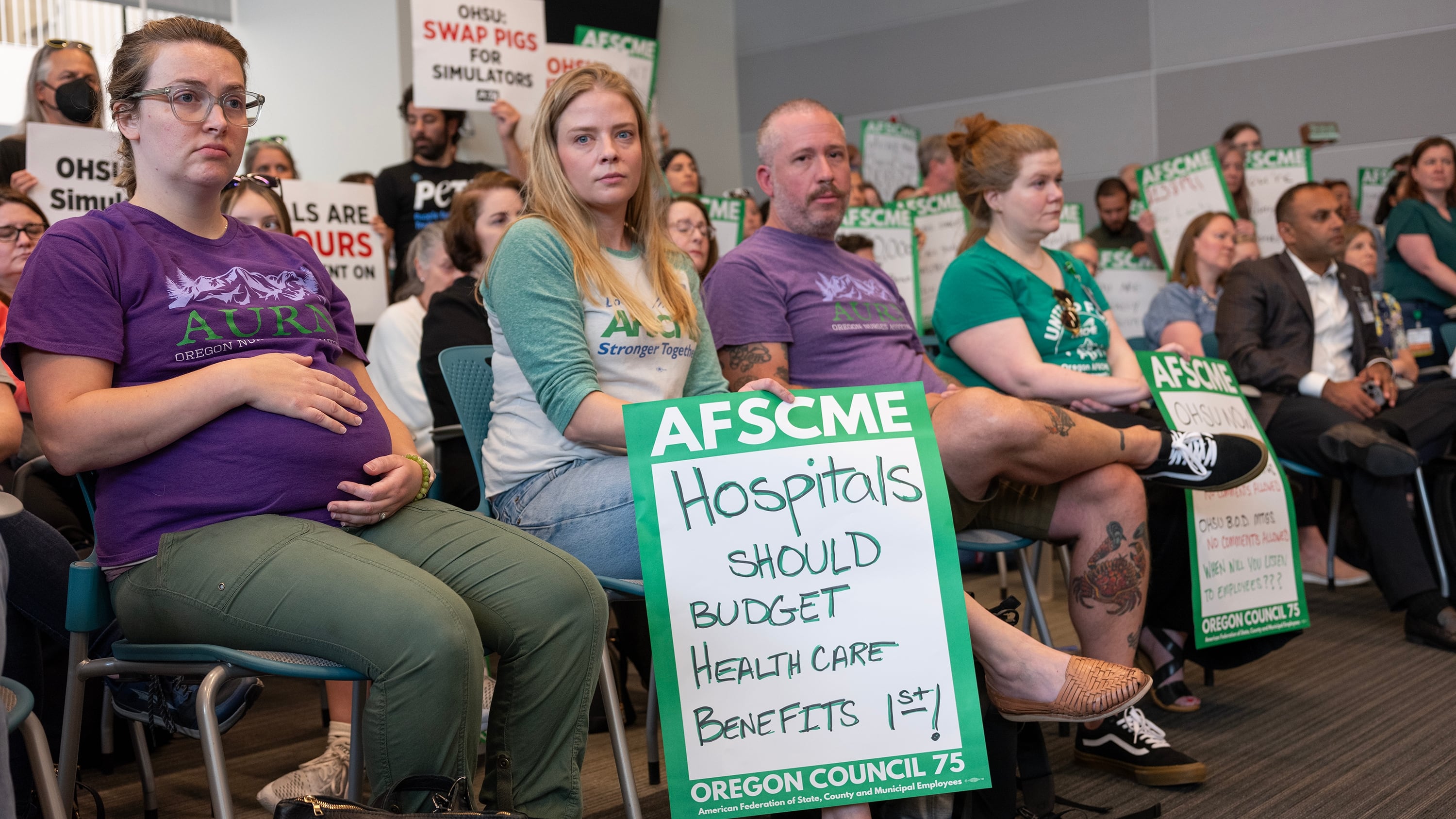
Oregon Health & Science University and a union representing about 8,000 of its workers have settled on a new contract, union leaders announced Wednesday, diminishing the chance of a major labor conflict at Oregon’s flagship medical institution.
The agreement is tentative. Members of American Federation of State, County and Municipal Employees Local 328—an eclectic mix of staff whose work spans patient care, administration, and food service—must still approve the contract.
This is no sure thing in a union that has in recent months aired internal rifts. But if seen through, the provisional deal would allow OHSU to avoid a costly strike that had emerged as a real possibility. The announcement comes a month after the AFSCME 328 voted to authorize a potential work stoppage, and just this week, the union had planned “strike preparedness” sessions with members.
AFSCME 328 leaders says they have been bargaining for 11 months. According to a union blog, the latest bargaining session commenced around 9 am Tuesday. By early Wednesday, the union had sent members an update: Bargaining was still ongoing, with both teams committed to “getting a tentative agreement tonight, if it is at all possible.”
The parties reached that agreement at 5:15 am Wednesday, the union bargaining team said, following a “breakthrough at the bargaining table,” settling on a proposed three-year contract that “reflects the cost of living in Portland.”
The agreement includes a ratification bonus, better protection for sick health care workers, and increased time off, as well as an across-the-board pay increase of around 3% to 4% a year over the life of the contract. The deal would also in the new year set a minimum wage of $20 per hour, increasing every six months over the life of the contract to $25 by 2028.
During the negotiations process, the union had justified its demands in part on the basis of MIT’s Living Wage Calculator, which found that a single adult with no children in Portland needs to earn about $27 an hour to support themselves and meet basic expenses.
Asked about the negotiation at an unrelated press event Wednesday morning, university president Dr. Shereef Elnahal said the bargaining team for the union, which generally represents workers toward the bottom of the OHSU pay scale, had emphasized the importance of a living wage.
“We started with the reality that we were paying on average higher than market rates for AFSCME 328 members,” he says. The “bargaining team made clear to us that, even though that was the case, because cost of living increases have hit Portland and our metro area very significantly, we still needed to go higher. We listened, we had much back and forth on this, and we responded.”
He says the package is fair and he hopes the union ratifies it. So does the ASCME 328 president Jennie Olson, a grants and contacts administrator at OHSU.
“This tentative agreement is a major step toward a living wage for the workers who keep OHSU running,” she said in a written statement. “Our members shouldn’t have to choose between caring for patients and affording to live in the community they serve.”
AFSCME spokesman David Kreisman tells WW the final union member vote on the contract is likely to take place in early January.
OHSU inked a separate labor contract in recent weeks with about 700 health care workers represented by the Oregon Nurses Association. Another, larger ONA nurses contract is set to expire in later 2026. OHSU also has active contracts with three other smaller AFSCME unions and is negotiating a first contract with another one.