Skip to main content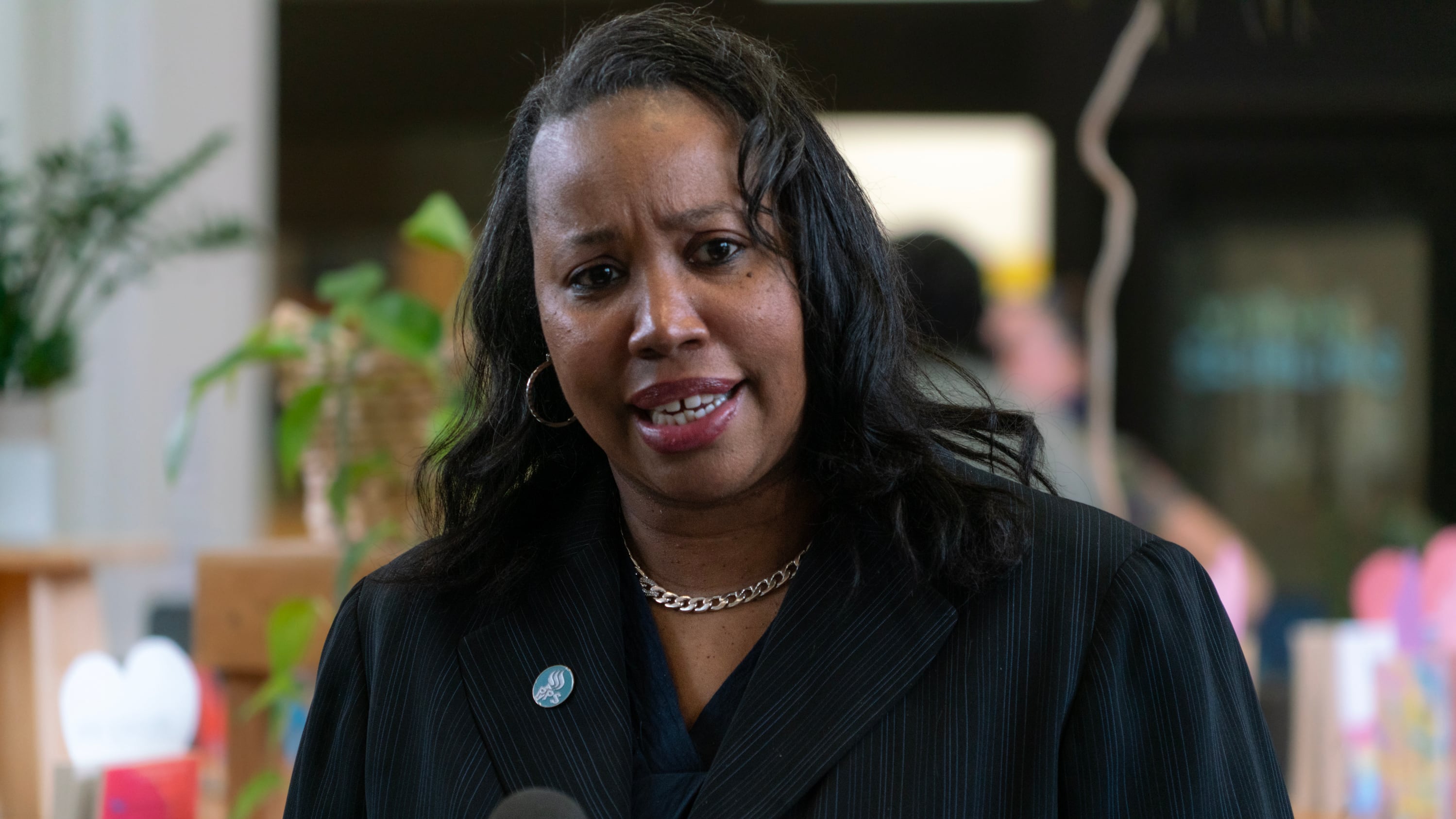
The Portland School Board and Superintendent Dr. Kimberlee Armstrong sent a letter to state lawmakers on Wednesday beseeching them to funnel enough additional funding to prevent staff cuts—and more, if possible.
The letter comes as the district stares down a $50 million budget gap for the upcoming academic year. The initial proposals to patch the hole include cutting about 290 positions, the majority of them student-facing. Because the district spends 90% of its budget on staff, Armstrong says the bulk of cost-saving measures involve cutting personnel.
“My first year we had to cut $30 million, my second year we had to oversee cutting $48 million and this year we’re looking at another $50 million,” says School Board Chair Eddie Wang. “It’s not fun anymore; it’s pretty difficult. Right now in PPS, the morale is at an all time low…We want to really stress our legislators to look at ways to find the funds to make sure that we don’t cut what we don’t have to cut.”
But the call for more money comes during a delicate short session in the Oregon Legislature, which last year approved a record $11.4 billion allocation to school districts. (The State School Fund is the primary funding mechanism for Oregon’s K-12 schools.) The state budget is suffering from federal challenges and a slowing economy. Notably, the U.S. Congress’ passage of H.R.1 directly affects funding for the Oregon Health Plan and the Supplemental Nutrition Assistance Program, and heavily contributes to a projected $650 million budget shortfall in the state’s own budget.
The latest forecast, released Wednesday, was actually sunnier than expected. Lawmakers had been forecasting a $750 million shortfall.
And the call comes as some legislators have reached peak frustration with the delta between increased per student spending in Oregon and declining results, which has widened over the last decade. Some legislators are even working this session to re-evaluate the Quality Education Model, which has long projected the adequate costs for educating students statewide at numbers well above what state lawmakers have been able to allocate.
There’s been some concern that, amid the state’s pessimistic revenue forecasts, legislators might turn toward pre-established school budgets for the 2025–27 school year and whittle them. The letter from Armstrong and board leadership alludes to those concerns, asking the legislature not to “balance the budget on our student’s backs.” Amid a more optimistic revenue forecast for the state, Armstrong told reporters that the district is “hoping that that is enough to back off any cuts that were going to come if there was a deficit.”
To lawmakers who’ve started taking a second look at how student spending has affected outcomes, and who feel dissatisfied seeing the resulting student outcomes, Armstrong had her own rebuttal.
“The thing I say to that is when comparing us to whatever state, let’s look at unfunded mandates,” she said. “Are we fully funding special education? I can tell you no, and that definitely impacts our budget. Transportation is reimbursed, but not at 100%, and we still have obligations to make sure that we get our kiddos, those who have disabilities, those who are experiencing homelessness, those in foster [care] to our schools every day.”
Just across the river in Washington, Armstrong pointed toward more generous special education funding and facilities funds for maintenance and improvement as additional examples.
PPS’s letter further warns lawmakers that cuts could jeopardize some of the progress the district has charted in recent years. “Essential reading and math interventions are at risk, as are enrichment opportunities and college- and career-readiness programs that are critical to students’ long-term success and their transition into adulthood,” it reads. “Cuts of this magnitude would undermine years of collective work and disproportionately harm students who already face the greatest barriers.”
In its letter, board members and the superintendent suggest decoupling Oregon’s tax structure from the federal tax code, which would increase state revenue. And they join a number of districts statewide in calling for legislators to tap into the Education Stability Fund, projected to reach $1.25 billion by the end of 2027.
In November, a number of advocacy organizations and school districts teamed up to call for the use of the fund, meant to keep education funds stable during times of budget emergency. It has been tapped a couple of times, most recently during the COVID-19 pandemic, and requires a number of indicators be met.
When WW asked how much of the fund PPS proposes tapping, district officials didn’t provide a clear answer.
“In a perfect world, we have a glass ball to know what it’s going to be like next year, and the year after,” Wang said. “Our ask is just as much as possible, but obviously reasonable. We would love to be able to keep current service levels at the minimum.”
With the PPS budget set to be finalized in June, Armstrong added that legislators would need to make changes and opportunities known soon.