 Skip to main content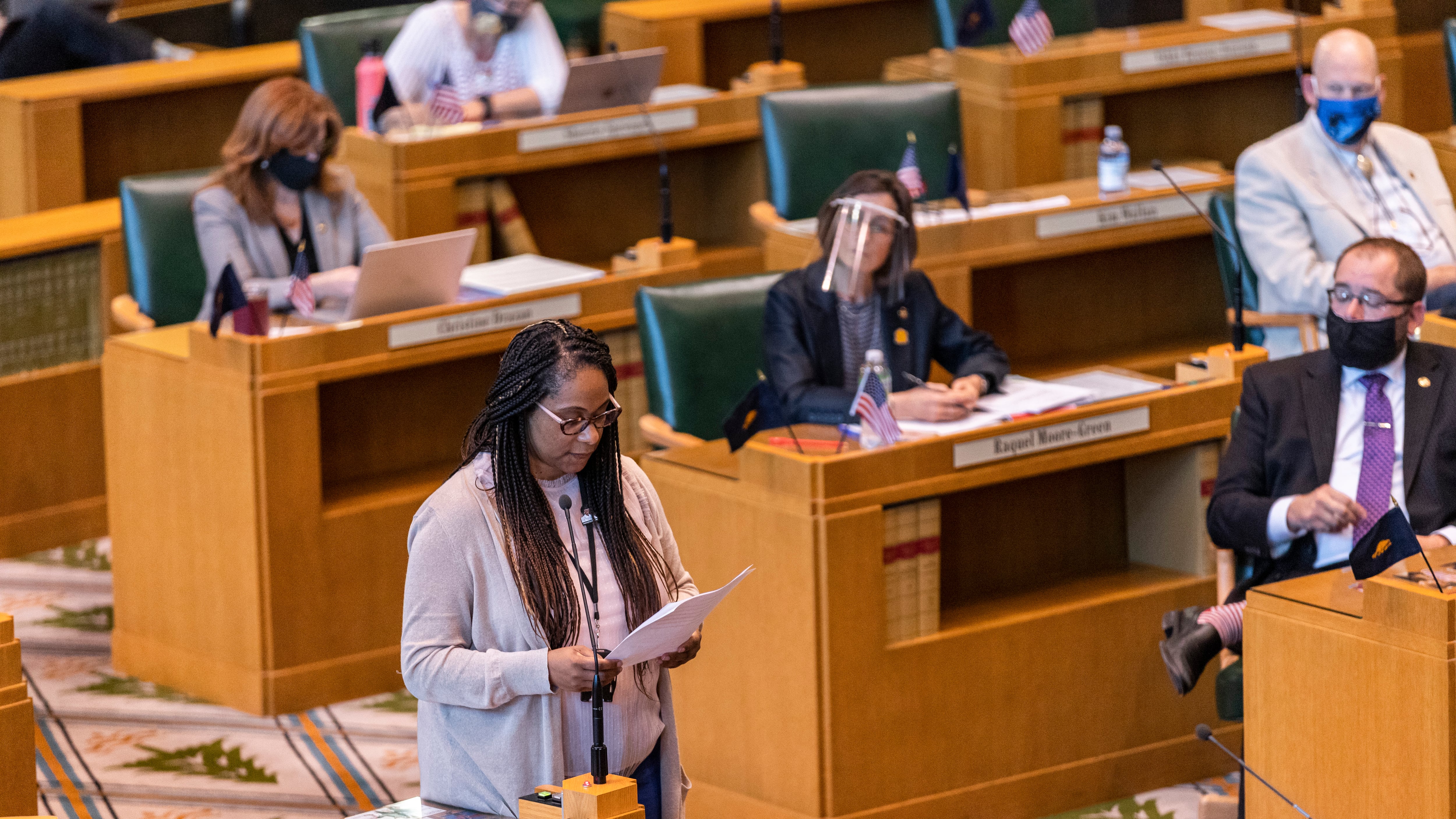
The Portland Police Bureau remains the largest law enforcement agency in the nation without body-worn cameras. The debate over the cameras’ utility has taken odd turns in this city: The police union wants the cameras, believing footage will allow officers to display their side of confrontations with protesters, while progressive elected officials have stopped discussing the cameras in public, fearing they’ll jeopardize police contract negotiations.
State Rep. Janelle Bynum (D-Happy Valley) is perhaps Oregon’s leading voice for police reform. But she says the debate about body-worn cameras has omitted something important: the traumatic effect of watching Black lives extinguished.
“I haven’t watched the George Floyd video,” she says. “I won’t watch those videos. I can’t. Sometimes I think we cheapen the value of human life by watching those and becoming numb to it.”
That wasn’t the only surprising observation Bynum made in an interview with the Dive podcast. She also discussed being racially profiled while campaigning door to door for a legislative seat, passing the CROWN Act to outlaw hair discrimination, and the tensions of being a Black woman running several McDonald’s franchises in a state where organized labor is a political powerhouse.
Here are three noteworthy moments from our conversation:
Bynum says the most hurtful thing anyone has said to her in Salem was a Democratic colleague who didn’t think she was sufficiently progressive. “I’ve had one incident that I remember the most was when someone told me if I didn’t want to be a Democrat, I should leave the party. And that was really hard for me…. Just because I don’t believe everything that you believe as a Democrat doesn’t mean that I’m not true. The person saying that was pretty bold, and I’m not sure that they would have said that to anyone else but me. If I step too far out of line of what they think a Democrat or a Black woman should be, I was told to go elsewhere.”
She believes members of the BIPOC Caucus are too often expected to sponsor the reforms to Oregon’s racist policies. “Black and brown people did not invent racism, so it is not our responsibility to fix it all. We should share our experiences, we should advocate for our relief, but it is not my responsibility, not at all. It’s my colleagues responsibility because they benefit from it. We don’t.”
Her proudest moment in the Oregon Legislature was bringing Black women to the House floor to testify about experiencing discrimination because of their hair. “Being able to hear women and Oregonians tell their stories about how their hair has impacted their ability to work, the types of jobs that they seek, and to be able to have freedom from that, was such a wonderful, wonderful day for me. Of course I care that the bill passes, but I’ve never felt so proud and so seen in all my life.”
Listen on Spotify.
Listen on Apple Podcasts.