Skip to main content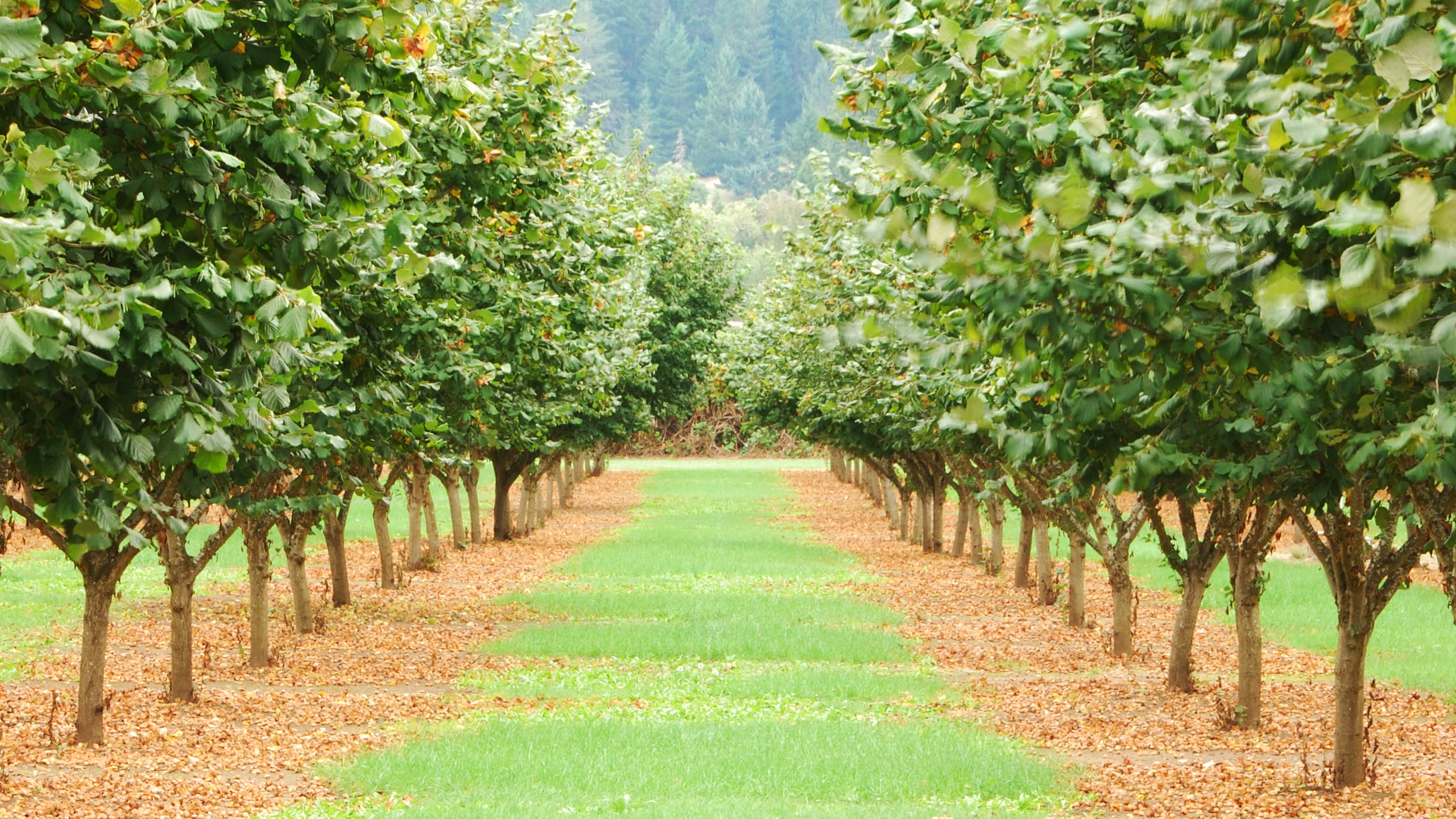
This story was produced by the Oregon Journalism Project, a nonprofit newsroom covering the state.
While many Oregon farmers pull back amid tariff worries, low crop prices and a difficult labor market, Jeff Newton plans to invest in new hazelnut trees at Christensen Farms near Amity in Yamhill County. Newton, along with other Oregon hazelnut growers, is waiting for a final tally of the volume of nuts they sold in 2025. But acreage and preliminary data show that hazelnut farming is booming in the Willamette Valley.
Although hazelnut trees require a relatively large investment up front and take years to produce a crop, they are a rapidly growing slice of Oregon agriculture. Demand for the nuts—and the money that yields—is the reason, according to researchers and members of the Oregon Hazelnut Commission. (Historically, Oregonians called the nuts filberts, a name the commission says reflects French settlers’ early influence on the industry, but since 1981, the commission has used the more common name, hazelnuts.)
“The biggest driver is more consistent bad prices on all other crops,” says Newton, vice chair of the Oregon Hazelnut Commission. “There just isn’t a lot of other profitable crops to grow.”
Despite the risks of blight and the multiyear wait for initial production, hazelnut tree acreage across the state has more than doubled in the past seven years while the total number of acres of farmland under cultivation has continued to decline.
The U.S. Department of Agriculture’s census data shows a 10% decline— about a million acres—in land used to grow crops in Oregon from 2002 to 2022. Meanwhile, the number of acres of hazelnuts increased 120%, from 31,000 to 88,000.
Other crops, including pears and cherries, saw a decline in acreage similar to the overall trend.
When planting crops that require years to mature, such as fruit or nut trees, farmers are betting on what they think will be successful, says Tim Delbridge, an assistant professor at Oregon State University’s College of Agricultural Sciences.
“Maybe the farmer is thinking, ‘Well, you know, I think hazelnuts have a bright future, and even though it costs a lot now, you know, I’m going to go ahead and invest in that,’” he says.
Oregon is one of the largest hazelnut producers in the world and grew an estimated 115,000 to 125,000 tons in 2025, says Christine Roth, executive director of the Oregon Hazelnut Commission.
Roth thinks production in the state will triple in the next six to seven years.
Oregon’s climate is well suited to grow hazelnuts and, according to Roth, the state’s generational family farmers are extremely invested in maintaining the nut’s quality.
Many farming operations have a uniquely close connection with the companies that process their nuts, she says, an intentional choice to maintain quality and standards.
“There’s definitely that sense of, we’re doing something special here,” Roth says. “This is part of the fabric of Oregon.”