Skip to main content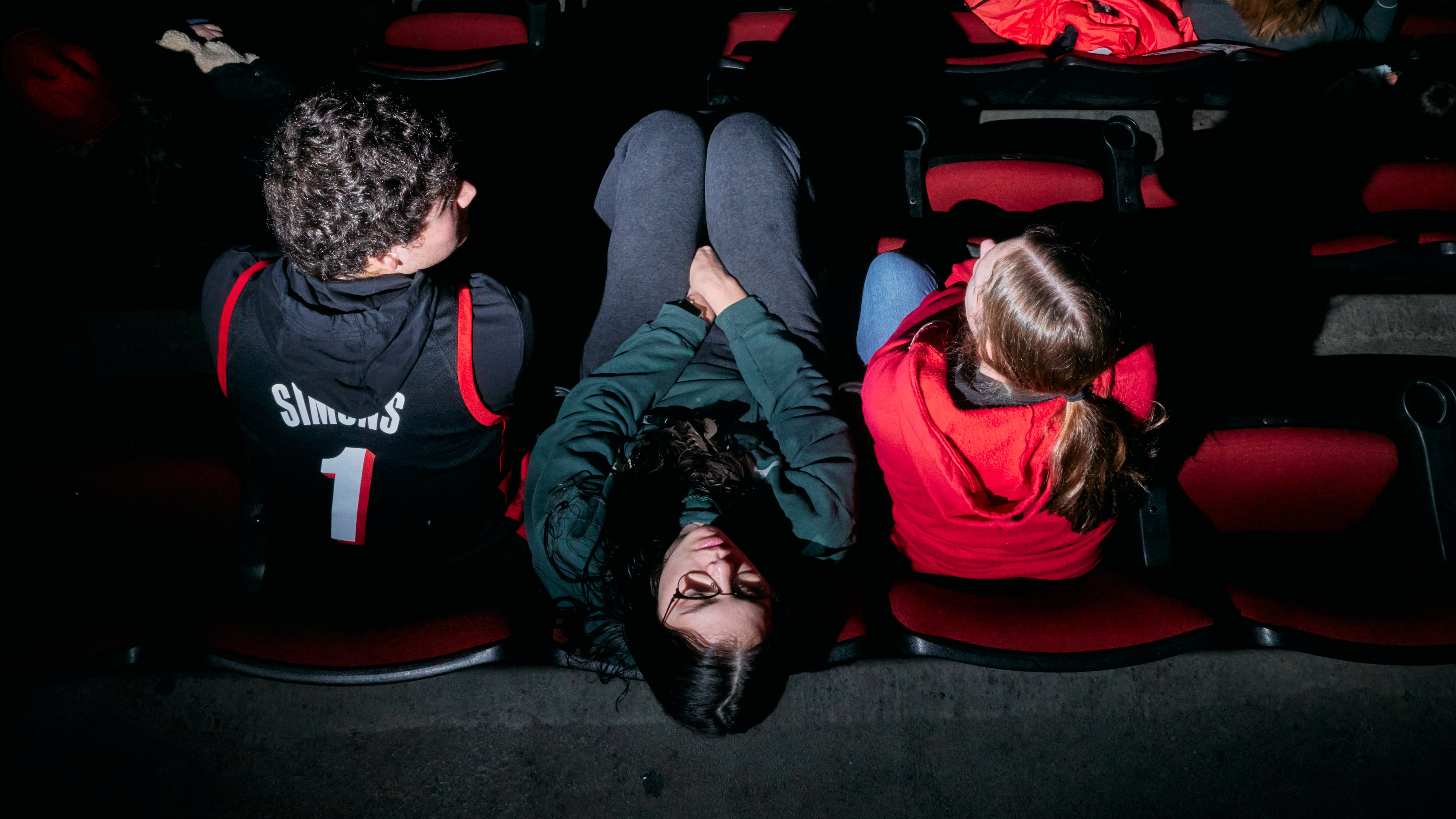
Spurred by fears that a new owner could uproot the Trail Blazers from Portland, state lawmakers approved a $365 million subsidy to renovate Moda Center in Portland’s Rose Quarter on March 6 in the final hours of the short legislative session.
Senate Bill 1501 passed with wide, bipartisan support in both chambers. Senators approved it by a 24–6 vote; in the House, the tally was 42–14. Lawmakers committed the public funding before sitting down to negotiate an arena lease with prospective Blazers owner Tom Dundon. The urgency stemmed in large part from the desire of Democratic leadership not to be remembered as the elected officials who allowed Portland’s most significant professional sports franchise to skip town.
“Now is not a time that Portland can afford to lose the Portland Trail Blazers,” said House Majority Leader Ben Bowman (D-Tigard), who carried the bill to the House floor. “We can’t afford to watch jobs disappear and businesses close. We can’t afford to be Seattle in 2008, watching the SuperSonics head east to Oklahoma City. Eighteen years later, they are still waiting and hoping for another chance.”
The threat that the Blazers could entertain overtures from other cities predates Dundon’s purchase: WW first floated the nightmare scenario last summer, detailing how the city of Portland’s agreement to buy Moda Center from the Blazers in 2024 meant that the estate of Paul Allen was selling a portable asset. WW wrote then that the price to keep the next owner from having a wandering eye could be an investment of $400 million in the aging arena.
Dundon, a Texas subprime auto loan billionaire whose purchase of the Blazers should be final by the end of the month, got a better deal than that. In the weeks before the session began, lawmakers, as part of an effort orchestrated by Gov. Tina Kotek, shaped a subsidy package that will ultimately commit $600 million: $365 million from state bonds, plus $88 million from Multnomah County and $120 million from Portland City Hall. (The local governments still must formally approve their shares.) Dundon pays nothing, unless the arena overhaul incurs cost overruns; taxes paid by the Blazers and other Rose Quarter entertainers will be diverted to paying off the state bonds to be issued for the arena renovation.
In remarks on the House floor prior to Friday’s vote, several Republicans relished what they termed the hypocrisy of Democrats going to bat for a billionaire.
“I’ve heard this building say so many times…, ‘We hate billionaires,’” said state Rep. Virgle Osborne (R-Roseburg). “Unless, in this case, we’re going to give this billionaire a whole bunch of free money from our tax rolls.
“Portland’s facing a $169 million budget deficit for the homeless services that it supplies,” Osborne continued. “If we’re going to blow taxpayer money, I’d say that would be a better place to blow it than giving it to a billionaire. And if we do decide to give this money to a billionaire, I hope we remember that. Because every time we do this, I’m going to remind everybody in the building that we hate billionaires. At least that’s what we preach.”
In recent weeks, other skeptics raised questions about the state’s largesse—and one lawmaker, state Sen. Khanh Pham (D-Portland), floated an amendment that would have required the state to discuss a private contribution to Moda Center’s overhaul, as well as revenue sharing by the Blazers. Her amendment went nowhere, and a rebellion by the progressive wing of the Democratic caucus never materialized.
Still, the outcome involved some dealmaking.
Although the Blazers deployed a team of lobbyists, the legislation that provided state funding for the Moda Center renovation, Senate Bill 1501, faced early skepticism from members of both parties. To help secure some Republican votes, Democrats found cash for a cherished GOP cause—county fairs.
Historically, 1% of Oregon Lottery proceeds go to county fairs, but that sum is capped at $1.53 million a year. A bill that would have removed that cap died in 2025. Now, though, a March 3 amendment to another bill, Senate Bill 1601—sponsored by Sen. Kate Lieber (D-Portland), co-chair of the budget writing Joint Ways and Means Committee and a leading supporter of the Blazers bill—has removed the cap. The change will add about $6.5 million a year in new funding for fairs starting Jan. 1, 2027.
In a session where many agencies faced reduced budgets, that money was a win for Republicans—and helped secure GOP votes for the Blazers.
Asked about that dealmaking, a spokesman for Senate President Rob Wagner (D-Lake Oswego) said Democrats worked to boost all parts of the state. “The Oregon Legislature works to bridge the urban-rural divide through strategic investment every single legislative session by making sure that priorities across the state are addressed,” Wagner spokesman Connor Radnovich tells WW. “The Senate president is proud of the balanced approach the Legislature took this session around investments, particularly funding water and sewer infrastructure improvements in rural areas.”
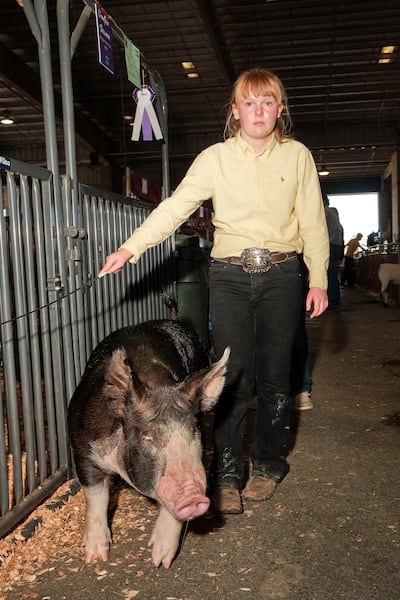
Republican leaders could not be immediately reached for comment. But in a Joint Ways and Means Committee hearing on March 3, state Rep. Mark Owens (R-Crane) brought up Moda Center funding and, in the same breath, praised colleagues for lifting the county fairs’ funding cap.
“Yesterday, we had a long conversation about where some of the metro area go to see concerts, gather, and economic development,” Owens said. He then immediately switched topics. “Specifically, the County Fair Account law: This is huge. This is huge to the 36 county fairs that are out there. Taking away that $1.53 million cap will allow them to start catching up on some of the deferred maintenance. It’s a home run for the counties. So I just wanted to thank you guys for that acknowledgement to where rural Oregon goes to gather, too.”
Even as most of them voted in favor of Moda Center funding, Republicans marveled at a process that committed the public dollars before starting a lease negotiation with Dundon.
“The process of this bill seems a little bit backwards,” said state Rep. E. Werner Reschke (R-Klamath Falls), who then voted yes. “It reminds me of the young man who was excited for his senior prom. So he went out and bought roses and he got a limousine. He bought a tuxedo, he got a reservation at a restaurant, and then he asked the girl, would she go out with him. Maybe asking first and getting that secured first would be better than spending all the time and effort up front.”