Skip to main content
This story was produced by the Oregon Journalism Project, a nonprofit newsroom covering the state.
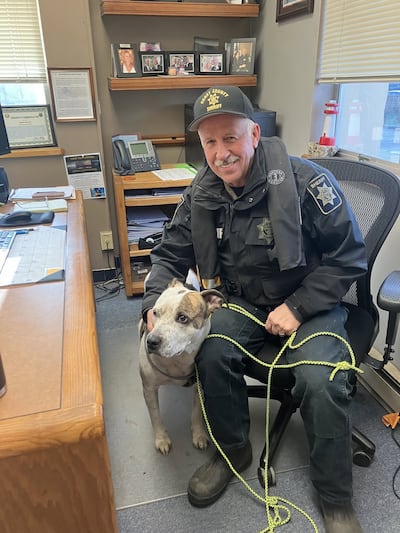
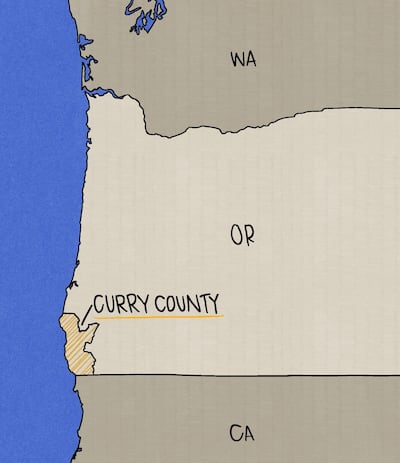
GOLD BEACH — In this windswept fishing mecca of 2,417 people, where the Rogue River rushes headlong into the Pacific Ocean, the hot-button issue is the fate of Sheriff Johnnie Lee “John” Ward, Curry County’s top lawman for the past 12 years.
Ward, 68, has been accused of lining his own pockets with public dollars; failing to supervise a deputy who went on to shoot two people in Gold Beach in separate incidents; allowing another deputy to defraud the Oregon Marine Board; and using uncertified police dogs, which put arrests and public safety at risk.
On top of those allegations, Ward has for 10 months defied a court order to share his agency’s financial and administrative records with the Curry County Board of Commissioners.
And now a just-completed investigation, dated July 20, found that the sheriff has for years abused his power: “Ward engaged in deceit, dishonesty, misrepresentation of facts, omission of material information, and subversion,” the report said.
The question Curry County now faces is what to do when a top cop thinks he’s above the law.
Ward’s case is extreme, but it illustrates a structural problem across Oregon: County sheriffs are independently elected, answerable only to voters who often reelect them by default. They are also largely immune from oversight by the boards of commissioners that set their budgets.
When a sheriff refuses to cooperate, as Ward has done, there is no boss who can hold him accountable. Curry County commissioners have tried the courts, their own investigation, an independent investigation, and even a criminal referral to the Oregon Department of Justice, which led nowhere—and Ward is still sheriff.
Much of what’s known about Ward today is due to one man: Brad Alcorn, a retired cop from California who began his tenure as a Curry County commissioner as an ally of the sheriff but became his chief accuser. And while neither Alcorn nor Ward would agree to talk with OJP, an examination of public records and conversations with elected officials and area residents reveal a county deeply divided over what it means when the top official entrusted with enforcing the law decides the law doesn’t apply to him.
Battles related to Ward’s fate have raged in the community and at board meetings for more than two years. Local media, including the Curry Coastal Pilot, the Redwood Voice, and Jefferson Public Radio, have covered parts of the conflict, but the reporting has been episodic and opinions are mixed.
Supporters, such as former county treasurer Dave Barnes, contend Ward’s getting a bum’s rush. “I’m fed up with what’s happening to him,” Barnes said. “It’s not fair.”
One of Ward’s former bosses sees it differently. “He has to go,” said retired Curry County Sheriff Kent Owens.
For many county residents, however, it’s hard to know what’s going on. Bryan Grummon, a retired tech executive who has served on numerous local boards, says the public discourse has shed more heat than light.
“We don’t have a lot of facts,” Grummon said, “but we have a lot of hard feelings.”
The prospectors who founded Curry County in the 1850s never found much of the precious metal that gave the county seat of Gold Beach its name. Residents relied instead on the Douglas fir and Port Orford cedar to provide family-wage jobs for most of the 20th century.
That changed in 1990. The feds listed spotted owls under the Endangered Species Act, dramatically reducing the timber harvest. Today, the average income for Curry County residents is 30% lower than the Oregon average and less than that of all but three counties.

Curry County’s modest property taxes—by far the state’s lowest—its scenic beauty, and the prospect of California weather at Oregon prices lure retirees. It’s a predominantly Republican county of 23,375 people where public meetings begin with the Pledge of Allegiance. In such an environment, Ward holds an exalted position, even among those who think he has violated the public trust.
“Sheriff Ward is the strongest, most powerful elected official in Curry County, hands down,” said County Commissioner Lynn Coker, who, like both of his fellow commissioners, wants Ward gone.
John Ward grew up in Gold Beach. A high school yearbook from 1974 captures an era when Oregon schools swam in money: sports, clubs and booming enrollment far different from today.
After a stint in the Navy, Ward worked in the woods and with developmentally delayed adults before joining the sheriff’s office in 1990. He rose through the ranks and ascended to the top job in 2014 when his predecessor resigned.
An avid hunter, fisherman and long-suffering fan of the Las Vegas Raiders football team, Ward also enjoys the occasional round of golf at Cedar Bend, a public course 10 miles north of Gold Beach. He keeps a small social circle and, except for a few years coaching his son’s and daughter’s high school golf teams, isn’t known as much of a joiner.
Things began to go sideways back in 2023. The number of county employees had ballooned from 115 to 152 in the previous five years, funded by pandemic money and road fund reserves. Then that one-time money was gone and reserves were evaporating.
Facing budget cuts on the order of 30%—including to the sheriff’s office—Commissioner Jay Trost and his colleagues decided to ask residents to pay additional taxes to fund the sheriff’s office, which patrols the county and runs the jail.
Commissioners sought detailed information from Ward to bolster their case to voters. (The sheriff’s office consumes the largest share of the county budget.) Yet Ward refused to respond to the board’s requests, balking at even basic questions about staffing, scheduling, workload and current use of resources.
Commissioners proceeded anyway and put a public safety levy on the May 2024 ballot. It failed 72% to 28% (a second levy would also fail the following year). The board’s questions of the sheriff continued—and he continued not to answer, instead pushing back. “You don’t appear to recognize that sheriff’s office operations are for me to manage and control,” Ward wrote to county counsel Ted Fitzgerald in a Sept. 4, 2024, email.
Ward grew so angry at Fitzgerald’s insistent requests on behalf of commissioners that he filed a bar complaint against the county attorney that month, accusing him of “openly harassing and threatening me in public meetings.” (The bar dismissed the complaint.)
“Today, I think we know why he wouldn’t provide any information,” said Commissioner Patrick Hollinger. “He had a lot to hide.”
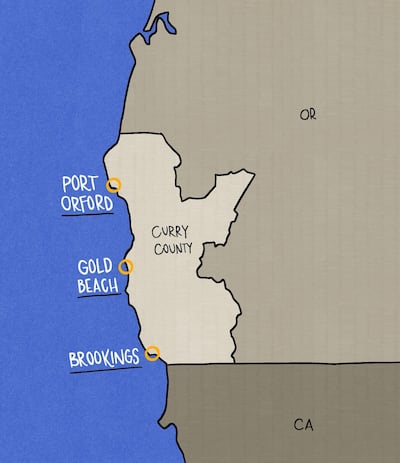
In 2017, Brad Alcorn, a retired detective from Fresno, Calif., moved to Brookings, 28 miles south of Gold Beach and the largest city (pop. 6,850) in Curry County.
In some ways, Alcorn was a typical county resident: Curry boasts the second-oldest population of any Oregon county, and it has the highest percentage of people in any Oregon county born outside the state.

Initially, according to people who know both men, Alcorn and Ward bonded. Alcorn helped Ward reestablish his agency’s K-9 program, used for law enforcement and search and rescue in the county’s rugged mountains and along its 100-mile coastline.
Alcorn also served as a volunteer reserve deputy for Ward. “I got to know Sheriff John Ward. I think he is a great sheriff,” Alcorn told the Curry Coastal Pilot in 2020.
In 2022, Alcorn won a seat on the Curry County Board of Commissioners with Ward’s support. But the buddy-buddy relationship unraveled in 2023 as the county’s finances worsened and Ward stonewalled the board.
As budget cuts set in, records show Alcorn began hearing from whistleblowers who shared with him a variety of concerns about Ward. Amid the lack of information from the sheriff, Alcorn began conducting an investigation of his own.
That investigation led to a showdown Oct. 8, 2024. Rather than meeting at county headquarters or Ward’s office, less than a block apart in Gold Beach, they met at the Curry County Fairgrounds, a windblown property adjacent to the beach in the city’s commercial district.
The two-and-a-half-hour conversation did not go well. “I confronted Sheriff Ward about what appeared to be his cumulative mismanagement of his law enforcement agency, failure to supervise his employees, conduct internal affairs investigations and hold officers accountable,” Alcorn later wrote.
After that meeting, the county board ran out of patience with Ward’s refusal to turn over public information. On Oct. 25, 2024, they sued Ward in Curry County Circuit Court. A year later, a judge ruled mostly in the county board’s favor, ordering Ward to hand over the requested information. It proved a hollow victory.
“He still hasn’t given us a thing we’ve asked for,” Trost said.
Observers say it is rare for a government body to sue one of its own employees for records—and even more rare for the employee to refuse to comply with the court’s decision.
“I have never heard of such a case in my 60 years in the law,” says former Oregon Supreme Court Justice Mick Gillette, now a lawyer in private practice. “It’s very unusual.”
In December 2024, Curry County turned over the results of Alcorn’s investigation to the Oregon Department of Justice.
Alcorn’s report, obtained by OJP, included a series of findings about what he termed Ward’s “lack of moral fitness.”
Here are some of most serious allegations in the report:
Fraudulent boat inspections: The Oregon State Marine Board pays Ward’s office $182,000 a year to patrol the Rogue River and inspect boats. But there is ample evidence that Curry County deputies were doing neither, according to the Marine Board.
“I noticed that [your office] has 0 hours of water patrol on the Rogue River/Gold Beach area for the month of August though there are hundreds of boaters on the waterway during the peak boating/fishing season,” Brian Paulsen, the Marine Board’s boating safety manager, wrote to Ward in an Aug. 12, 2024, email.
Paulsen also questioned Ward’s agency’s claim that all 142 boats it had inspected in the month of August met safety requirements. That seemed improbable to Paulsen because more than 30% of boats statewide fail such inspections.
“Some if not all of the information submitted is fraudulent and false information intended to deceive the Oregon State Marine Board,” Alcorn concluded, adding that Ward was guilty of “gross mismanagement and failure to supervise, defrauding of a state agency to receive unjustified reimbursement, and exposure of the public to unnecessary risk by failing to perform the prescribed safety-related tasks.”
Hollinger, a Curry County commissioner who also works as a fishing guide, spot-checked the boats Ward’s agency claimed it had checked and found that owners had no recollection of the claimed inspections.
Uncertified police dogs: In his investigation, Alcorn learned that Ward’s office used uncertified police dogs in 2023 and 2024. Alcorn told Ward that was unacceptable because it could undercut any law enforcement action involving a dog and expose the county to lawsuits should a dog injure anyone.
“The fact that the K-9s were being used while not certified and lacking training hours not only put the community at risk, but places county finances in jeopardy by exposing the county to extreme legal liability,” Alcorn wrote in his report.
Failure to supervise a troubled deputy: In his report, Alcorn questioned Ward’s oversight of his staff, particularly a Curry County sheriff’s deputy named Kenny Moore. In December 2021, Moore allegedly broke into a house while off duty and intoxicated. Two deputies responded and took him home. Moore then threatened to kill himself, so the deputies took him to a hospital. He soon returned to work. Yet Moore’s county personnel file included no records of a police report, any investigation of the break-in, or whether Moore had been counseled or medically cleared.
Alcorn said in his report that Ward’s office was “putting the public…and ultimately the county, at risk, if liability arises regarding Moore’s future or past performance.”
Moore left the sheriff’s office in September 2022 and joined the Gold Beach City Police Department. On Jan. 12, 2024, Moore shot an unarmed woman in Gold Beach during a traffic stop.
Thirteen months later, on Feb. 22, 2025, Moore shot another Gold Beach resident, a developmentally disabled man who was creating a disturbance.
Clint Crane, a retired cop who lives around the corner from the location of the second shooting and knew the victim, said it’s both unlikely that a small-town cop would shoot two people in two years and disturbing that, despite Moore’s troubles as a sheriff’s deputy, he moved on to the Gold Beach police department.
(Moore was cleared of wrongdoing in both shootings. The first is the subject of a pending federal civil rights lawsuit. Moore did not respond to written questions. Jordan White, the Gold Beach police chief who hired Moore, said he spoke to Ward before making that decision and that Ward did not mention any issues with Moore.)
“If this happened in LA or Portland, it would be all over the news,” Crane said. “It would be something for which people would want accountability from the authorities. Here, there’s nothing.”
At the beginning of 2026, while Ward was still ignoring the court order to turn over documents to the county board, the Oregon Department of Justice notified Curry County that it had looked into Alcorn’s report and found that none of the 13 allegations against Ward rose to the level of “prosecutable charges.”

Trost, who succeeded Alcorn as county chair, says that outcome left him “dumbfounded.”
Trost’s fellow commissioner Hollinger said of the state’s response, “I thought it was a joke.”
“You have an expectation that the Department of Justice is supposed to be doing their job,” Hollinger added. “To just sit on the allegations for more than a year and really not do anything—it was very disheartening.”
DOJ spokeswoman Jenny Hansson said the department did closely examine Alcorn’s report.
“DOJ’s criminal investigators reviewed those allegations, ultimately determining that 12 of the 13 complaints were not criminal, but were instead related to mismanagement, violations of county policy, or supervision matters for the Department of Public Safety Standards and Training to review,” Hansson said.
She said DOJ did investigate the Marine Board allegation. “Ultimately, investigators determined there wasn’t sufficient evidence to pursue criminal charges, and the underlying behavior had been corrected.”
While the state seemed uninterested in Ward, the Curry County board was unrelenting. Last fall, the board hired an independent investigator, Jim Ferraris, who served in senior positions for the Portland, Salem and Woodburn police departments over a 40-year career.
Ferraris focused on donations made by the John G. Atkins Foundation, located in Brookings, to the sheriff’s office. He concluded Ward had appropriated some of the $391,000 the foundation donated for the public’s benefit for his own use, a potential violation of both ethics and criminal laws. (The contributions were first reported by The Oregon Roundup.)
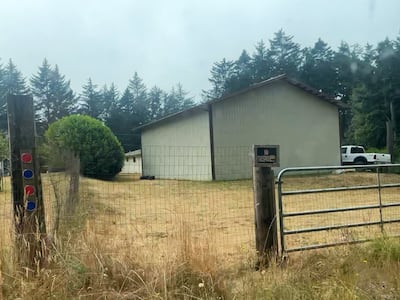
Most notably, Ferraris determined that a $29,880 travel trailer the foundation paid for is registered in Ward’s name—i.e., he owns it. An even more glaring example: In 2017, the foundation paid for a large storage shed to be built for the equipment its money purchased. Rather than placing the shed on county land, Ward had it built on his property adjacent to his home.
In 2019, Ward signed a declaration stating that although the shed was on his personal property, “the building remains the property of the Sheriff’s Department.”
Curry County property records show the $53,000 structure belongs to Ward personally—not to the sheriff’s office. Ferraris found Ward’s declaration “specious at best.”
Ferraris also noted in his report that Ward appeared to have lied about his criminal history.
Last year, in a public comment at a board of commissioners meeting, retired Curry County Sheriff’s Detective Dave Gardiner cited an archived record that showed Ward was arrested in Curry County in 1980 after going AWOL from the Navy. Ferraris noted that Gardiner signed a sworn statement to that effect.
Ferraris also found that Ward’s personnel file shows he was arrested in 1980 for selling a controlled substance. Yet in an Aug. 20, 2025, deposition in the public records case, Ward denied ever having been arrested.
“Ward does not appear credible,” Ferraris concluded, adding that based on his investigation, Ward appeared to have committed theft, engaged in official misconduct, and violated state ethics laws and the Department of Public Safety Standards and Training’s “moral fitness standard related to dishonesty.”
Earlier this month, the county board sent Ferraris’ investigation to the DPSST, seeking to have Ward’s law enforcement certification revoked. And for the past few months, according to people who have been interviewed, FBI agents have been in Curry County asking questions about Ward.
“We’re aware that the FBI is investigating,” DOJ’s Hansson said. “We’re ready to be of assistance and to take up any criminal charges that may result from their investigation.”
Even as Curry County voters overwhelmingly rejected a public safety levy in 2024, they reelected Ward that year by nearly as big a margin. It was the first time in three elections that he even drew an opponent, but he won 62% to 29%.
And although the county board has publicized its lawsuit against Ward and some of the allegations in the Alcorn report, many residents continue to defend him.
One is Andre Bay, a leader of unsuccessful 2025 recall campaigns against Commissioners Trost and Hollinger. Bay, who has also been a leader of the Three Percenters movement and the effort to make Curry County a Second Amendment sanctuary, says he and his allies wanted the commissioners out because they cut Ward’s budget and are wrongfully pursuing him.
“Their hatred of the sheriff is blatantly obvious,” Bay added.
Part of the reason residents may be blasé about Ward’s behavior is that law enforcement scandals aren’t new in Curry County.
Two of the sheriffs Ward worked for, Mark Metcalf and John Bishop, saw their careers end in scandal. Metcalf was convicted in 2007 of a variety of crimes, including sexual abuse, harrassment and official misconduct. Bishop, Ward’s immediate predecessor, was convicted in 2019 of felony theft for stealing from the Oregon State Sheriffs’ Association.
Trost thinks Ward’s deep roots in Curry County and residents’ respect for law enforcement have enabled him to hold on. “The office of sheriff carries immense respect in Curry County,” he said.
Nonetheless, momentum against the sheriff seems to be building. One of the area’s longest-serving public officials, state Rep. Court Boice (R-Gold Beach), who hails from the family that founded the biggest business on the Gold Beach waterfront, Jerry’s Rogue Jets, said Trost and his commissioner colleagues are doing the right thing.
“John [Ward] supported me in my first race for the county commission,” Boice said. “I’ve known him a long time. But I wish he would resign.”