Skip to main content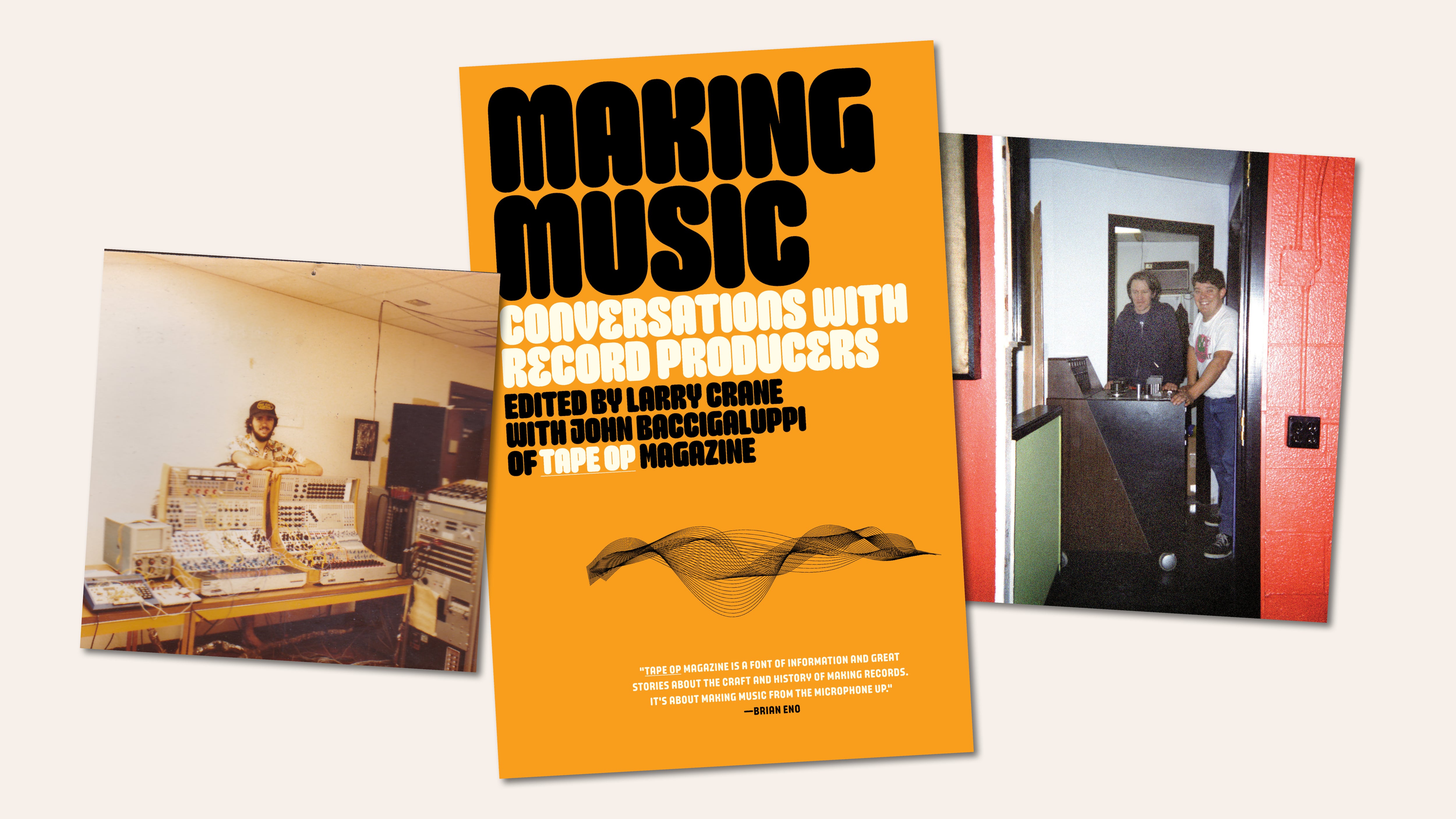
Larry Crane wants to talk about music.
It’s not an exaggeration to call Crane a towering figure in the world of music recording. Since 2000, Crane has recorded national and local artists at his Jackpot! Studios ranging from Death Cab for Cutie to Richmond Fontaine and M. Ward. He also co-produced “Miss Misery,” the song that won Elliott Smith an Oscar, and is the archivist for Smith’s estate. But among music nerds, Crane may be best known for Tape Op, the magazine he launched in 1996.
Tape Op is dedicated to long-form interviews about the art and science of recording music with heavyweights like Glyn Johns and Brian Eno. It’s easy to paint the magazine as a niche, technical outlet for weirdos who hoard recording equipment in their garages. But in truth, there’s something in it for everybody who cares about how music gets made—whether they’re sound engineers, musicians or just fans who want to know the story behind their favorite album.
This year, Tape Op celebrates its 30th anniversary with a new book, Making Music: Conversations with Record Producers (Akashic Books, 368 pages, $18.95). Edited by Crane and Tape Op publisher John Baccigaluppi, the book includes interviews with the aforementioned Johns and Eno as well as Jack Antonoff, Linda Perry and Lee “Scratch” Perry.
WW talked to Crane about running a print magazine in 2026, what makes a producer a producer, and who his audience is. The interview has been edited for brevity and clarity.
WW: Tape Op is celebrating its 30th anniversary, and I don’t have to tell you this is not an easy time to be in media at any level. What has kept Tape Op going?
Larry Crane: It’s funny, I own a recording studio that’s got tape decks in it, and I have a magazine that’s in print, and everybody thinks everything I’m doing is wrong. And believe me, that’s not part of my personality; I’m not a Luddite or something. I’m not holding on to something that used to exist by any stretch.
I think the economics of running a magazine pretty much dictate that you must pick a small lane to operate within. So we have a niche magazine in the field of recording music because music is my favorite art form.
The other component of that is having something that is compelling. Tape Op started as a personal vision of mine, and it also reflects my growth. If you look through the magazines from issue 1 to issue 175—which I think is at the printer right now—you’d see my growth as a studio recording person. I mean, that’s why it’s called Tape Op. The tape op is the tape operator, which is someone who’s supposed to be sitting in the back of the studio learning.
I think having a magazine with that vision and giving away the knowledge for free and collating the knowledge and having long-form interviews—it all sets up a unique tone that musicians find appealing.
In the intro to the book, you talk about how in music the term “producer” can mean a lot of different things—from the technical part of running the mixing board to developing the artist. What parts of the role do you find most interesting at this point?
The technical part of recording is—and I hate saying it—but it’s just kind of boring. If you have the resources to get good equipment or the time to learn to use cheaper equipment, it’s not that hard to get a half-decent sound. I’m a producer. I want to get my hands dirty in the song or in the music or in the performances. I was tracking someone’s vocals yesterday, and I’m like, “Why are you singing that part all staccato? It sounds really like you don’t care to be singing it like that.”
I spent an hour or something coaching the singer. I’d sing parts back on the talkback button where I want to hear it, hear the notes lag or linger. That’s the exact opposite of the person with the console; that’s the exact opposite of how a lot of people perceive the recording process. They think it’s all technical, and you’re sitting there with the faders in front of you.
My friend Steve Albini would always say, “I’m not a producer.” I’m like, “Bullshit, Steve.” He would make a big mark on the records he worked on. He would make people clean up their parts or play better or get better sounds, and that’s production, too. Everything’s production, but man, the hands-on: Give me the lyrics sheet. Teach me the melodies. I’m going to sing along with you while you’re in there and think about how this works. That’s what I like doing, what I get excited about and what keeps me going.
You mentioned Steve Albini; who are the folks you’ve particularly enjoyed talking to or have learned stuff from?
Jim Dickinson was talking to me about recording the Replacements, and he says, “Sometimes you’ve got to steal the music from the artist.” The first time I heard him say that I thought, “That’s really pretentious. That’s really self-important.” And then I found myself doing that. I found myself kind of going, “Hey, look over here!”—you know, while I’m trying to get the band to do something I want them to do—because they’re fighting me or they’re not understanding my directions. I’m trying to capture what I know will make a better recording, despite the artist having intentions otherwise. I’m like, “Oh my God, Jim was totally right.”
We talked about the niche aspect of Tape Op, but who do you see as its audience?
The audience is definitely musicians. I know that we have readers that are not musicians and not actively recording, but they just love reading the stories about how people create, how they interact, how they work. I would like to see more readers that are really coming from even further outside these areas—people that are more peripheral music fans who are just kind of curious about what goes on when someone’s recording music, culturally. The new issue has an article by one of our writers, Ian Brennan, who also worked on the book. It’s about traveling all over the world and recording people in really remote areas of Africa and Asia and stuff, and these stories are just incredible. In one story, they’re in a hut on stilts on the beach, and then the tide comes in, and they get stranded there. These are stories that are so far beyond the technicality of recording. They’re cultural stories.
SEE IT: Larry Crane and John McEntire in conversation about Making Music: Conversations with Record Producers at Powell’s City of Books, 1005 W Burnside St., 503-228-4651, powells.com. 7 pm Friday, Oct. 9. Free.