Skip to main content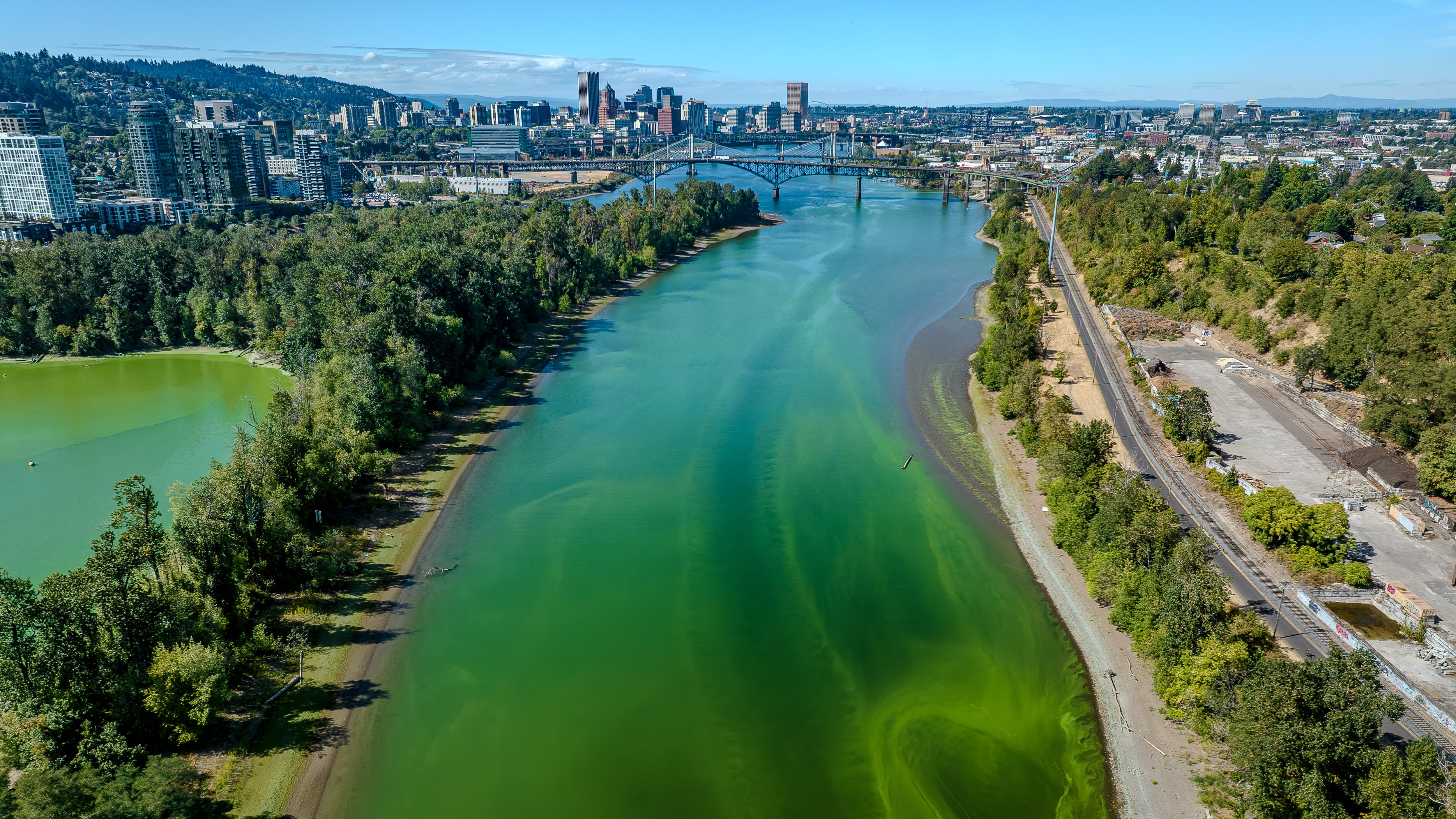
Human Access Project’s mission is to reconnect Portlanders with their river—a mission that has gotten awfully tricky this week as a nasty, bright green algae bloom has started escaping from the Ross Island Lagoon and floating into the main waterway of the Willamette River.
HAP has already canceled two events this week due to health concerns from the megabloom and expects it may have to cancel its River Huggers morning swim program next week.
“This is the worst year that we’ve seen it,” says Scott Fogarty, executive director of Human Access Project. And there aren’t a lot of immediate solutions, at least for summer 2026: “This year, the genie is out of the bottle, so to speak.”
The Oregon Health Authority has issued a precaution for the Willamette in Portland, a step below an advisory. A precaution means that a bloom has been confirmed and toxins are present, but at levels that are safe for human recreation. Toxin levels may be unsafe for pets, though.
“When it doubt, stay out,” the agency says.
OHA’s recreational advisories for harmful algae blooms in Oregon are available here.
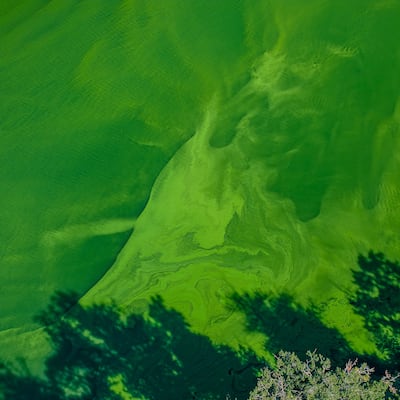
The severity of this year’s megabloom, which HAP captured via drone photos, is largely due to climate change issues such as a decreased snowpack leading to a low river flow this warm summer, Fogarty says.
A longer-range solution to the recurrent toxic algae blooms in the Willamette, Fogarty says, is to put a channel in Ross Island to increase water flow through the lagoon. HAP has been advocating for that solution for 10 years and working with Oregon State University on engineering such a channel. It’s a private island, though, owned by Robert Pamplin Jr. and Ross Island Sand and Gravel, which mined it for gravel for decades.
Algae blooms have happened four of the last five summers, Fogarty says, but this is the worst he’s seen.
“It just smacks you in the face once you see those images from the air,” he says. “We’re praying for rain.”