 Skip to main content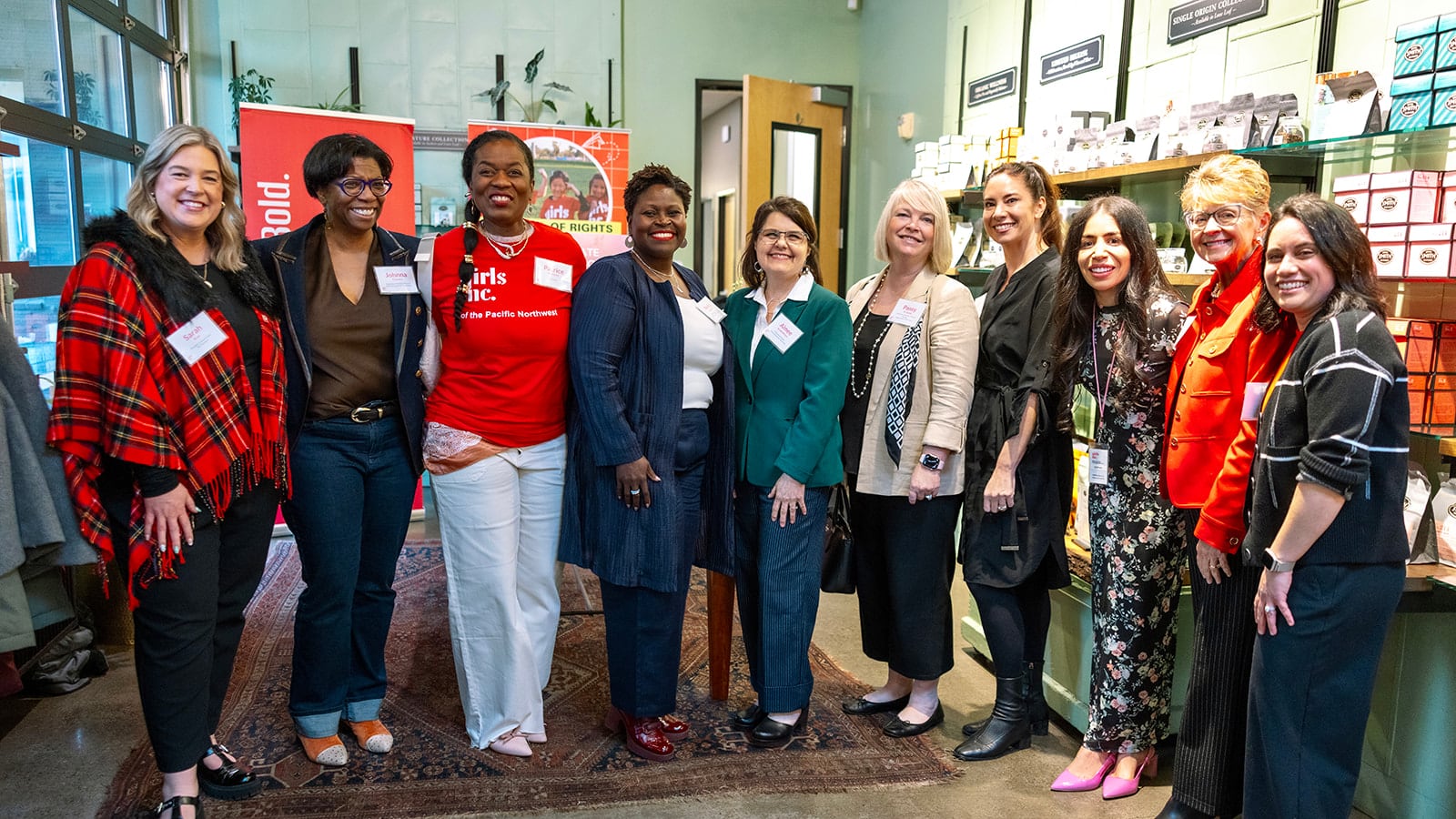
This story is published in cooperation with Willamette Week and Oregon State Credit Union.
Women’s History Month often looks backward at legacy. But across Oregon and Southwest Washington, women are shaping the future of their communities right now.
That work takes many forms: programs helping girls grow into confident leaders, services supporting survivors rebuilding their lives, and creative spaces expanding who gets to be seen, heard, and valued.
At its core, the work is about building what communities actually need: access, safety, opportunity, and systems of support that last. Organizations like Girls Inc. of the Pacific Northwest, Clackamas Women’s Services, and North Pole Studio are doing that work every day—supported by community partners like Oregon State Credit Union, whose long-term investment helps expand the reach of their impact.
Investing in the Next Generation of Leaders
At Girls Inc. of the Pacific Northwest, leadership isn’t something girls grow into later—it’s something they begin practicing now.
Through partnerships with schools across Portland, Seattle, and Southwest Washington, the organization delivers research-based programming that helps girls build confidence, leadership skills, and the tools to advocate for themselves and their communities. Its focus is building strong, smart and bold leaders capable of changing the world.
For Chief Programs Officer Grace Malango-Blake, that work reflects the focus of much of her career: creating environments where young people—especially girls and gender-expansive youth—feel seen, valued, and empowered to shape their own futures.
Students who once hesitated to speak up begin leading discussions, mentoring younger participants, and advocating for issues affecting their communities.
“I believe deeply in the power of consistent, relationship-based programming,” says Malango-Blake. “Youth-led leadership feels especially critical right now. The next generation isn’t waiting for permission to shape their communities and their future. It’s our responsibility to ensure they have the support and platforms to do so.”
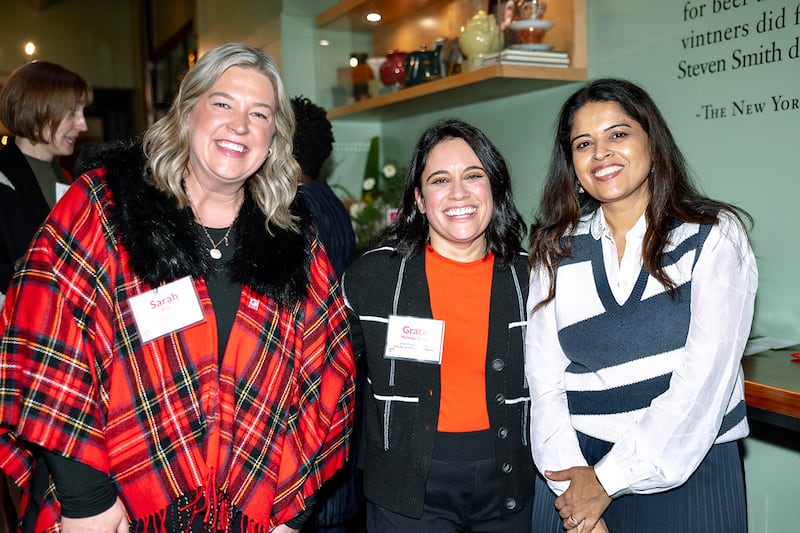
Malango-Blake’s lived experience as a woman—and a mother—have had a huge influence on the way she leads in her current role.
“For me, leadership as a woman means leading with clarity, empathy, and courage. It’s about building systems that genuinely reflect the values we speak about–equity, access, and opportunity–and making sure those values show up in practice,” Malango-Blake says.
“I prioritize transparency, shared ownership, and mentorship because I believe leadership is less about hierarchy or ego and more about stewardship. About holding responsibility with care and inviting others into it. I’ve also come to believe that leadership reveals itself most clearly in the quieter moments: how you navigate uncertainty, how you show up during organizational change, how you respond when the path forward feels unclear.”
When asked how she believes women leaders are uniquely positioned to influence impact, culture, or progress within their organizations or communities, Malango-Blake reflects on her work with Girls Inc., and her own daughters.
“They are watching how leadership is modeled: whose voices are heard, whose ideas are valued, and what it means to take up space. I want them to see that leadership can hold both strength and compassion, that systems can be challenged and reshaped, and that their voices belong in every room they enter,” Malango-Blake shares.
“When leadership reflects diverse identities and lived experiences, organizations become more thoughtful, more innovative, and better equipped to serve their communities.”
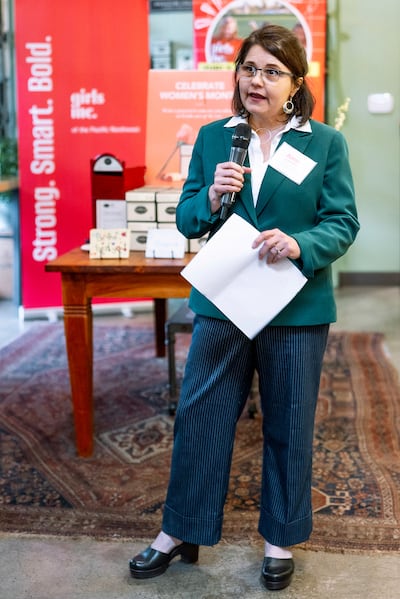
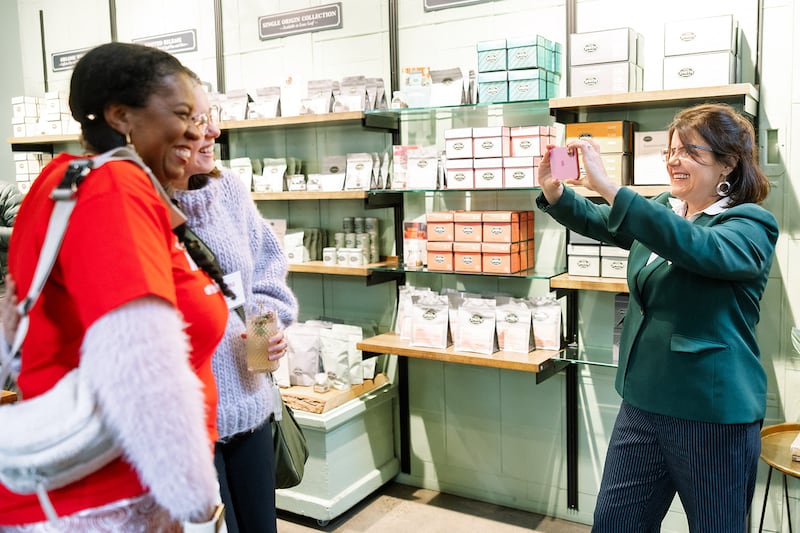
Those ideals are heavily represented in Girls Inc.’s annual Women’s History Month celebration, which brings together regional leaders and partners who share a commitment to expanding opportunities for girls and women across the Pacific Northwest. The event highlights the organization’s work helping girls grow up strong, smart, and bold while creating space for community partners to support and invest in that future.
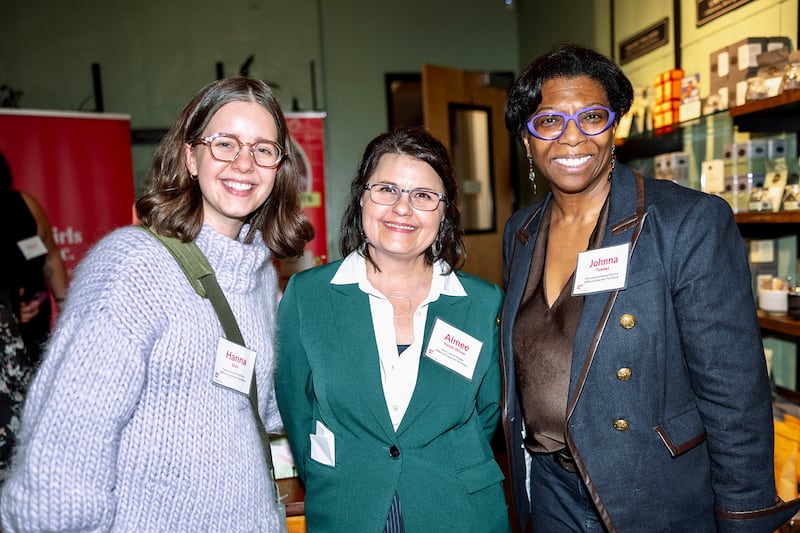
This year’s event was hosted at Smith Teamaker, and included representatives from the new WNBA Portland Fire, Portland Thorns FC, Port of Portland, and Portland General Electric, and First Lady of Oregon, Aimee Kotek Wilson. This year’s event was also the first year that Oregon State Credit Union served as the event’s presenting sponsor.
Building Systems of Safety and Support
Leaving a dangerous situation is often only the beginning for survivors of domestic and sexual violence. Rebuilding stability can mean navigating housing, legal systems, counseling, and financial independence all at once.
Clackamas Women’s Services works to make that path more navigable. The organization provides advocacy, emergency shelter, housing support, counseling, and prevention education for survivors across the region. Under Executive Director Melissa Erlbaum’s leadership, the work has expanded into a broader network of support designed to help survivors rebuild stability and independence.
“At the center of our work is a simple but powerful idea: breaking the isolation that often surrounds violence and ensuring survivors have the support they need to move forward safely and with independence,” says Erlbaum.
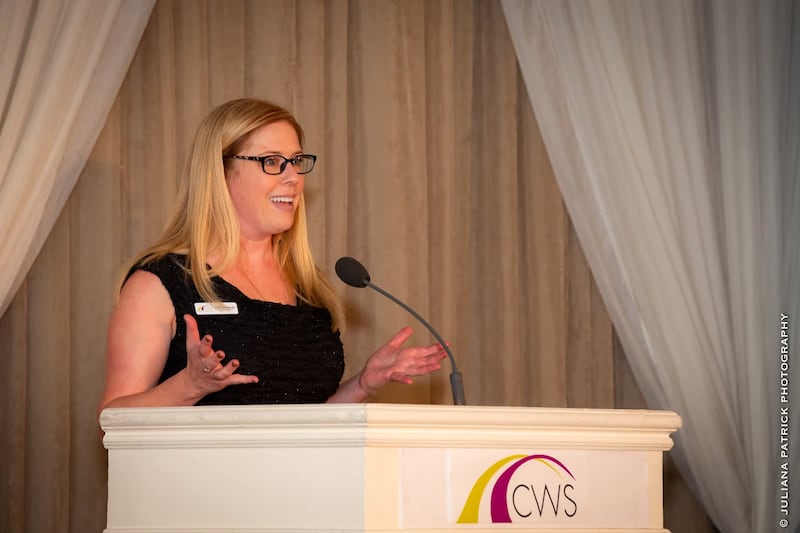
She also helped lead the development of Clackamas County’s Family Justice Center model, bringing nonprofit organizations, law enforcement, and other agencies together so survivors can access coordinated services in one place.
“Survivors show extraordinary courage,” Erlbaum says. “Our responsibility as a community is to ensure that courage is met with support, opportunity, and systems that truly work for them.”
Erlbaum’s lived experiences as a woman have also shaped her approach to leadership, and how she leads.
“For me, leadership today is grounded in purpose, relationships, and a deep commitment to the people and communities we serve…One of the most important lessons I’ve learned is that meaningful change rarely happens all at once; it happens through persistence, collaboration, and a willingness to keep showing up,” Erlbaum says.
“Many women leaders also navigate spaces that historically were not designed with them in mind. In those moments, it becomes especially important to stay grounded in your values and the communities you represent…If my leadership can contribute even in a small way to building safer, more connected communities, then I feel I am doing the work I’m meant to do.”
Erlbaum also shared the ways in which she thinks women leaders are uniquely positioned to influence impact, culture, or progress within their organizations or communities.
“In my experience, women leaders are often uniquely positioned to influence impact and culture because many of us lead with a strong orientation toward relationships, collaboration, and community,” Erlbaum says.
“Because many of us have navigated barriers ourselves or have experienced how expectations around gender can shape opportunity, voice, and safety, we may be especially attuned to how policies, structures, and culture affect people…When women step into leadership roles, especially in mission-driven fields, it expands the definition of what leadership can look like and helps open pathways for others.”
“Art as a Tool for Empowerment, Creative Problem Solving, and Social Change”
At North Pole Studio, community impact takes another form: creative empowerment. The Portland-based nonprofit supports artists with autism and developmental or intellectual disabilities in building meaningful careers in the arts, providing workspace, mentorship, and opportunities to exhibit and sell their work.
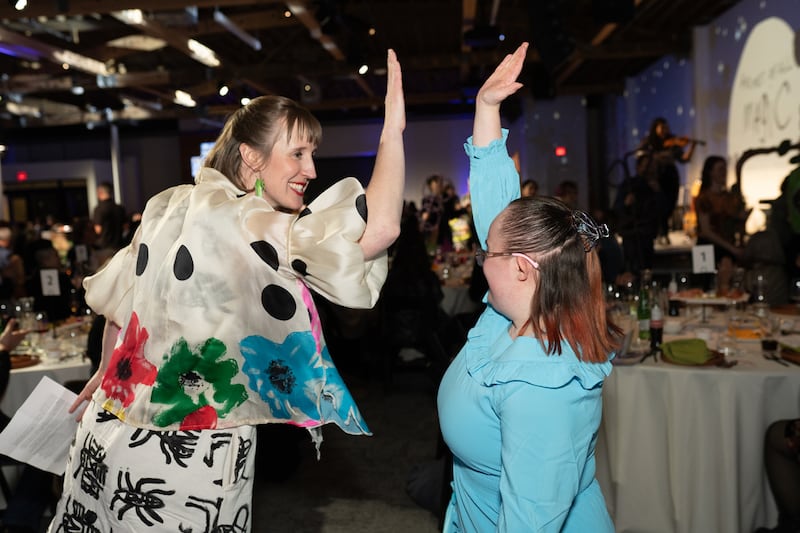
Executive Director Carissa Burkett sees that work every day through the artists she works alongside. “I deeply believe in the power of art, both in the act of creating for artists themselves and in the impact art has on the community and culture around us,” Burkett says. “Creating allows the artists we serve to have a valuable voice within their community and to earn income through their talents.”
For the artists North Pole Studio serves, exhibiting work publicly and earning income through their art reinforces both creative identity and financial independence—two forms of empowerment that often go hand in hand.
Like Malango-Blake and Erlbaum, Burkett reflects on how her own experiences have shaped her perspective on leadership, and how she leads those around her in her current role.
“I don’t want to see women pigeon-holed into one specific leadership approach, style, or archetype and hope that we can continue to allow women to be able to show up in the broad spectrum of womanhood within leadership,” Burkett says.
“And that we can move away from societal expectations of what a ‘woman leader’ is supposed to look like.”
When Partnerships Go Beyond the Check
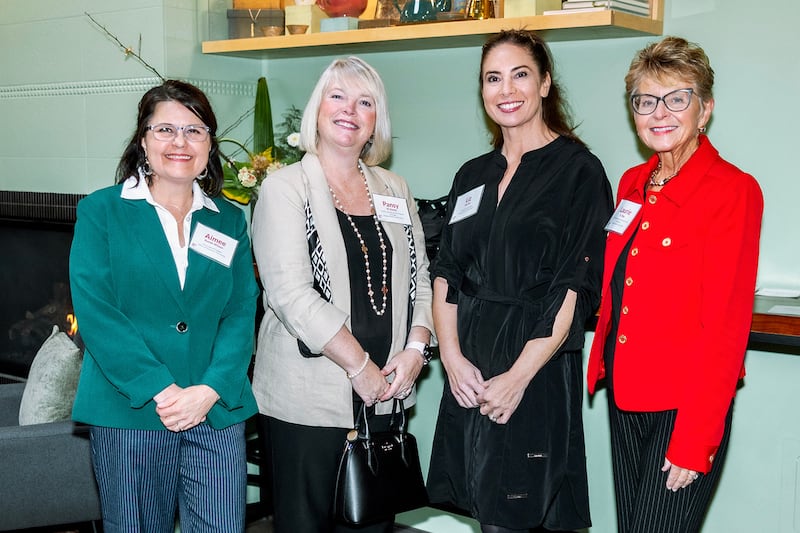
The work happening at organizations like Girls Inc. of the Pacific Northwest, Clackamas Women’s Services, and North Pole Studio is made possible in part through partnerships that help programs grow and reach more people across the region.
At Oregon State Credit Union, community involvement centers on long-term relationships with nonprofit partners across Oregon and Southwest Washington, including financial support and employee volunteering.
Chief Growth Officer Liz Enomoto Martin says the work begins with investing in the people behind each organization’s mission.
“A lot of organizations support nonprofits by writing a check,” Martin says. “We take the time to understand the impact they’re making, we volunteer alongside them, we look for ways to help share their stories, and when possible, we give beyond what was originally asked.”
“Their stories become part of our story,” Martin adds. “That depth of care is what has impacted me most personally—it makes the work feel real and human. I am more connected to the people we’re helping, and that brings greater meaning to everything we do every day.”
When personally defining leadership as a woman today, and identifying how her lived experience has shaped the way she leads, Martin, like Malango-Blake, draws on experience as a mother.
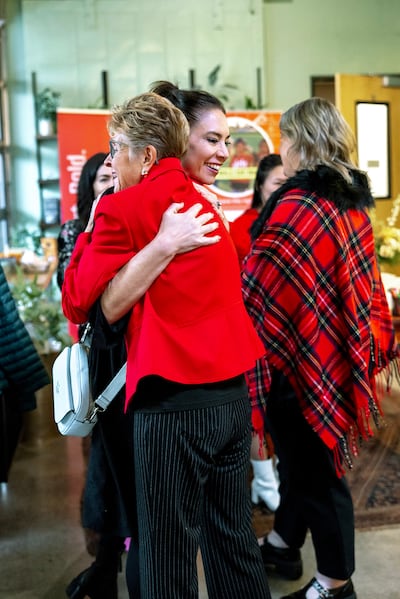
“As the mom of two fiercely talented and independent teenage girls…I’m deeply aware of how much representation matters—and how important it is to have strong role models,” affirms Martin. “What I hope to pass along to both my daughters and my team is what it looks like to lead with care, drive, and confidence, while staying humble and always being open to learning. To be a leader who knows how to use their voice—and just as importantly, when to amplify the voices of others.”
Martin also offers similar sentiments as her cohorts when asked how she believes women leaders uniquely impact the various aspects of the work they are doing.
“I notice [women are] often able to shape culture and make a significant impact because they lead with a strong awareness of people and the bigger picture. They’re not only smart and driven,” Martin affirms. “They ask thoughtful questions, listen closely, recognize patterns, and consider how decisions affect others, both now and in the future. That approach builds trust and collaboration, and carves a productive path toward intentional, sustainable growth.
The Work That Moves Communities Forward
Strengthening communities rarely happens through a single organization. It unfolds through networks of people—educators, advocates, artists, and nonprofit leaders—working together to expand opportunity and support.
Women’s History Month offers a moment to recognize that leadership. But its impact is visible year-round—in stronger communities, expanded opportunities, and the continued investment of organizations like Oregon State Credit Union, whose support helps that work grow.
