Skip to main content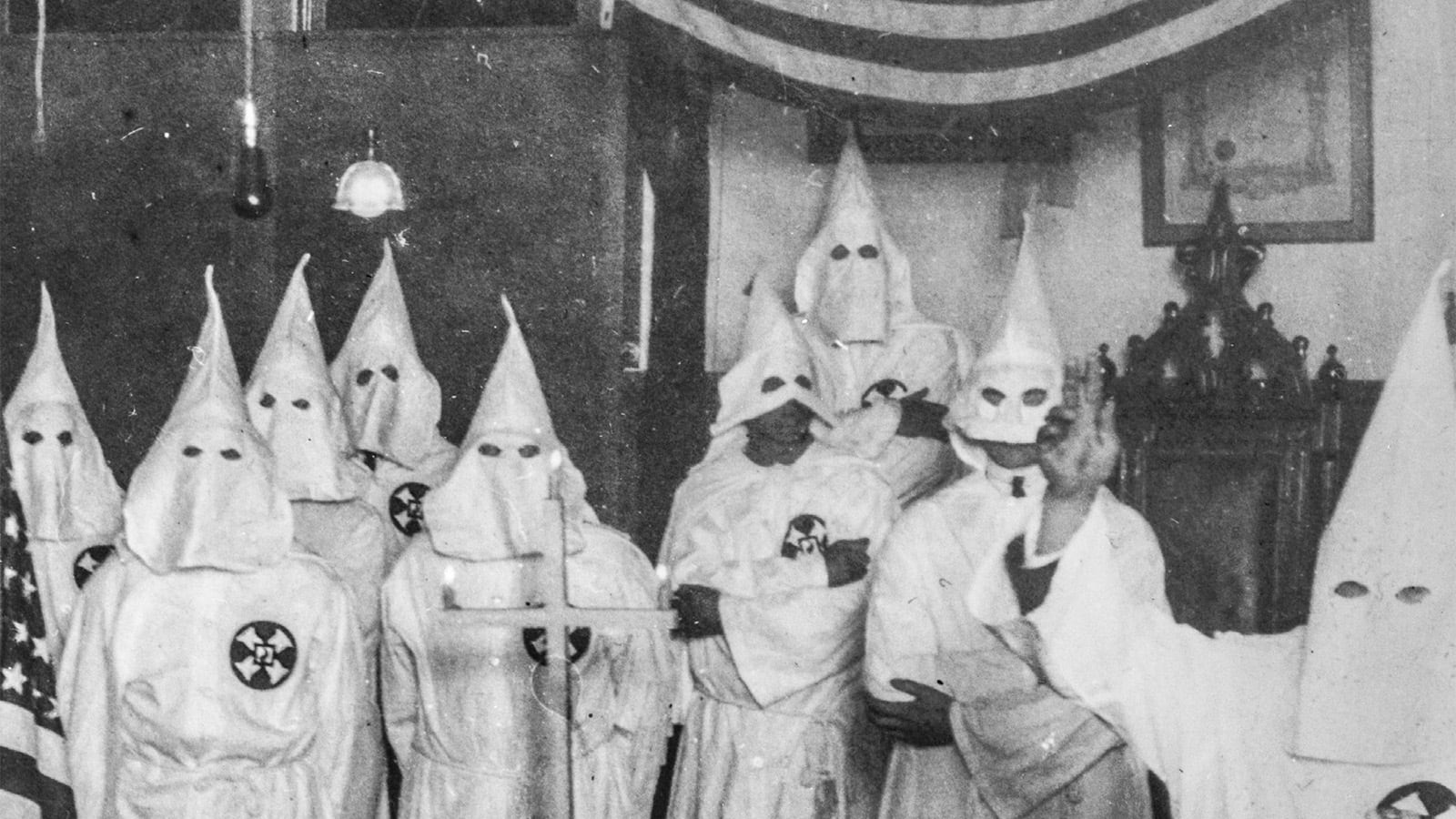
A little more than a hundred years ago, Portland Mayor George Baker faced a familiar problem. He had to cut the police budget by 10%. The City Council didn’t hunker down as it would in 2026 to try and find money elsewhere in the city budget. Business leaders didn’t band together to place an initiative on the ballot that would spend climate tax dollars to hire more police. They wouldn’t even have known what a climate tax was—Portland was still cold enough in December 1924 for the Willamette River to freeze so deep you could drive a car across it.
No, Mayor Baker resorted to a solution that would make Peacocks’ heads explode on today’s City Council. He created a 100-member vigilante police force. And this wasn’t some feel-good neighborhood watch program; these guys carried badges and guns. To find men for such a force, Baker consulted the city’s law and order–minded fraternal organizations like the American Legion to recommend names. The problem was, another of the organizations Baker consulted was the Knights of the Ku Klux Klan. Dozens if not nearly all the vigilantes vetted and approved by Portland Cyclops Frederick L. Gifford, the city’s “invisible super chief of police,” were members of the Klan.
Yes, as veteran Oregon newsman Steve Law describes in his eye-opening new book, Peddlers of Hate (OSU Press, 278 pages, $29.95), the Ku Klux Klan was a thing in Oregon in the early 1920s—a big thing, particularly in Portland. Two burning crosses 30 feet high once lit up Mount Scott and eight crosses burned on Mount Tabor, visible to Portlanders for miles around. The Klan frequently filled Portland’s Municipal Auditorium, what we now call the Keller, for sold-out recruiting lectures and initiation ceremonies that turned away thousands for lack of seats.
Nightriders of the original post–Civil War Klan had terrorized the South by burning schools for Black children and lynching newly emancipated Black people and anyone who tried to help them. Perhaps because Oregon was just 0.3% Black at the time, when the Klan resurrected itself in the 1920s, it managed to woo white Protestant ministers away from their congregations with paltry cash donations of $50 or $75 to spread a message of anti-Catholic hate on top of the Klan’s usual racial and ethnic bigotry.
Instead of outright lynchings, the new Klan threw “necktie parties” in which Black people, Jews, immigrants and Catholics were kidnapped at gunpoint, suspended by the neck on tiptoe, accused of bootlegging or consorting with white Protestant women, and then released short of actual hanging. A rash of these abductions and threatened lynchings near Medford in Jackson County came to be known as the Southern Oregon Outrages, but were never successfully prosecuted.
At the height of its power in the ’20s, the Ku Klux Klan had more members per capita in Oregon (1 in 15) than in any other state except Indiana (1 in 12), and Portland’s klavern was the sixth largest in the nation. Some 50,000 Oregonians were members of the Klan at one time or another. As the Klan began setting up klaverns in five dozen cities all over the state, Klan members won a majority of seats in the Oregon House of Representatives in the fall of 1922 and elected Kaspar Kap Kubli (his real name) as House speaker for the 1923 legislative session. Kubli’s shared initials with the Klan, K.K.K., were a complete coincidence, but too good for the Klan to pass up—it granted Kubli free membership, making him the highest-elected confirmed member of the Klan in Oregon history.
The Klan’s endorsement of Democrat Walter Pierce for governor in 1922 ousted incumbent Republican Ben Olcott, who as governor denounced the Klan at every turn. Pierce was not a Klan member and tried to keep the Invisible Empire at arm’s length, but he backed its biggest cause, a statewide ballot initiative to compel Oregon’s children to attend only public schools. The measure was the first and only one of its kind to pass in the nation. It outlawed private and parochial schools, run mostly by Catholics—who were the Klan’s real target in promoting the measure.
The original Ku Klux Klan faded away with the end of Reconstruction in the 1870s. Law traces its comeback in the 1920s to D.W. Griffith’s cinematically innovative but deplorably racist blockbuster The Birth of a Nation in 1915. Oregon newspaper editor Beatrice Morrow Cannady, the state’s foremost civil rights advocate at the time, tried repeatedly to have the three-hour silent epic banned here, driving herself to the point of nervous exhaustion, but it remained too powerful. President Woodrow Wilson, a political progressive but inveterate racist, even screened it at the White House.
Burning crosses to terrify as well as draw people to its gatherings was a new twist on the Klan that first appeared in The Birth of a Nation. The same year the film premiered, an insurance salesman and fraternal lodge organizer named William Simmons revived the Ku Klux Klan as a private corporation, mostly to sell insurance to his fraternal lodge buddies as they joined. The enterprise struggled until 1920, when Simmons hired two public relations whizzes, Edward Young Clarke and Elizabeth Tyler, who turned the KKK into a license to print money. “Kleagles” would fan out all over the country peddling hate for $10 a membership, keeping $4 as a commission and returning $6 to the Klan. Members had to pay annual dues and buy their pointy hoods and white robes at inflated prices from an approved manufacturer.
Law, a longtime reporter and editor for such newspapers as the Portland Business Journal, Salem Statesman Journal and Portland Tribune, spent the better part of three years combing through history books, court records, academic papers, unpublished manuscripts and newspaper clippings to craft a detailed history of the Oregon Klan, with timelines at the head of every chapter and contemporary photos, documents and charts on almost every other page.
Based on his research and interviews with such historians as Portland State University professors emeritus David Horowitz and Darrell Millner, Law concludes that the demise of the Oregon Klan was largely its own fault. After the organization’s swift rise in 1921, Klan leaders’ infighting, hypocrisy and greed to fleece members led to its equally precipitous fall in less than four years. By 1924, the Ku Klux Klan was a spent force. Ku Kluxers kept parading but often withheld their national dues, and the U.S. Supreme Court in 1925 declared the Klan’s greatest achievement, Oregon’s compulsory public school initiative, unconstitutional before it could take effect.
In less than 300 pages, Peddlers of Hate serves as a reminder that as bad as things may seem in Oregon, and maybe Portland especially, there was a time when they were a whole lot worse. And for the political candidate unafraid to lose a race, and the newspaper editor unafraid to speak up and lose advertisers, and the activist unafraid to fight on the losing side because it’s right, the sun also rises.
SEE IT: Peddlers of Hate author Steve Law appears at Powell’s City of Books, 1005 W Burnside St., 800-878-7323, powells.com. 7 pm Wednesday, Aug. 26. Free.