Skip to main content
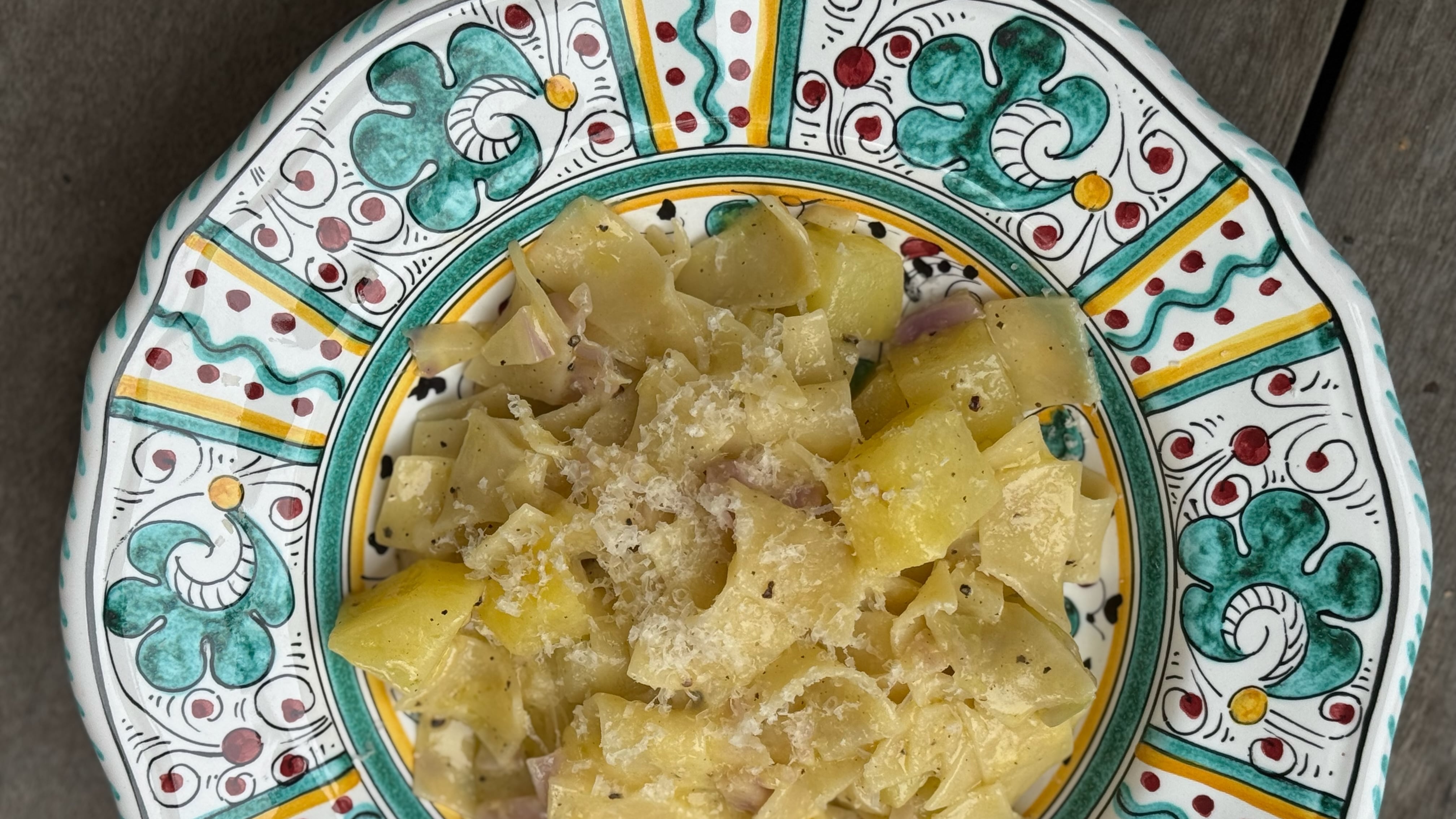
Like many Italian classics, this simple pasta comes from la cucina povera, literally “the poor kitchen,” where scarcity, poverty, and a seemingly genetic ability to make delicious food from meager ingredients come together. It’s inspired by pizzocheri (peetso-carry), a dish made with the buckwheat pasta also called pizzocheri. Pizzocheri the dish features cabbage and potatoes, the vegetables of choice for poor people everywhere.
While you can find buckwheat pizzocheri at specialty markets and online, it’s much easier (and cheaper) to grab some regular wheat pasta at the grocery store. I like to use pappardelle, the wide flat noodles usually nested in little bundles, since they’re close to the traditional pizzocheri size and shape.
The pasta and vegetables get cooked together, then tossed with a garlicky butter and olive oil mix. A young, softish gouda stands in for the hard to find Alpine casera cheese used in traditional dish. A final sprinkling of Parmigiano adds a touch of sophisticated flavor that bumps the other humble ingredients up a few notches.
Recipe
- 2 medium size yellow potatoes, peeled and cut into ½-inch pieces
- ¼ head green cabbage, thinly sliced
- ½ lb pappardelle pasta
- ½ stick (4 tablespoons) butter
- 3 tablespoons extra virgin olive oil
- 2 cloves garlic, finely chopped
- 4 oz mild gouda cheese, grated
- Kosher-style sea salt and freshly ground black pepper to taste
- freshly grated Parmigiano Reggiano or Grana Padano cheese
Bring a pot of well-salted water to a boil and add the potatoes. Cook for about 10 minutes, then add the cabbage and pasta, breaking the noodles into smaller pieces as you drop them into the water. Cook for another 7-8 minutes or until the pasta reaches your preferred level of al dente.
While the pasta and vegetables cook, combine the chopped garlic, butter and olive oil in a skillet large enough to hold all of the ingredients. Cook over medium heat for a few minutes, add a generous pinch of black pepper, and remove from the heat.
Drain the pasta and vegetables, reserving ½ cup of the cooking liquid. Add the pasta, vegetables and reserved cooking water to the skillet with the garlic and cook over medium heat for about 5 minutes.
Sprinkle the grated gouda cheese over the skillet and toss to combine. Serve immediately topped with the grated Parmigiano.