Skip to main content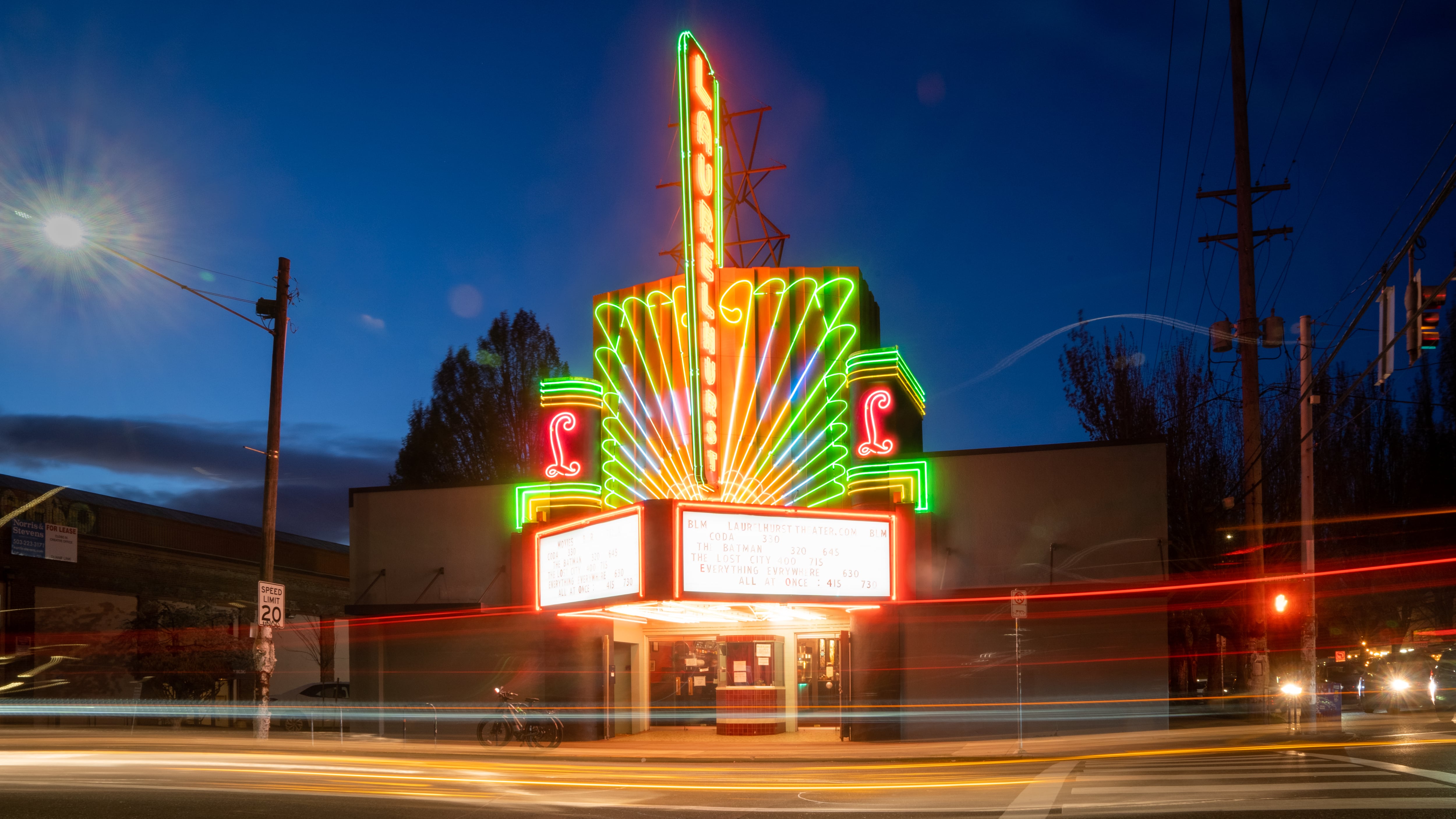
This year I saw a lot of old movies on big screens in Portland. Sometimes it’s an excuse to get out of the house: I sprained my ankle on New Year’s Day, and spent the first weeks of 2025 effectively housebound and increasingly stir-crazy. Perhaps too fittingly, my first public outing after the accident was a Saturday-morning screening of Rear Window, about an injured, stir-crazy journalist.
Sometimes it’s an excuse to cross something off my to-watch list: Hard Eight had been on that list for years, and I expect I would eventually have gotten around to watching it on a streaming platform, but instead I saw it at the Laurelhurst, and now I wish Philip Baker Hall could give me stern-but-streetwise advice about surviving the Reno underworld. Sometimes I want to rewatch a movie I already love, but on the big screen, with other people who also love it (or are simply crossing off an item on their own to-watch list). I’m enough of a cinephile to say things like “Seeing Boogie Nights in 70 millimeter really does feel different” but not enough of one to defend that point with anything more than a little babbling about film feeling warmer than digital.
Sometimes I go to a rep screening not for the movie, but for the experience; an explicitly crafter-friendly, lights-on screening of Never Been Kissed at Tomorrow Theater was so heckler-friendly that no one got mad at me for yelling at a teacher character who says alarmingly thirsty things to the protagonist, who is his student and who he believes to be underage. (It doesn’t really matter that the movie sucked, though, because I got a lot of knitting done.)
It’s rare for me to come to the end of a movie—regardless of how or where I see it—and declare that I’ve found one of my new favorites, but that happened to me in April, walking out of a packed Hollywood Theater screening of The Straight Story. It’s a movie that works particularly well on the big screen: sweeping scenery, an achingly beautiful score and slow, thoughtful dialogue with occasional moments of Lynchian humor.
The loss of David Lynch at the beginning of this year struck a particular nerve in me, both because I wanted him to go on spinning visions of dark Americana forever, and because his persona—in movies, TV shows or on social media—was such a source of comfort and cheer. He was like Mr. Rogers, if Mr. Rogers had gone to art school instead of seminary, and his acolytes were not children but adults who don’t mind too much when a movie gives them a week’s worth of disturbing dreams. Mourning a celebrity can feel a little embarrassing, and even when it doesn’t, there is sometimes no place for that grief to go. Watching Richard Farnsworth undertake a journey fraught with as much real joy as self-created hardship, though, felt like a powerful act of collective mourning.
But it would have been a great movie regardless. And I’ll probably watch it again at home. But in an era when streaming services have become so dominant that studios barely bother with a theatrical release—and when it feels like big media conglomerates are actively burying older IP—seeing older movies in their original format feels almost subversive. And in an era when streaming is so dominant that studios barely bother with a theatrical release of anything, going to the movies at all feels exciting. It also feels like a middle finger to the Big Tech dorks who want us all endlessly scrolling through two-minute vertical videos, racist jokes and AI slop. To paraphrase the master himself, Get off your fucking telephone and get real.