Skip to main content
Standing at the edge of the St. Johns Bridge, high above the rumbling Willamette River, Keith Zimmerman was shaking, his body full of adrenaline.
It wasn’t his first suicide attempt. Homeless in Portland, he talked often about not wanting to live. He’d had these thoughts, essentially, since he was a child.
“It’s basically why I’m an addict,” he says. “That shit is all-consuming. No one can live with that feeling forever.”
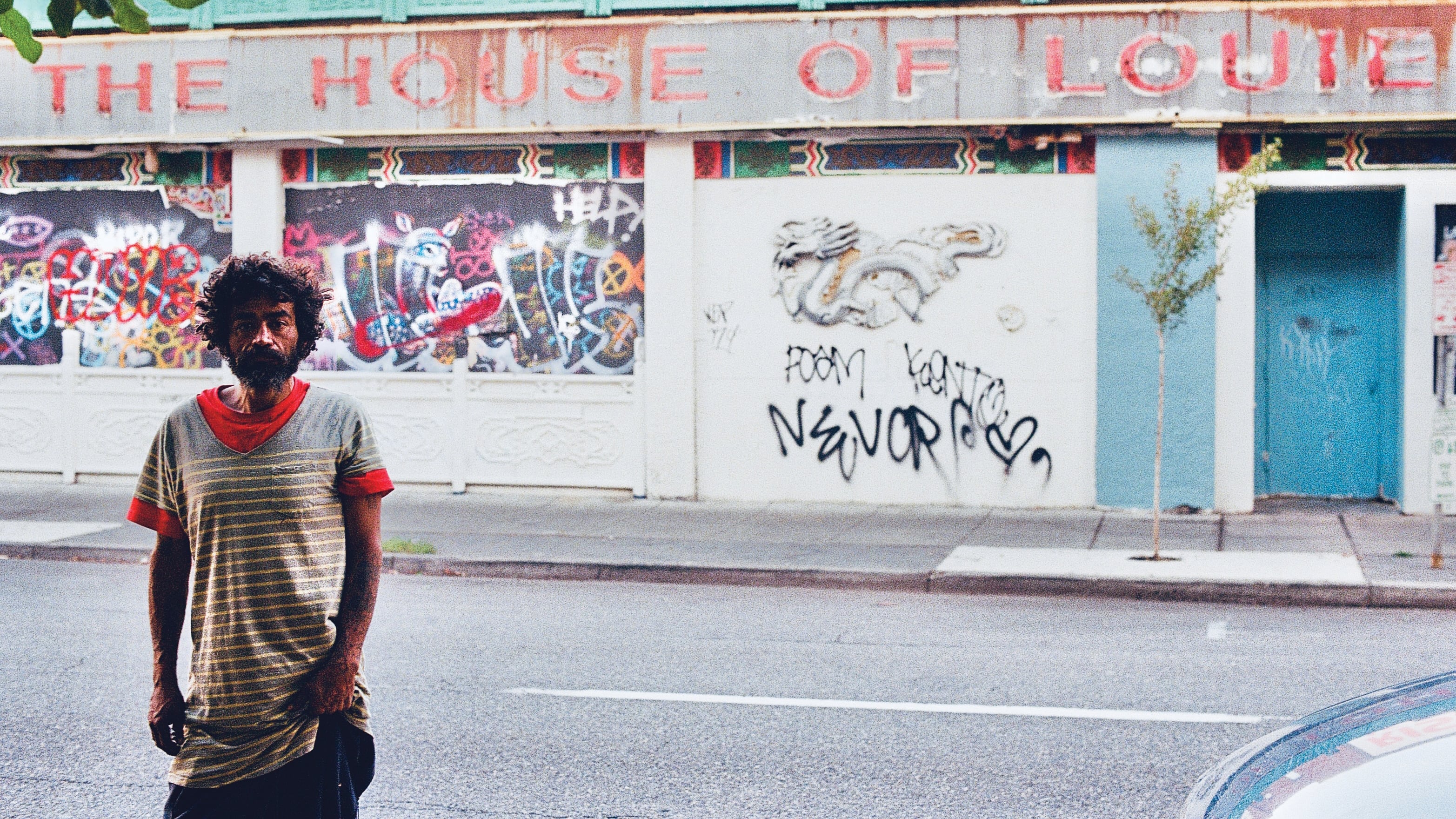
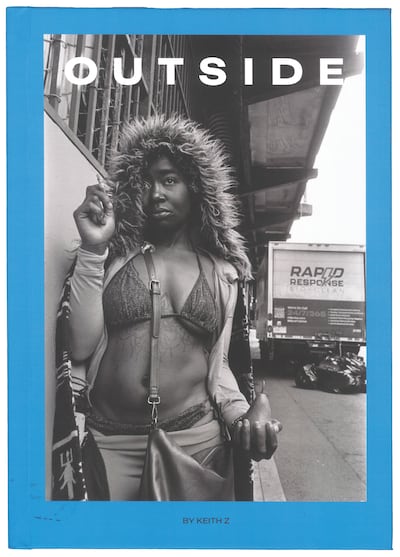
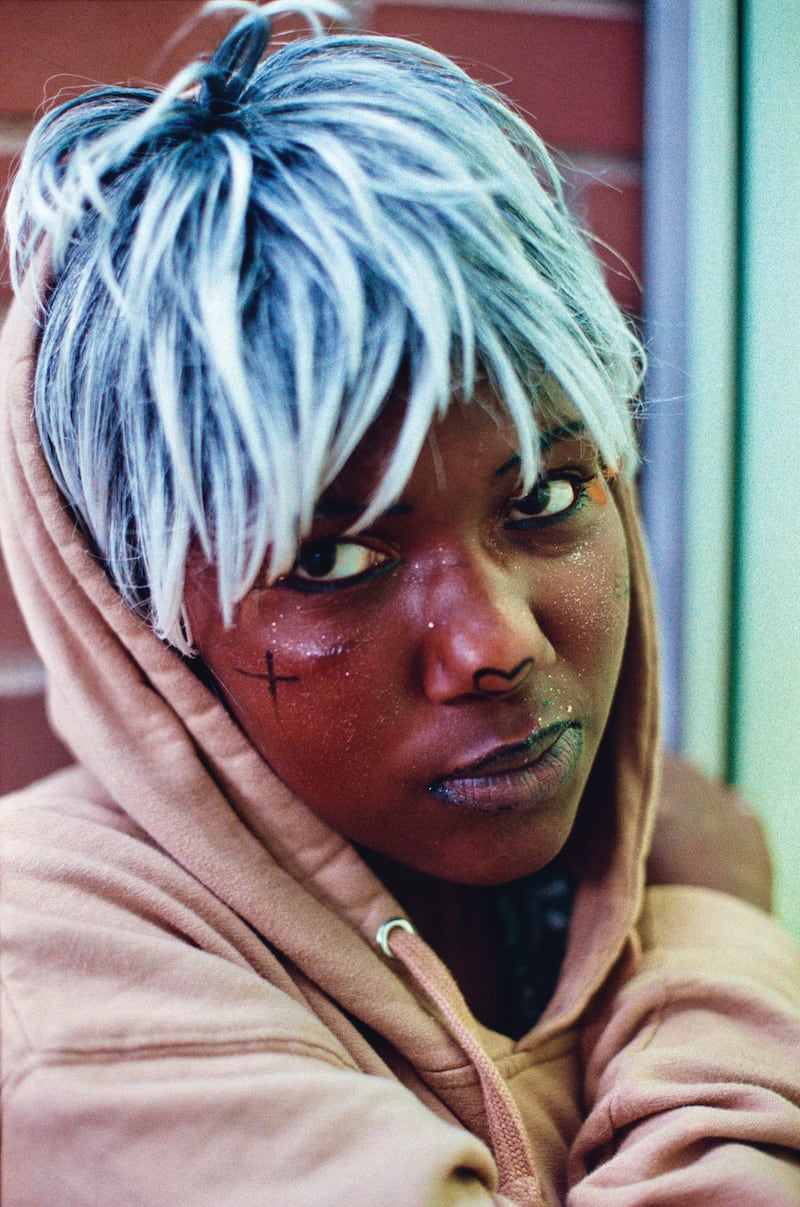
He stepped off the edge that day, and not toward the water—one step in a long journey that ultimately led him to pick up a camera and make Outside, a new photo book that aims to showcase Portland’s homeless population with honesty and love. It’s not a catalog of exotic specimens but of unique individuals possessing style, pride and above all, humanity. If you’ve lived in Portland long enough, you might recognize a few of them.
Zimmerman, 53, doesn’t call the book his greatest accomplishment. He calls it his first. And what’s staggering to many in Portland’s photo community is, he was 49 when he first held a professional camera.
“I mean, I couldn’t do any better,” says Bobby Abrahamson, co-founder of Franklin Foto, a nonprofit community darkroom in St. Johns and an accomplished photographer in his own right. “Nobody I know who’s been shooting for 30 or 40 years could do a better job of composing and capturing a powerful moment.”
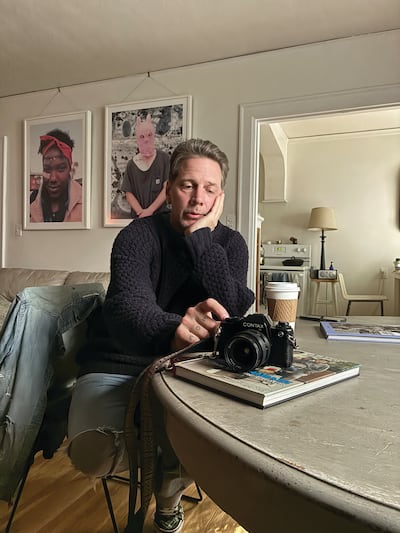
Keith Zimmerman, alias Keith Z, was born in Boise, Idaho, in 1974. His dad was a firefighter for the U.S. Forest Service who left the family when Keith was 3. His mom relocated for work numerous times, Zimmerman and his two older sisters in tow. They settled in Portland briefly when he was in the third grade, and he’d return, under much different life circumstances, in 2014.
In the years and decades since, Zimmerman has lived the life of what he calls a dysfunctional addict. Alcohol entered the picture around age 15 and led to harder drugs and periods of incarceration, institutionalization and various flavors of homelessness extending from his early 20s through his 30s and 40s with a few spells of sobriety and stability mixed in. Maintaining jobs and relationships was always a struggle. He couldn’t keep money in his pocket; any windfall he’d use to get drunk.
The night at the St. Johns Bridge was a moment that led him to sobriety. But it wasn’t the only one. A major influence in Zimmerman’s recovery has been the 12-steps framework of mutual aid and accountability established by Alcoholics Anonymous. Another was a stay at a Native American rehab facility outside Portland where an elder impressed on him the importance of listening—with his ears but also with his eyes.
There was the death of his friend RayRay, a talented musician and a “hope to die” drunk, to use his words, who near the end resembled a ghost. The experience allowed Zimmerman to practice a lesson from his first sponsor: To get sober, you’ll have to learn to step over dead bodies.
During the pandemic, Zimmerman lived in transitional housing in Chinatown and trained as a social worker through Central City Concern. Social work taught him to listen without trying to “fix” people in recovery or control their lives. Practicing patience allows subjects to reveal themselves naturally, he learned.
Another important step was moving from Chinatown—home of drugs, transitional housing, and a large homeless population—to the more affluent and relatively peaceful Alphabet District. There, his apartment—dark, quiet, packed with thousands of books—is a refuge. One night in his room, Zimmerman had an epiphany while flipping through a photo book by Jamel Shabazz, who photographed his Harlem community in the ’70s and ’80s. “Now, that’s how you do it,” Zimmerman thought. He’d make a photo book documenting his own community—never mind that he’d only ever taken pictures with his phone.
Since 2023, photography has aided him on his journey—given him purpose and solidified his sobriety. Taking pictures taught him to listen not just with his eyes but also his lens. And it was through this burgeoning interest he met Abrahamson—another milestone in his recovery. A photojournalist, photography instructor at Clark College, and author of several photo books, Abrahamson is a fellow purveyor of street portraiture, a medium given, he says, to glorifying and exploiting its subjects. “Ruin porn,” he calls it.
Three years ago, Zimmerman reached out on Instagram, seeking guidance on the book he wanted to make. When they met up, Abrahamson was surprised to find they were around the same age, though Zimmerman, smelling of cigarettes, seemed more world-worn. Abrahamson was reminded of his brother, Frank.
Franklin Abrahamson, alias Frank, was a real estate professional in Atlanta in the mobile home business. He’d often joke he essentially worked in the affordable housing industry. Frank was successful in life but battled the hungry monster of addiction; he may have indeed harbored guilt about the struggling people he profited from, his brother surmises. Frank Abrahamson died of an overdose in 2023, leaving a sizable inheritance to his more socially conscious brother Bobby, with the directive to “do something useful” with it. That was the seed of Franklin Foto, a growing nonprofit photography gallery in St. Johns that Bobby Abrahamson co-founded in 2024 with fellow photojournalist Jason Kaplan.
The Franklin Foto community trained Zimmerman in darkroom techniques and gave him an old 35 mm SLR that had been kicking around the gallery—one that previously belonged to social worker and talented street portraitist Ward Shortridge, who, like Zimmerman, had lived a hard life and was drawn to Portland’s homeless. He died in 2019.
Zimmerman was excited on a recent Friday afternoon—boxes of the initial run of Outside had just arrived. He planned to personally give several copies to subjects featured in the book. Knowing himself, and the way objects of value tend to fly from his pockets, he doesn’t expect to earn much selling copies at $65 each.
As we walked from his Alphabet District apartment toward Chinatown, where he’d made many of the portraits in the book, he described another important relationship in his life—with his friend Derek, alias Derek Cianfrance, Hollywood director of Blue Valentine, The Place Beyond the Pines and others. The pair were close growing up in Colorado—Cianfrance, an art-school kid; Zimmerman, a skater who got kicked out of his house a lot. A teenage Zimmerman eventually moved in with an older couple and they formed a unique, interracial and, in the end, unhealthy family dynamic. Zimmerman recalls it as a strange and beautiful time.
Cianfrance wrote a screenplay based loosely on Keith’s life to that point. The resulting film, Brother Tied, was a critically acclaimed independent drama that debuted at Sundance and propelled Cianfrance to a blockbuster career. Zimmerman played a version of himself in the movie and traveled with it on the festival circuit—some of the only acting and globe-trotting he’s ever done. But he hated the finished product and what his friend did to his story. He calls the film sappy and takes issue with its racial stereotyping. It caused an enduring though largely unspoken rift between the two.
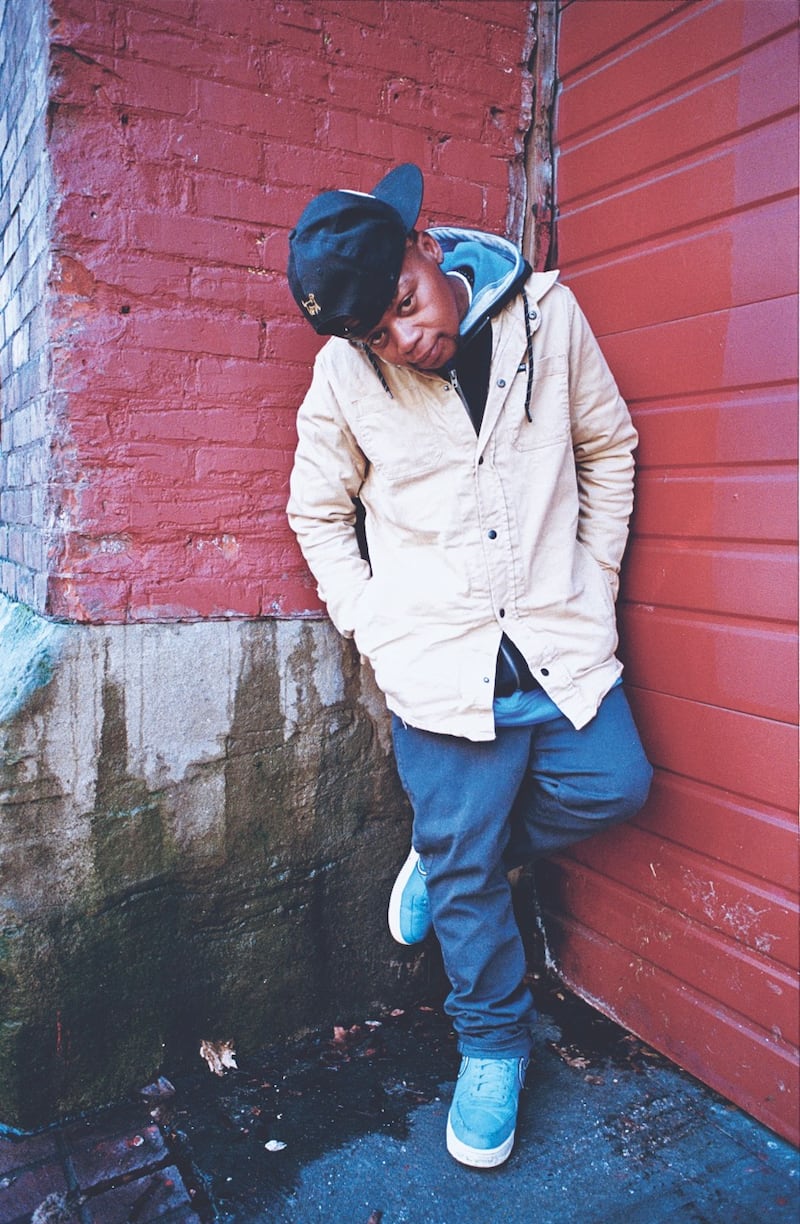
Cut to a desperate day in 2023 when, in a manic episode, Zimmerman called Cianfrance and told him what he really thought of him—all of it—completely burning the bridge, in his telling.
“It was for everything, for a lifetime of resentment. And that’s something alcoholics do really well—hold on to resentment,” Zimmerman says. “I rarely lose my shit, but when I do, I’m trying to hurt people with my mouth. So I did that, and it was really ugly. And then I went in my house and called my boss [at Central City Concern] and did the same thing.”
Those two calls blew up what felt like his entire life.
“I was like, I don’t have any options left, but I have this fucking plastic camera,” he says. “So while I regret a lot of things that I said, it absolutely changed my life.”
Zimmerman hesitates to even bring up the film. “I’m trying not to hurt anybody,” he says. “I don’t believe in any form of vengeance. Ultimately this is somebody I love.” (Cianfrance did not respond to requests for comment.)
Contrary to journalistic norms, Zimmerman often pays his subjects, usually a few bucks. He feels it is ethically right to compensate them for their time and, more to the point, their eternal image. Near Tom McCall Waterfront Park, the cash flies from his pockets, along with cigarettes from a fresh pack.
Zimmerman gave a copy of Outside to a woman named Yvonne. It’s her fur-shrouded face—somber and serene—that graces the book’s cover. Zimmerman smiles recalling how he scanned his proofs the night he took that shot.
“The moment I saw it, I knew,” he says. “That’s a Madonna.”
Yvonne quietly scanned the pages. She stopped at a photo of her friend Ruby, who recently died.
Small and stylish, everyone in the streets knew Ruby’s name. She was a legend, her friends attest.
“She shared everything,” Yvonne said, tearing up. “She used to share everything she had with you.”
Reactions like these help Zimmerman, who’s been struggling these past few weeks. Focusing on the book—hosting reporters; weathering the interpersonal drama of choosing a cover model; preparing for the show at Franklin Foto, as well as another at Blue Sky Gallery in December and yet another in Phoenix after that—has meant not focusing on the work of recovery, his life’s work, essentially. He insists he’s not worried about ending up back where he was.
“I know that I don’t have a problem that a drink is going to fix,” he says. “Smoking crack is not going to make my life better. It’s obvious to most people, but it took me a long time to figure it out.”
GO: Outside book launch and photo show at Franklin Foto, 8953 N Lombard St., franklinfoto.org. Opening 5–8 pm Saturday, Nov. 7; show through Nov. 30. Free.