Skip to main content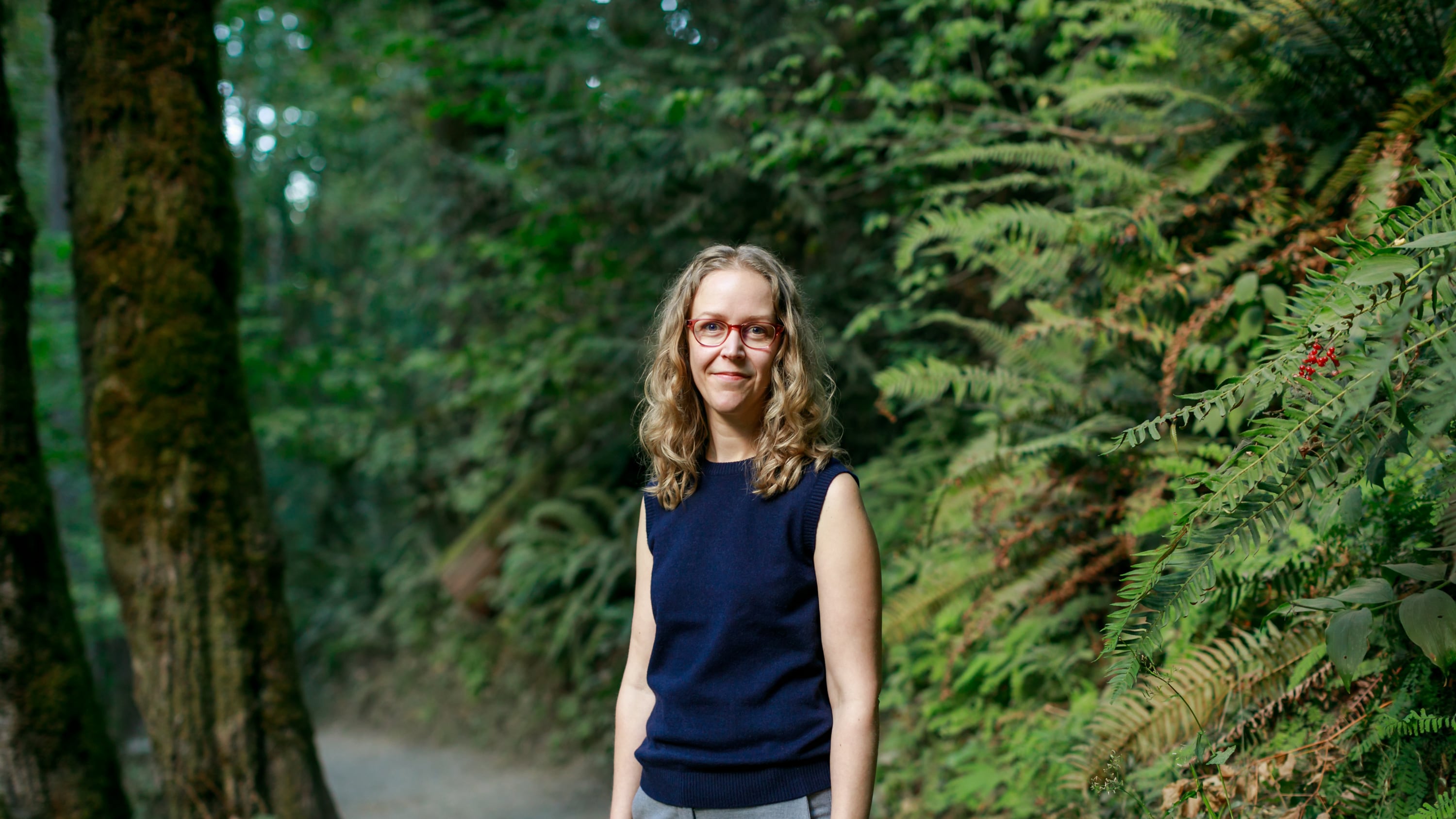
Last September, Portland State University history professor Catherine McNeur was looking to drum up interest in the new course she’d developed on Portland’s park system. PSU courses need 12 students to enroll or they’re scrapped, and getting attention for a novel seminar can be difficult. So McNeur went where the kids are: TikTok.
McNeur, 44, began posting reels to TikTok and Instagram where she told the stories behind iconic Portland parks like Washington and Laurelhurst (her local oasis; she lives in Kerns). The videos are decidedly low tech: Wearing tortoiseshell eyeglasses and sometimes a Yale ballcap, McNeur holds up the camera to her face and describes the history of the place where she’s standing. She records narration with voice memos and edits in iMovie. She doesn’t even use a selfie stick.
No matter: She’s found her audience. An al fresco lecture in January, deliciously captioned “The forgotten house on Mt. Tabor” on the two social channels, drew 100,000 views. An in-person event scheduled for Feb. 26 sold out the lecture hall and was moved to PSU’s Hoffman Hall, a larger venue, which also sold out. “It’s not breaking news to say that Portlanders love their parks,” McNeur says, “but I didn’t realize there were so many people on social media who’d be really into serious history.”
“It transformed the way I do research now,” McNeur adds. Where previously she would compile historical discoveries for a course or a book, she now uses video as a trial run for the material. For instance: “Recently I found all this stuff in the Portland city archives about people being really angry over Chinese pheasants. They were set out in parks specifically as decorative items. But the pheasants got loose in neighborhoods and started eating people’s gardens. And so the police chief was debating whether or not people could start shooting the pheasants.”
If you find that sort of anecdote irresistible, McNeur has many, many more. That house atop Mount Tabor? It was a mental health sanitarium, moved there around 1906 because of neighborhood complaints about patients wandering the streets in distress. The Lownsdale Square public restrooms were a gay cruising spot in the 1910s. The namesake of Dawson Park, the Rev. John Dawson, championed its creation because he didn’t want kids in his congregation playing in Irvington Park with Russian immigrants.
These are not all happy tales. “In any relationship with a place or a person,” McNeur says, “you have to look at the ugly as well as the good.” But on an internet that increasingly feels like a conveyor belt of junk food, McNeur offers a full picnic, laid out under the towering trees.