Skip to main content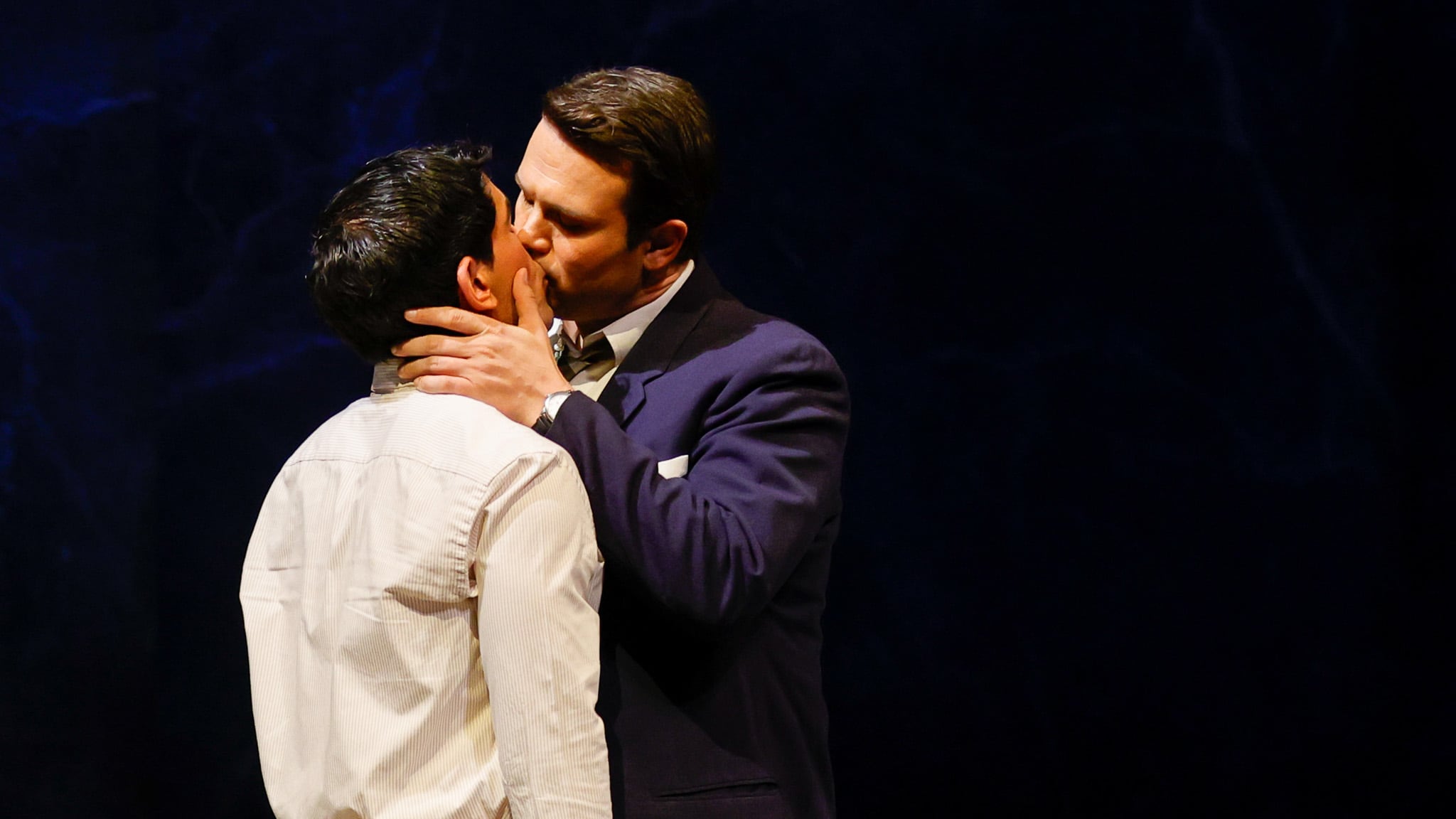
A forbidden love story between two men whose discovery would cause them to lose their livelihoods. A system that does not accept anyone who doesn’t fit into strict parameters. Raw emotional and physical intimacy.
If this sounds like your favorite “gay hockey show,” you’re not wrong, but these descriptors also apply to Fellow Travelers at Portland Opera. Director Kevin Newbury, who has been with the project since its inception, told Willamette Week that Fellow Travelers “is the Heated Rivalry of opera. It is to opera what Heated Rivalry is to hockey.”

While there are similarities to the television juggernaut, no one comes to the cottage in Fellow Travelers, and the decidedly more tragic love story is set within the confines of McCarthy-era Washington, D.C., where the government was not only hunting communists—but also people suspected of homosexuality. And the story of the “Lavender Scare” of the 1950s is, unfortunately, still highly relevant today. Fellow Travelers follows Hawkins Fuller, a State Department employee (Joseph Lattanzi) and Timothy Laughlin, an up-and-coming writer (Andy Acosta). The two men begin a secret relationship and grapple with the ethical and practical consequences of working for their government. Real-life figures such as Joseph McCarthy appear onstage, and others, such as Richard Nixon, JFK and Roy Cohn, are part of the narrative that weaves fiction with actual events.
After reading the 2007 novel by Thomas Mallon, Newbury said he thought, “These characters just felt like they needed to sing. This deserves to be set to music.” In 2023, the novel was adapted into a TV miniseries starring Jonathan Bailey and Matt Bomer. While Newbury is a fan of the miniseries, he said the opera accomplishes something unique. “What opera especially does really well is getting into the interior thoughts of a character,” he says.

Newbury, composer Gregory Spears, and librettist Greg Pierce developed and produced the original production with the Cincinnati Opera in 2016 and remounted it with Seattle Opera for its 10th anniversary. The Portland version is scaled down for the Newmark Theatre and a possible tour.
Fellow Travelers is in English with surtitles; the music is modern. Both main characters have an aria that fully extrapolates their true feelings, and the entire production is full of soaring voices and orchestration conducted by Nicholas Fox. The layering of the two leads’ tenor and baritone voices with the company and orchestra fills the space with soul-wrenching beauty.
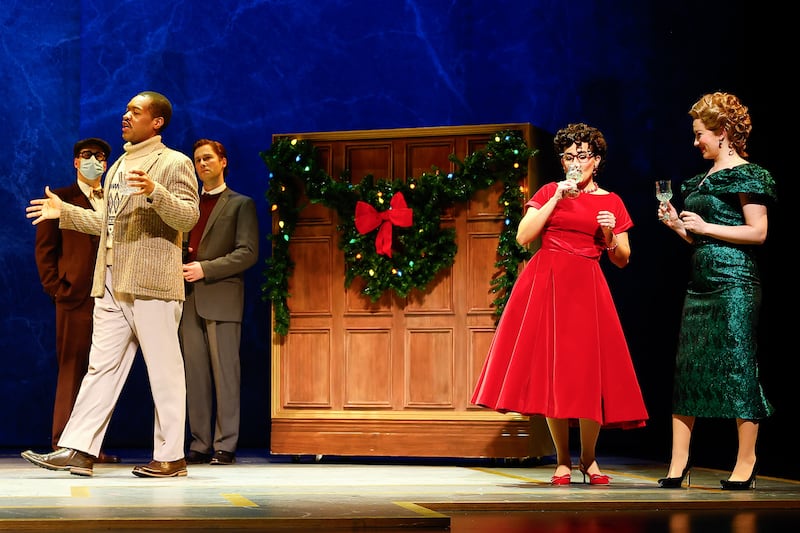
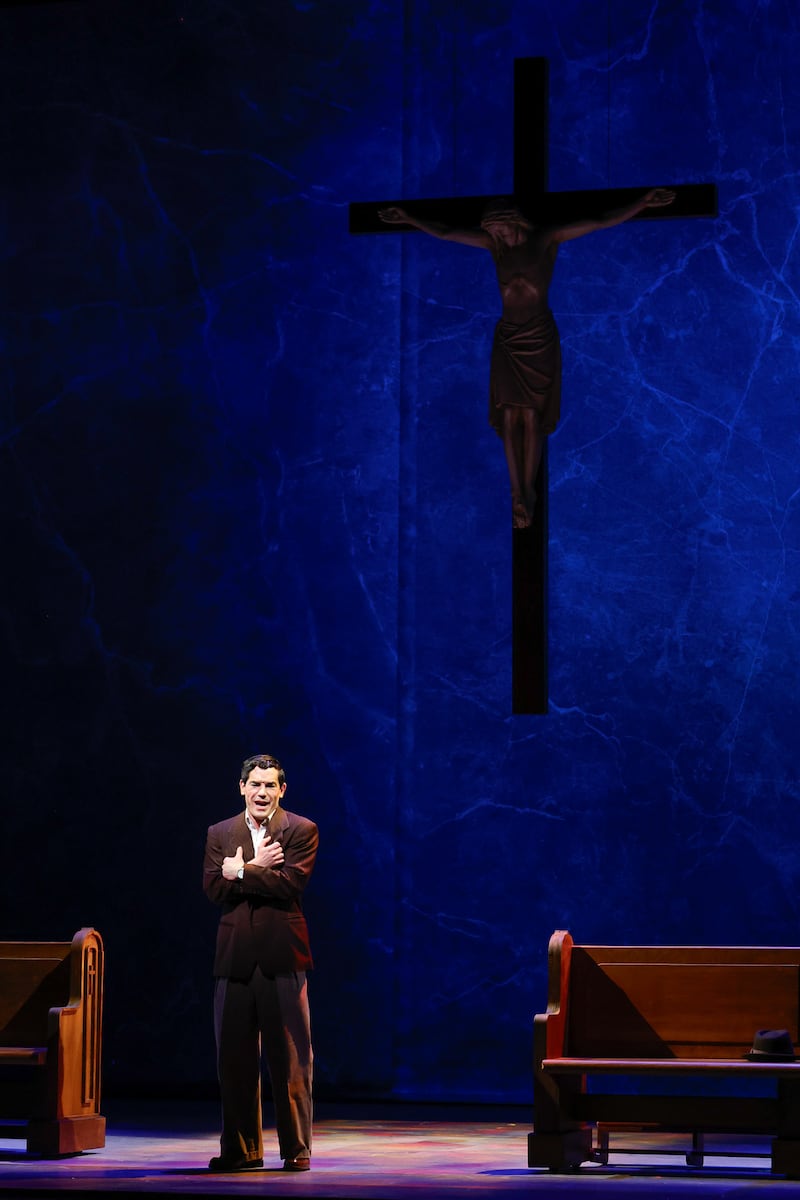
Both Newbury’s staging and the set by Victoria “Vita” Tzykun are efficient and effective. Paired with crisp lighting by Thomas C. Hase, the multiyear span of the story moves along at an even pace, and the gorgeous new costume design by Devario D. Simmons, which features Mad Men-like bright colors on the women and muted business suits on the men, emphasizes both the elegance and the restrictive vibe of the period.
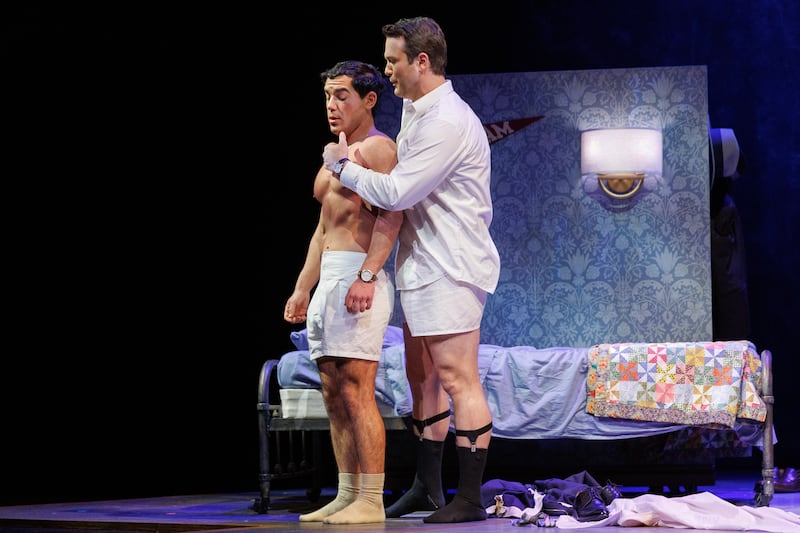
When it came to moments of emotional and physical intimacy between the two characters, Newbury made a big change in the staging compared with the original production. Except in New York, the opera didn’t previously contain nudity, but he felt that now including partial nudity was “essential because we haven’t seen that level of intimacy between two men on the operatic stage until this show.” Like on television shows you’d see on HBO and Showtime—where Heated Rivalry and Fellow Travelers aired, respectively—the intimacy, coordinated by associate director Sara E. Widzer is tasteful and helps advance the story.
The creative team behind Fellow Travelers uses this production to expand The Lavender Names Project, a collaboration between the American LGBTQ+ Museum and Up Until Now Collective, which produced Fellow Travelers. The project memorializes the LGBTQ+ employees who were investigated, fired or forced to resign their positions within the federal government. Photos of some of these individuals appear in the final moments of the opera, and the entire project will be available at the American LGBTQ+ Museum in New York after the run.
Besides the connection with The Lavender Project, this production is also engaging locally. The March 11 performance is LGBTQ+ Community Night, which will include tables around the lobby from various local organizations as well as a discussion panel before the show. “The story is about encouraging intergenerational conversation within our community,” says Newbury, who wants patrons to speak with him after the show about their own experiences.
Newbury sees the opera’s ending as less tragic than the original or the miniseries. However, the heartbreak of not being able to be with the person you love and not being able to serve your country without fear is palpable as the opera reaches its conclusion. The story is as haunting as it is exhaustingly similar to present-day struggles, but Fellow Travelers is a triumph both as a skillfully made piece of art told gorgeously through this production, and because it takes a shameful page of American history and turns it into something that celebrates LGBTQ+ Americans.
0 of 7


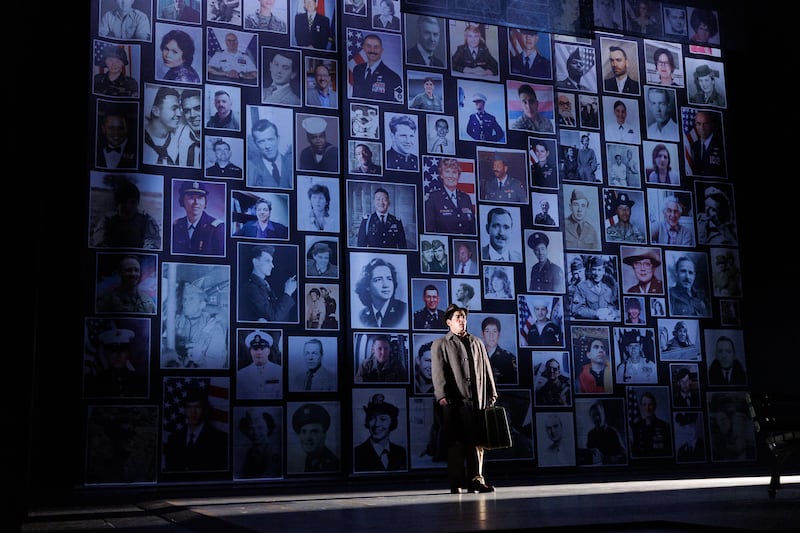
SEE IT: Fellow Travelers at the Newmark Theatre, 1111 SW Broadway, portlandopera.org. 7:30 pm Saturday, Wednesday and Friday, and 2 pm Sunday, March 7–15. $31–$106.